What to Look for When Buying a Used RV: 7 Key Checks
What to look for when buying a used RV comes down to four things, in this order: water damage, tires and running gear, working systems, and clean paperwork. Every buyer should start with the roof and floors. First-timers get the most from the paperwork and professional inspection checks. Motorhome shoppers need the chassis and test drive. Travel trailer and fifth wheel buyers should focus on sealant, slide-outs, and soft floors.
The problem is that a used RV looks its best on the lot. Fresh wax, a quick wipe-down, and a friendly seller hide what a sunny afternoon cannot show you. Water that crept in for years can rot a floor, and repairing it can cost more than the discount you negotiated.
This article gives you seven checks, ordered by how much money they can cost you. Each one covers what to inspect, which red flags should slow you down, and the question to put to the seller. MobileRVService.com connects RV buyers with mobile inspectors and technicians who come to the rig, so you can verify what you see before you sign.
1. Roof, seals and exterior
What to check
Check the roof before anything else, because water enters through the roof and its sealed seams and does its damage out of sight. This is the part of what to look for when buying a used RV that first-time buyers skip most often. If the roof is walkable, walk it slowly and press down every few feet to find soft spots. If it isn't, bring a ladder and probe from the edge.
- Sealant around vents, skylights, the A/C base, and roof edges should be pliable and intact, not cracked, blackened, or peeling.
- The roof membrane should be free of punctures, bubbles, tears, and chalky patches.
- Solar panels, racks, and antennas need sealant at every fastener.
- Screws under exterior trim strips should be clean. Rust there means water is already getting in.
- Window seals, slide-out seals, and awning fabric should be flexible and undamaged.
A roof that was resealed on schedule is worth more than any interior upgrade.
Red flags
Treat fresh sealant slathered everywhere with suspicion. It can mean careful maintenance, but it can also mean a seller covered a leak right before listing. Look for dark streaks below windows and vents, sidewalls that bow or bubble, and dents or patched panels that point to a past collision. One cracked seal is a cheap repair. Cracks all around the roof mean years of neglect.
What to ask the seller
Ask when the roof was last resealed, who did the work, and whether receipts exist. Then ask whether the RV has ever leaked and where it has been stored. A rig kept under cover usually ages far better than one that baked outside every summer.
2. Interior water damage and mold
What to check
Press on the floors, walls, and ceilings, because soft spots are the clearest sign of water damage inside a used RV. Walk the entire floor, especially near the entry door, toilet, kitchen, and slide-out. Use a flashlight in every cabinet, closet, and under-bed compartment, then open each exterior storage bay too. Knowing what to look for when buying a used RV matters most here, because damage hides in corners.
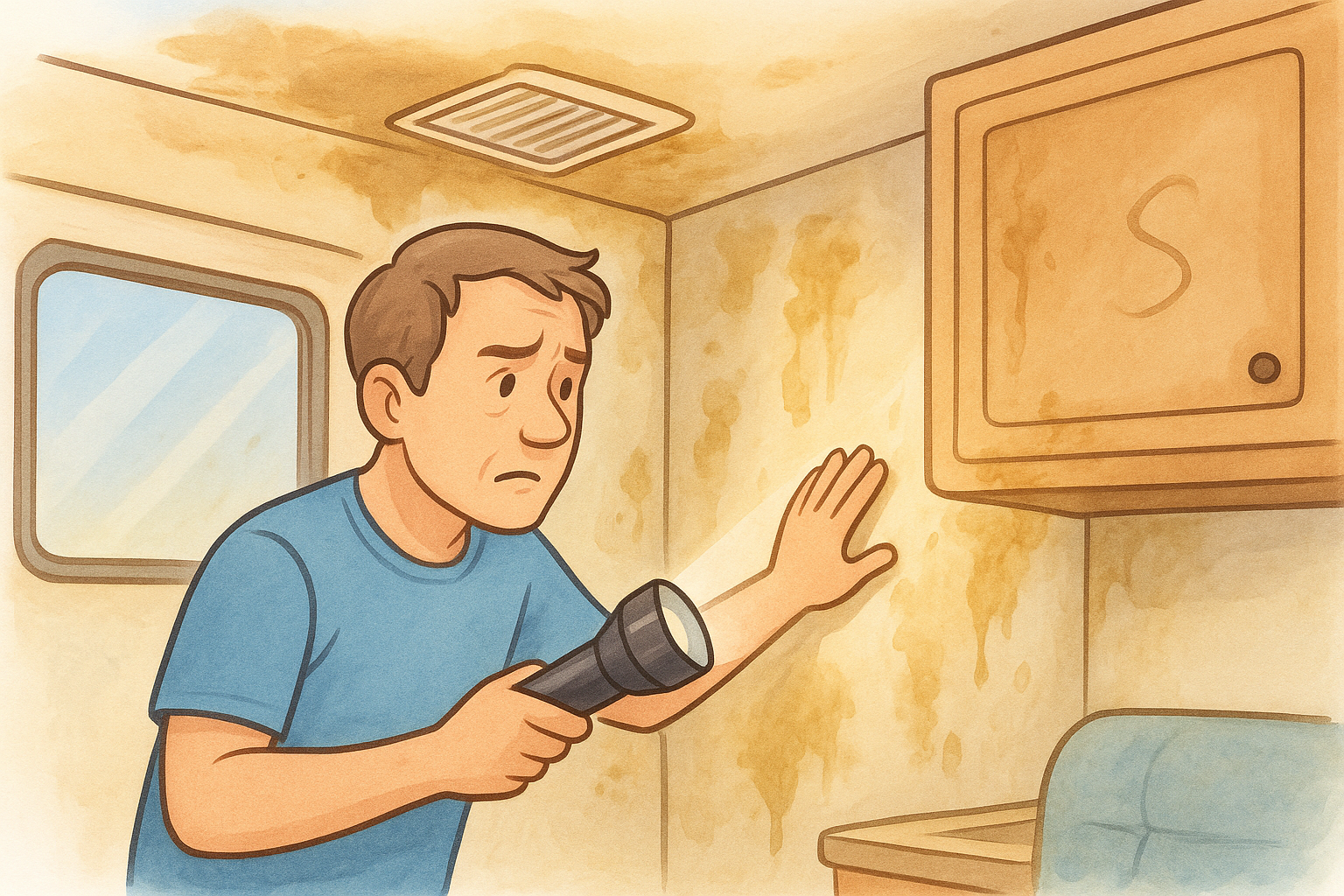
- Brown or yellow stains on the ceiling, around vents, and at wall corners
- Floors that feel spongy, flex, or creak underfoot
- Fiberglass sidewalls that look wavy or are pulling away from the frame, which is called delamination
- Black or green spots on caulk, cabinet interiors, and mattress undersides
- A musty smell, which you should trust even when you see nothing
Soft floors and wavy walls are repair bills, not cosmetic flaws.
Red flags
A strong air freshener or a running dehumidifier is a classic cover-up. So is new flooring in one small patch of an otherwise worn interior. Mold that returns in the same spot points to an active leak, and extensive rot can cost more to fix than the RV is worth. Walk away from those rigs instead of hoping to negotiate.
What to ask the seller
Ask whether any floor, wall, or ceiling section has been repaired or replaced, and who did the work. Request receipts and photos. A documented repair by a qualified shop is fine. An unexplained repair is a reason to bring in a technician with a moisture meter before you go further.
3. Tires, brakes and chassis
What to check
Read the tire date code first, because age matters more than tread depth on an RV. Find "DOT" on the sidewall, then the four digits at the end. They give the week and year, so 2420 means the 24th week of 2020. Many technicians suggest replacing RV tires at roughly five to seven years even when they look fine, so budget for a full set if they're older. When buying a used RV, tires are the easiest item to turn into a price reduction.
- Sidewall cracking, bulges, and uneven wear on every tire, including the spare
- Frame and axle rust, cracked or crudely welded sections, and a damaged underbelly
- Working brake lights and, on towables, a hitch and coupler that move freely
- On a motorhome: cold start, oil and coolant condition, steady idle, smooth shifting, and a real test drive
Judge RV tires by the date code, not the tread.
Red flags
Mismatched tires, cracked sidewalls, and wear on only one edge suggest alignment or axle trouble. Look under the rig for fluid drips, a sagging frame, or an opened underbelly that signals a past leak repair. On a motorhome, stalling, hard shifting, or heavy grime under the hood mean a mechanic should look before you continue.
What to ask the seller
Ask when the tires were bought and whether the RV has ever had a blowout. A blowout can tear out wiring, plumbing, and wall panels near the wheel well. On a motorhome, ask for the engine and transmission service history, not just the living area receipts.
4. Electrical, propane and generator
What to check
Test the electrical system on battery power first, then plug into shore power, because a seller's demo often covers only the easy source. Bring a phone charger or an outlet tester. Treat this as part of what to look for when buying a used RV that will actually be camped in, not just parked. Ask the seller to run slides, awnings, and jacks all the way out and back.
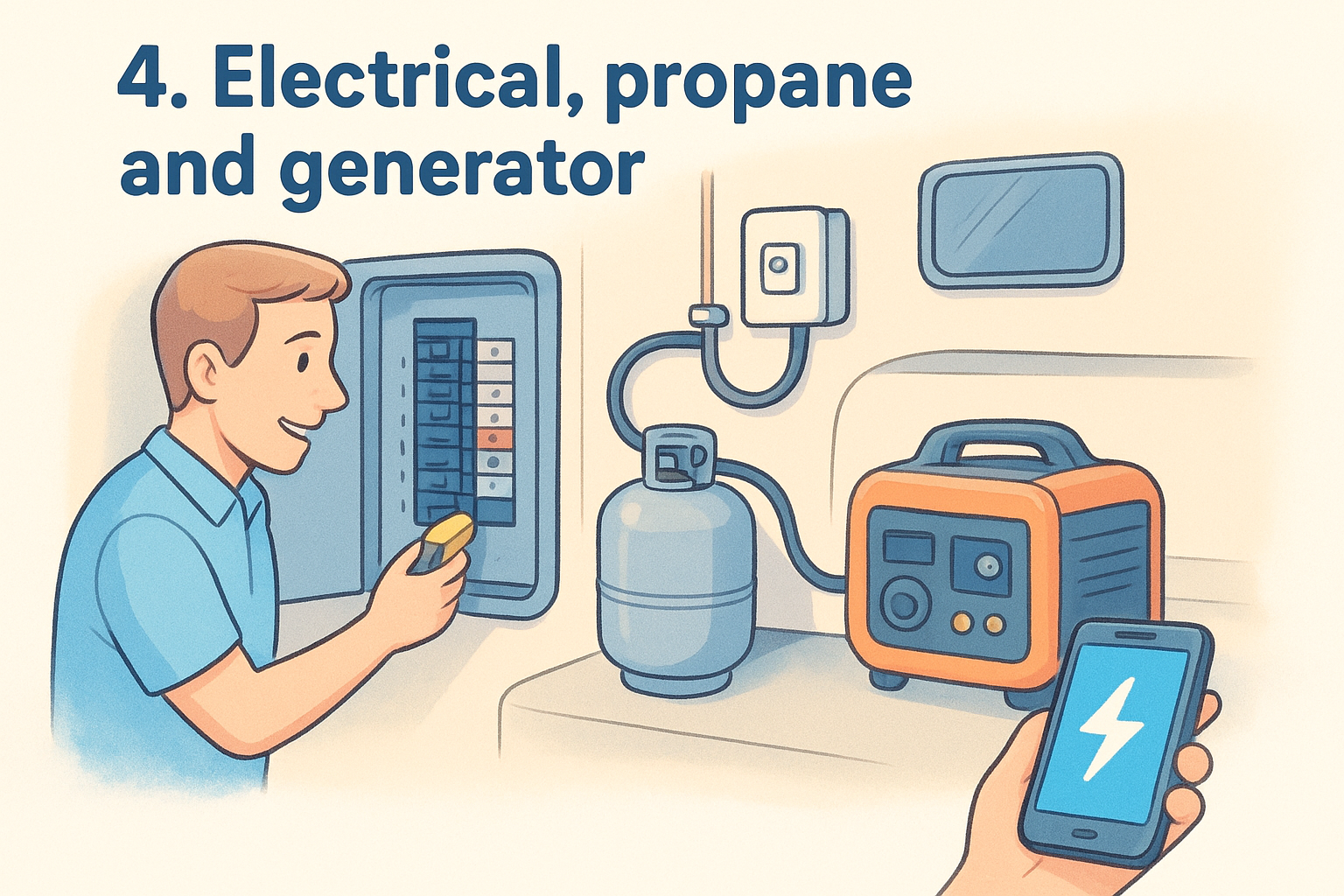
- Every light, vent fan, outlet, and USB port works
- The breaker panel is clean, with no scorch marks or non-factory wiring
- The stove and oven light, and the fridge and water heater run in gas mode
- The furnace fan starts, ignites, and pushes warm air from the vents
- The generator starts easily and runs at least 15 minutes under load without surging
- A technician can run a propane pressure and leak test if you're serious
Test every system on every power source, not just the one the seller prefers.
Red flags
Extension cords feeding the interior, tape-wrapped splices, and slides that groan or move unevenly are expensive problems. Swollen batteries and a generator that surges also deserve attention. Be wary of the phrase "it just needs a fuse." If it were that simple, the seller would have fixed it before listing.
What to ask the seller
Ask how old the batteries are and when the generator was last serviced. Check the generator hour meter against that answer. Low hours with no service is not a good sign.
5. Plumbing, tanks, heat and cooling
What to check
Run the plumbing and climate systems long enough to see them fail, because a quick on and off proves nothing. Ask the seller to start the fridge and water heater before you arrive. Run the pump, then connect to city water and repeat. Flush the toilet, check under sinks and behind the toilet for drips, and sniff the drains. This is one of the most overlooked things to look for when buying a used RV.
Air conditioner Cold air from every vent, no ice, no odd noises 10 to 15 minutes Furnace Fan starts, burner lights, warm air at each vent 10 to 15 minutes Water heater Hot water at the tap, no leaks around the tank About 30 minutes Refrigerator Cools on both electric and propane Several hours Pump and faucets Every tap, shower, and flush on pump, then city water About 10 minutesGive each system real time to run, because a quick demo hides the failures.
Red flags
A pump that cycles when no tap is open points to a leak. Rusty or discolored water, foul drain odors, and a corroded water heater are all warning signs. So is ice forming on the A/C or a fridge that never gets cold. Slow drains can mean blockages or venting trouble.
What to ask the seller
Ask whether the RV was winterized every year and whether anything has ever frozen. Freezing cracks lines and fittings, and those cracks become leaks. Ask how the holding tanks have been cleaned and how old they are.
6. Title, records and recall history
What to check
Confirm the title is clean and in the seller's name, because a bad title cannot be fixed after you pay. Match the VIN on the title to the VIN plate on the chassis. Then look up the VIN for open recalls using the NHTSA recall lookup. Paperwork is the dullest part of what to look for when buying a used RV, and one of the costliest to skip.
- Title brands such as salvage, flood, or rebuilt
- A lien release letter if the seller had a loan
- Bill of sale, registration, and owner's manuals
- Maintenance records and receipts for repairs
- The federal certification label showing weight rating and cargo capacity, so you know your gear, water, and passengers fit
- The RV's age, since some parks restrict older rigs, often around ten years, so check the parks you plan to use
If the title isn't clean and in the seller's name, nothing else on this list matters.
Red flags
Walk away if the seller's name isn't on the title or the title is "in the mail." A price far below market, missing records on an expensive rig, and pressure to pay fast by wire are all bad signs. Never send a deposit before you've seen the RV in person.
What to ask the seller
Ask a few direct questions and listen to how easily the answers come:
- How long have you owned it, and why are you selling?
- Was it used full-time, on weekends, or mostly stored?
- Has it ever been in an accident or had water damage?
- Were pets or smoking ever allowed inside?
7. A professional inspection and price check
What to check
Pay for a professional pre-purchase inspection, then use the written report to negotiate or walk away. Your own checks screen out bad rigs. A technician with moisture meters and propane gauges confirms the good ones. MobileRVService.com lists over 3,200 RV service providers, searchable by zip code and filterable by ratings, availability, and service category, including pre-purchase inspections. Mobile inspectors come to the seller's lot or storage yard.
Fees vary with RV type and size. A large motorhome costs more to inspect than a small trailer, and prices commonly run from a few hundred dollars to over a thousand. Before booking, ask for a sample report and confirm the inspector will test roof, systems, and chassis. Compare the asking price with similar local listings and a valuation guide such as J.D. Power. Then subtract the repair costs the report finds.
A good inspection fee is small next to one missed roof leak.
Red flags
A seller who refuses a third-party inspection, insists on choosing the inspector, or hurries you is hiding something. Buying sight unseen is the same gamble. If you're buying out of town, hire an inspector near the RV rather than trusting photos and a phone call.
What to ask the seller
Ask whether the inspector can have a few hours with the RV, with power, water, and propane connected. Ask whether the seller will hold the RV for you until the report comes back. A confident seller says yes to both.
Walk the lot with a plan
A used RV is worth buying when the roof is sound, the floors are firm, the tires are young enough, every system works, and the paperwork is clean. Work through the seven checks in order and stop at the first serious problem. Water damage and a bad title are reasons to walk away. Old tires or a dead appliance are reasons to negotiate.
Bring a flashlight, a phone charger, a notepad, and a friend who will notice what you miss. If you want a technician at the seller's lot, MobileRVService.com's VIP Membership can help you find a qualified inspector when you can't locate one yourself.