Motorhome Inspection Service: Costs, Scope, And How To Hire
Buying a used motorhome without a professional inspection is like gambling with your travel plans and your wallet. A motorhome inspection service sends a certified technician to evaluate the vehicle's mechanical systems, structural integrity, and living components before you commit to a purchase. Whether you're buying from a private seller or a dealership, this step can reveal hidden problems worth thousands in repairs.
This guide breaks down what a motorhome inspection covers, how much you should expect to pay, and how to find a qualified inspector in your area. You'll also learn what red flags inspectors look for and when to walk away from a deal.
At MobileRVService.com, we connect RV owners with over 3,200 mobile technicians and inspectors across North America, professionals who come directly to the vehicle's location. Finding the right person to evaluate your potential motorhome doesn't have to be a guessing game.
Why a motorhome inspection service matters
You're about to spend tens of thousands of dollars on a vehicle with more systems than most homes. A motorhome combines a drive train, electrical grid, plumbing network, and appliances into one package, and sellers don't always disclose problems they know about or issues they've never discovered. Professional inspection catches defects before you own them, giving you leverage to renegotiate or walk away.
Financial protection from hidden defects
Most used motorhomes carry unresolved maintenance issues that surface weeks after purchase. Water damage from roof leaks can hide behind fresh paint or new cabinet panels, and structural rot often costs more to fix than the coach is worth. An inspector uses moisture meters and thermal imaging to detect these problems before you sign paperwork.
Frame damage from accidents or poor storage shows up as stress cracks, misaligned doors, or slide-outs that bind. Sellers rarely mention collision history, and cosmetic repairs can mask serious chassis issues that make the vehicle unsafe at highway speeds. Discovering this after purchase leaves you with few legal options and a depreciating asset.
A thorough inspection typically costs between $300 and $700, but it can save you from buying a motorhome with $10,000 or more in hidden repair needs.
Safety concerns you can't see
Propane leaks, faulty brake systems, and worn suspension components create immediate danger for you and other drivers. Carbon monoxide detectors may not function, furnaces can leak exhaust into living spaces, and electrical shorts cause fires while you sleep. Inspectors test every safety system using diagnostic equipment most buyers don't own, identifying hazards that visual checks miss entirely.
What a motorhome inspection covers
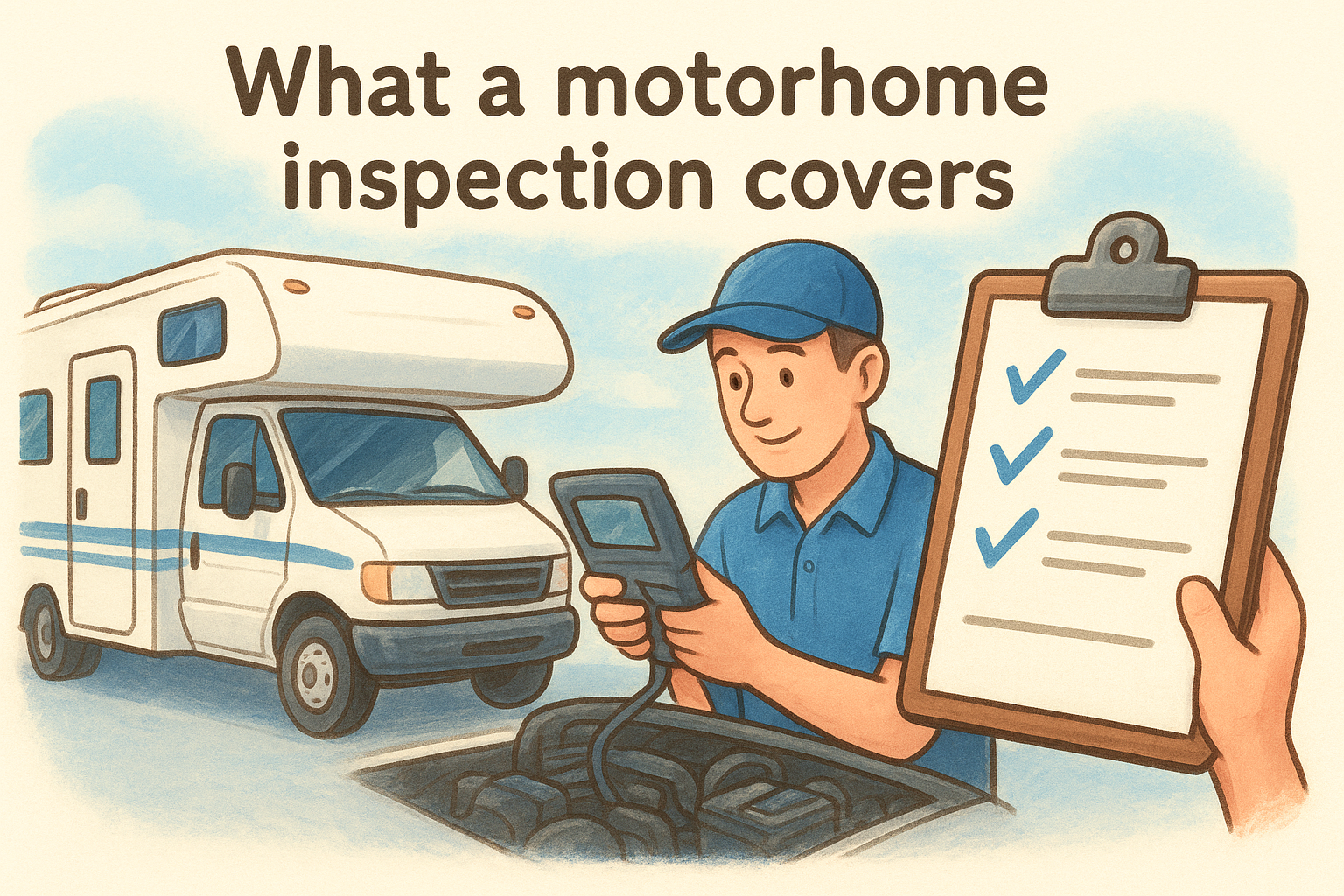
A qualified motorhome inspection service examines three major systems: the chassis and drive train, the house structure and utilities, and all onboard appliances. The process typically takes two to four hours depending on vehicle size and complexity. Inspectors follow a detailed checklist that covers hundreds of components, testing each system under operating conditions rather than relying on visual assessment alone.
Mechanical and structural evaluation
Your inspector checks engine performance, transmission function, and brake condition using diagnostic tools and road tests. They examine the frame for rust or accident damage, test suspension components for wear, and measure tire tread depth. Generator output, fuel system integrity, and exhaust components receive attention because failures in these areas create safety hazards or strand you far from qualified repair shops.
A comprehensive inspection typically reveals at least three to five issues that require attention, even on well-maintained motorhomes.
Interior systems and appliances
Plumbing gets tested for leaks and proper drainage, while the electrical system undergoes voltage checks at every outlet and fixture. Inspectors run the furnace, air conditioner, refrigerator, and water heater through full cycles to verify operation. Roof condition matters most because water intrusion destroys cabinetry and floor structure, so inspectors look for cracked sealant, loose vents, and membrane damage that lets moisture inside.
Motorhome inspection cost and what affects price
Most motorhome inspection service providers charge between $300 and $700 for a complete pre-purchase evaluation. Class A motorhomes at the higher end of that range cost more to inspect than smaller Class B camper vans because they contain more systems and square footage to examine. You'll pay for the inspector's time, expertise, and the specialized equipment they bring to test electrical systems, plumbing, and structural integrity.
Price factors that increase your bill
Vehicle age plays a significant role in inspection duration. Older motorhomes require more detailed examination of structural components, especially around slide-outs and roof edges where water damage accumulates. Inspectors spend extra time checking chassis rust, outdated electrical panels, and obsolete appliances that fail more frequently than modern equipment.
Geographic location affects pricing because labor rates vary across regions and travel distance matters. Inspectors in metropolitan areas charge more than those in rural markets, and some add mileage fees if they drive over 50 miles to reach your vehicle.
Paying $500 for a thorough inspection often prevents you from buying a motorhome that needs $15,000 in structural repairs.
How to hire the right inspector
Finding a qualified motorhome inspection service requires more than searching online reviews. You need someone with specific RV credentials and hands-on experience working with the exact systems in your prospective motorhome. Start your search by asking sellers, local RV dealerships, or campground owners for referrals to independent inspectors they've seen produce thorough reports.
Check certifications and experience
Look for inspectors certified through NRVIA (National RV Inspectors Association) or similar professional organizations that require ongoing training. Ask how many years they've worked specifically with motorhomes, not just general RV experience. Someone who spent decades repairing Class A coaches understands failure points better than a newly certified inspector who mainly services travel trailers.
A certified inspector with five or more years of motorhome-specific experience will catch problems that general mechanics miss.
Ask the right questions before booking
Request a sample inspection report to see what level of detail you'll receive. Find out whether they use diagnostic equipment like moisture meters and thermal cameras or rely only on visual checks. Confirm they'll test every system under operating conditions, including running the generator, checking slide-out alignment, and evaluating roof integrity from the top surface.
How to prepare and use the report
Schedule your motorhome inspection service at least three days before you plan to finalize the purchase. This timing gives you room to negotiate repairs or cancel the deal if major defects surface. You'll need to provide full access to the vehicle, including shore power hookups, propane supply, and clearance for the inspector to climb on the roof and slide underneath the chassis.
Make the vehicle accessible for inspection
Arrive at the inspection location with keys, manuals, and maintenance records in hand. Fill the fresh water tank and propane bottles so the inspector can test all systems under actual operating conditions. Clear out personal items that block access to storage compartments, service panels, and mechanical spaces where critical components hide.
Providing complete access and documentation helps inspectors find problems faster and deliver more accurate reports.
Review findings and negotiate repairs
Your inspection report becomes your negotiation tool with sellers. Use documented defects to request a price reduction equal to estimated repair costs or ask the seller to fix major issues before closing. Walk away from motorhomes with structural damage, frame problems, or water intrusion that exceeds 20% of the purchase price, as these defects often signal deeper issues the inspector couldn't reach.
Next steps
You now understand how a motorhome inspection service protects your investment and reveals problems before they become your responsibility. The crucial next step is scheduling an inspection with a qualified professional who brings diagnostic equipment and years of hands-on RV experience to your evaluation. Don't skip this process even if the motorhome looks pristine or the seller seems trustworthy, because hidden defects surface after purchase when you have zero leverage to negotiate repairs or refunds.
Finding the right inspector shouldn't delay your purchase timeline or location. MobileRVService.com connects you with over 3,200 mobile RV technicians and inspectors across North America, professionals who travel directly to wherever your prospective motorhome sits. Enter your zip code to find certified inspectors in your area who can schedule evaluations within days, not weeks. The VIP membership tier provides concierge assistance if you need help locating an available inspector quickly for urgent purchase decisions.