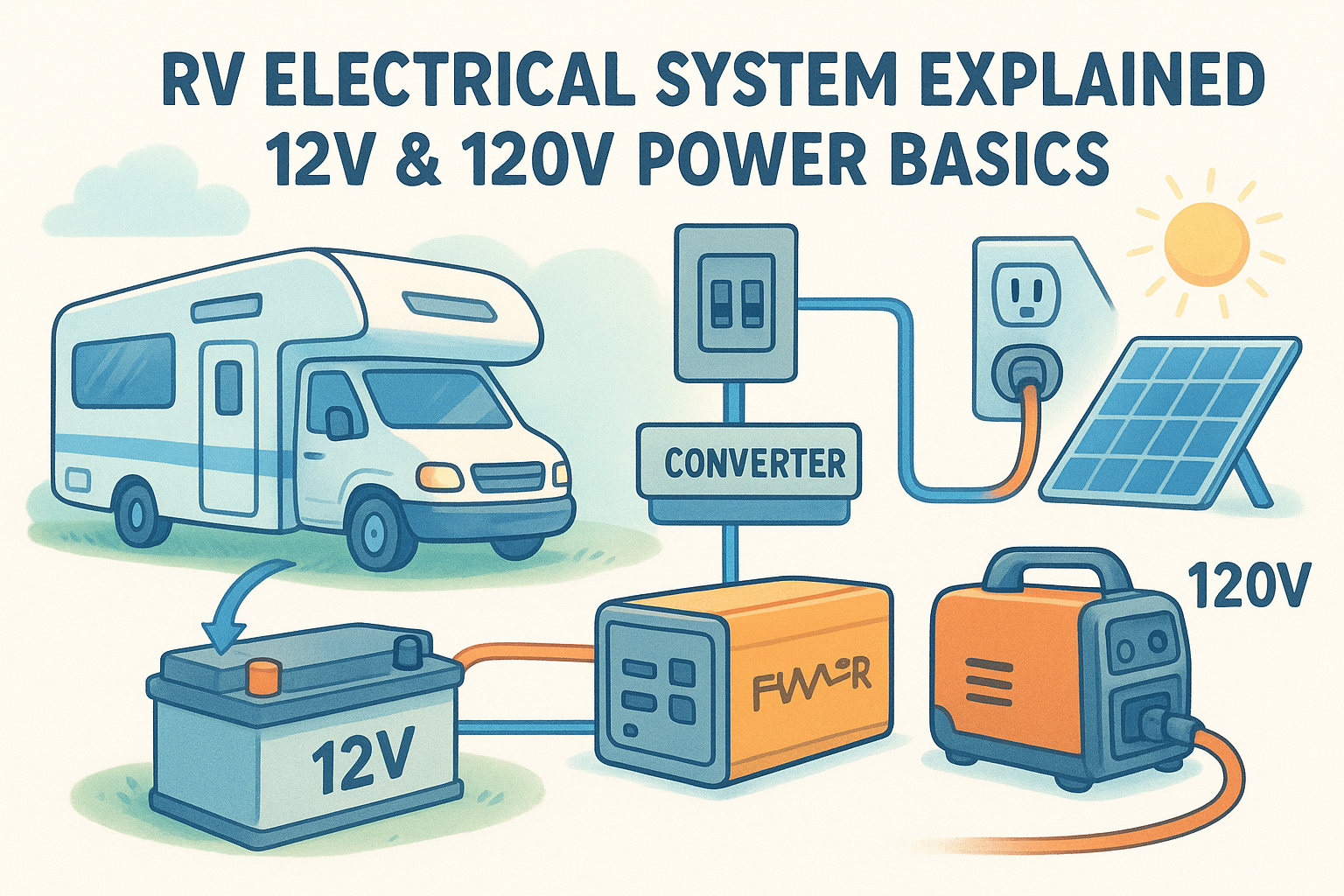
RV Electrical System Explained: 12V & 120V Power Basics
Your RV runs on two separate electrical systems, and confusing them is how most owners end up stuck with dead batteries, tripped breakers, or a fried converter. If you've ever wondered why your lights work fine but your air conditioner won't turn on, or why your inverter matters more than you thought, you're dealing with the gap between 12-volt DC and 120-volt AC power. This rv electrical system explained guide breaks down both sides so the wiring under your rig finally makes sense.
The short answer: your 12V system runs off batteries and powers lights, water pumps, fans, and slide-out controls, while your 120V system mimics household power for outlets, microwaves, and rooftop AC units. They connect through your converter and inverter, and understanding that link is the key to diagnosing most electrical problems yourself instead of guessing.
Below, you'll get a plain-language walkthrough of how each system works, what components tie them together, and the warning signs that mean it's time to call for help. And if a problem turns out bigger than a fuse swap, MobileRVService.com connects you with mobile technicians who diagnose electrical issues on-site, wherever you're parked.
Why understanding your RV's electrical system matters
Most RV owners never open their electrical panel until something stops working, and that's usually the moment they realize how little they actually know. Your rig depends on two completely different voltage systems working in sync, and a basic misunderstanding of how they interact can lead to a dead battery bank, a fried appliance, or worse, an electrical fire. The National Fire Protection Association has long flagged electrical malfunctions as a leading cause of RV fires, which is reason enough to treat this as more than a hobbyist curiosity.
Skipping past the basics costs you in ways that add up fast. A battery drained too low too many times loses capacity permanently. A converter left to overcharge cooks your batteries in a season instead of three years. An inverter sized wrong for your microwave trips every time you try to heat up dinner. None of these are exotic failures. They're the predictable result of not knowing what's actually running where.
If you don't know which system powers what, you can't tell a five-minute fix from a five-hundred-dollar mistake.
What happens when something goes wrong on the road
Electrical failures rarely wait for a convenient time. Your slide won't retract the morning you need to leave a campsite, or your AC unit dies during a heat wave three states from home. Understanding the difference between a 12V problem and a 120V problem determines how fast you get back on the road, because the two systems fail in completely different ways and need different tools to fix.
Here's a quick breakdown of what's typically at stake when each system goes down:
12V DC Lights, water pump, furnace fan, slide motors Dim lights, slow pump, no response from controls High if it strands you 120V AC Outlets, microwave, rooftop AC, residential fridge Breaker trips, no shore power, appliance won't start Moderate unless it's extreme heatRecognizing which column your problem falls into means you can decide in minutes whether it's a battery issue you can jump-start yourself or a shore power problem that needs a licensed technician.
The confidence to troubleshoot before you panic
Owners who understand their power setup save real money because they stop paying for service calls that a five-minute check could have solved. Before assuming the worst, a working knowledge of your system lets you rule out the obvious:
- Check if a breaker tripped instead of assuming the converter failed.
- Test battery voltage with a cheap multimeter before calling for a replacement.
- Confirm shore power is actually reaching your pedestal before blaming your RV.
- Look at your inverter's load rating before assuming it's broken.
That kind of baseline knowledge doesn't just save cash, it changes how you travel. Full-timers and weekend campers alike report more confidence boondocking off-grid once they understand exactly how many amp-hours their battery bank holds and how long their appliances will run before needing a recharge. You stop guessing and start planning, which is really the whole point of learning how your RV's power actually works in the first place.
How to manage 12-volt and 120-volt power in your RV
Managing both systems well comes down to knowing which one you're pulling from at any given moment and respecting its limits. Your 12V battery bank runs everything when you're off-grid, so watching your state of charge matters as much as watching your fuel gauge. Your 120V system only works when you're plugged into shore power, running a generator, or drawing through an inverter, so mixing those sources up is the fastest way to trip a breaker or drain a battery you didn't realize was carrying the load.
Keeping your 12V system healthy
Batteries hate two things: sitting at low charge and sitting fully depleted. Lithium batteries tolerate deeper discharge cycles than lead-acid, but neither likes being ignored for weeks at a stretch. A few habits keep your DC side reliable:
- Check voltage weekly with a multimeter; anything under 12.2V on a resting lead-acid battery means it's time to charge.
- Avoid discharging lead-acid batteries below 50% capacity to protect their lifespan.
- Turn off parasitic draws like propane detectors and clocks when storing the rig long-term.
- Match your solar or converter charging profile to your battery chemistry, since lithium and lead-acid charge differently.
Treat your battery bank like a fuel tank you can't glance at, because ignoring it costs you range and money.
Managing your 120V power sources
Shore power, generators, and inverters all feed the same 120V outlets, but each has different limits. Plugging into a 30-amp pedestal while running your AC, microwave, and water heater at once will trip the breaker every time. Generators need proper ventilation and regular oil changes to keep producing clean power, and inverters only handle loads up to their rated wattage before shutting down or overheating.
Running your rv electrical system explained correctly means load-balancing on purpose instead of by accident. Before flipping on a high-draw appliance, ask what else is already running. Spread big loads like the microwave and air conditioner across separate times rather than stacking them, and know your shore power amperage so you're not asking a 30-amp connection to do 50-amp work.
Switching between sources smoothly is the real skill here. When you disconnect from shore power, your converter should automatically hand charging duties to your battery bank, and your inverter should pick up 120V loads without you noticing a flicker. If you do notice a flicker, or worse a dead outlet, that's your first clue something in the connection between systems needs attention before it becomes a bigger repair.
Key components that keep your RV's power running
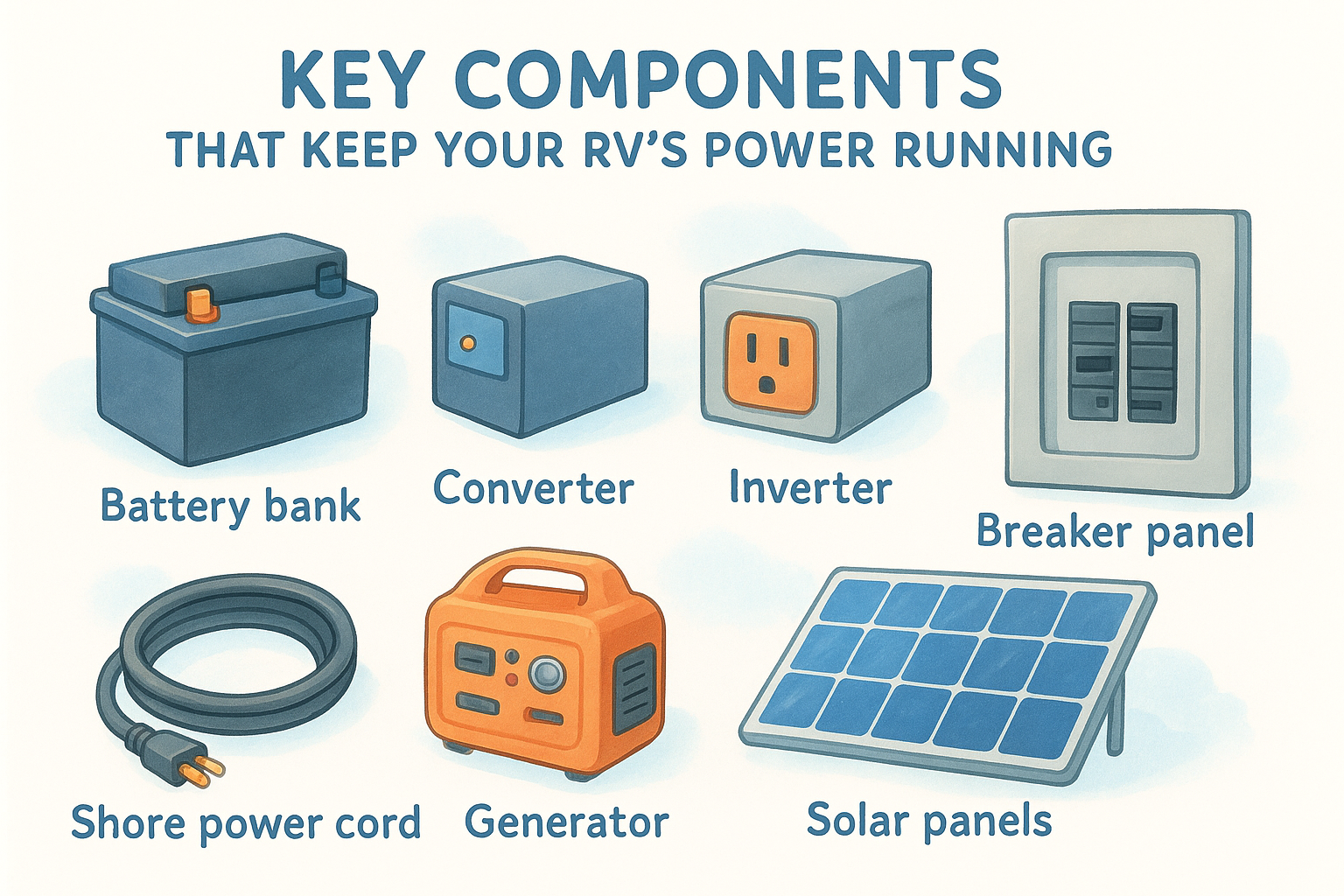
Every RV electrical system is really just a handful of parts working together, and once you can name them, troubleshooting stops feeling like guesswork. Batteries store your 12V power, the converter turns 120V into usable 12V charging current, the inverter does the reverse for AC appliances, and a breaker panel or fuse box protects everything from overload. Add in a shore power cord, generator, and possibly solar panels, and you've got the full cast of characters that keeps lights on and appliances running no matter where you're parked.
The core hardware you're relying on
Recognizing what each part actually does helps you narrow down a problem before you start pulling panels apart. Here's a quick reference:
Battery bank Stores 12V power for off-grid use Loses charge capacity, won't hold voltage Converter Charges batteries from 120V shore power Overcharges or stops charging entirely Inverter Converts 12V battery power to 120V AC Trips on overload, hums or shuts off Breaker panel Protects 120V circuits from overload Breaker trips repeatedly Fuse box Protects 12V circuits from overload Blown fuse cuts power to one system Shore power cord Connects RV to campground pedestal Loose prongs, corroded connections Generator Produces backup 120V power off-grid Won't start, produces dirty powerLearn these seven parts and you can diagnose most electrical failures before you ever pick up a phone.
How these parts depend on each other
Generators and shore power both feed your converter, which then tops off your battery bank, so a failure anywhere in that chain shows up as a charging problem even if the actual fault is somewhere else. Inverters pull the opposite direction, drawing stored 12V energy back out as usable AC power, which means a struggling battery bank can make a perfectly healthy inverter look broken. Solar panels complicate the picture slightly by adding a charge controller into the mix, a small but critical piece that regulates how much current reaches your batteries so panels don't overcharge them on a sunny afternoon.
Wiring quality ties all of this together more than most owners realize. Corroded terminals, loose grounds, and undersized cable gauge cause more mystery electrical problems than any single failed component, which is worth remembering before you start replacing parts that were never actually broken.
Common RV electrical problems and how to troubleshoot them
Most electrical failures fall into a short list of repeat offenders, and recognizing the pattern saves you hours of guessing. Tripped breakers, dead batteries, flickering lights, and appliances that won't start account for the vast majority of service calls mobile technicians run, and nearly all of them have a logical starting point once you know where to look.
Diagnosing the usual suspects
Before assuming the worst, work through the problem systematically instead of jumping straight to a part replacement. A methodical approach catches the cheap fixes before they turn into expensive ones:
- Lights dim or slow-moving slides: check battery voltage first; anything below 12V under load points to a weak or failing battery.
- Breaker trips repeatedly: count what's running simultaneously, since overloading a 30-amp circuit is far more common than a bad breaker.
- No 120V power at all: verify shore power is reaching the pedestal with a simple outlet tester before blaming your RV's wiring.
- Inverter shuts off under load: compare your appliance's wattage draw against the inverter's rated capacity, since undersized inverters fail predictably.
- One outlet dead, others working: look for a blown fuse or a GFCI outlet that tripped somewhere in the circuit.
Nine times out of ten, the fix is smaller than the panic that preceded it.
When the problem is bigger than a fuse
Sometimes the checklist above doesn't turn up an easy answer, and that's your signal to stop troubleshooting and start calling for help. Corroded battery terminals, a failing converter board, or a generator producing dirty power are repairs that need proper tools and testing equipment, not trial and error at a campsite. Pushing forward without the right diagnostics risks damaging a component that was fine to begin with, or worse, creating a fire hazard.
Understanding your rv electrical system explained in plain terms helps you describe the problem accurately when you do call for help, which speeds up diagnosis considerably. Telling a technician "my breaker trips whenever the AC and microwave run together" gets you a faster, cheaper visit than "my power doesn't work." That specificity is often the difference between a same-day fix and a multi-day wait for parts, and it's exactly the kind of detail a mobile technician needs before they even arrive on-site.
Owners who travel far from home base benefit most from knowing this. A minor issue that would take five minutes at a dealership back home can strand you for days if you can't explain what's actually happening, so treat troubleshooting knowledge as part of your emergency kit, right alongside your spare fuses and jumper cables.
Safety and maintenance tips for a reliable power system
A reliable electrical setup isn't luck, it's the result of small habits repeated every season. Preventing failures costs far less than fixing them, and most of the routine work takes only minutes once it becomes part of your regular RV upkeep. Getting comfortable with this rv electrical system explained approach to maintenance means fewer surprises and longer-lasting components across the board.
Building a maintenance routine that actually works
Owners who stay ahead of problems tend to follow the same short list of habits, regardless of rig size or how often they travel. Consistency matters more than intensity here.
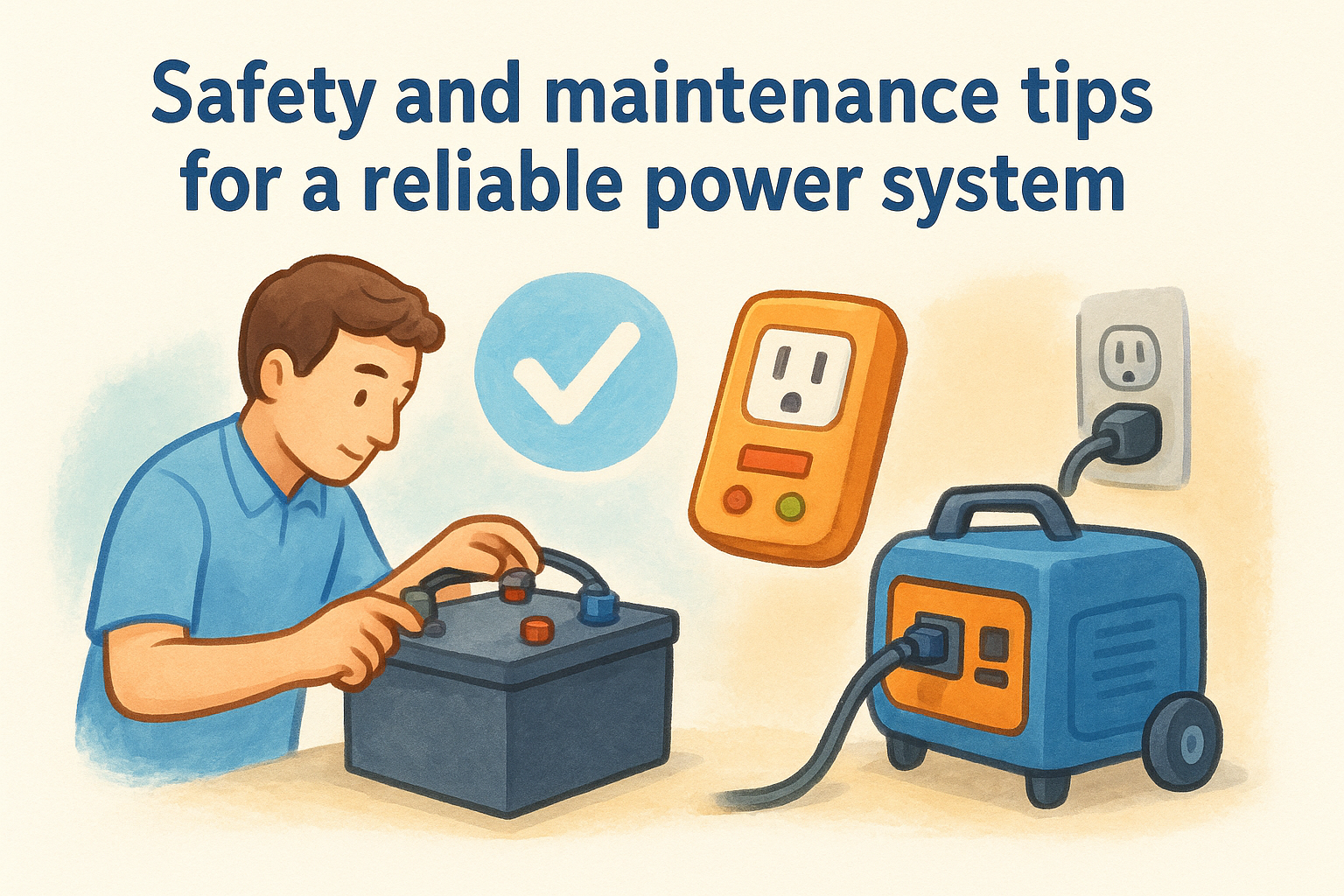
- Inspect battery terminals every month for corrosion or loose connections, since a weak connection mimics a dead battery.
- Test your GFCI outlets quarterly by pressing the test button, confirming they trip and reset properly.
- Check shore power cord prongs before every trip for pitting or discoloration, a sign of overheating.
- Run your generator under load monthly if it's not in regular use, preventing fuel system gunk and stale power output.
- Clean converter and inverter vents twice a year so dust doesn't cause overheating shutdowns.
A five-minute inspection habit prevents most of the electrical failures that end up as expensive service calls.
Protecting yourself and your rig from real danger
Safety matters as much as function, and electrical shortcuts are how RV fires start. Never bypass a breaker or fuse with a higher-rated part just to stop the tripping. That breaker is protecting wiring rated for a specific load, and overriding it turns a minor inconvenience into a genuine fire risk. Overloaded 30-amp connections running 50-amp worth of appliances are a common culprit, so respect your shore power rating even when it means running the microwave and AC at separate times.
Grounding deserves attention too. A missing or corroded ground wire won't announce itself until you touch a metal surface and feel a tingle, which is your body completing a circuit that should never reach you. Test your RV's ground fault protection annually, and if you ever smell burning plastic or see scorch marks near an outlet, shut off power at the source immediately rather than investigating further yourself.
Seasonal storage brings its own risks. Batteries left connected but unused for months drain slowly through parasitic loads and can freeze if left discharged in cold climates, cracking cases and leaking acid. Disconnecting your battery bank or using a maintenance charger during storage protects both your investment and your safety when you pull the rig back out in spring.
Staying powered up on the road
Knowing your 12V and 120V systems doesn't just satisfy curiosity, it changes how you handle every trip from here on out. You'll spot a weak battery before it strands you, catch an overloaded circuit before it trips your breaker, and know when a problem needs more than a multimeter and a screwdriver. That last part matters most, because even seasoned owners eventually run into a converter board or generator issue that's beyond a driveway fix.
When that happens, you don't need to hunt down a dealership hours away or wait days for an appointment. Mobile technicians can diagnose and repair your electrical system right at your campsite, which keeps your trip on track instead of derailing it. If you want backup ready before you're stuck on the shoulder of a highway, check out the remote assistance and membership features built specifically for RV owners who'd rather travel confident than travel lucky.