RV Furnace Repair near Me: How to Find a Mobile Pro
Your furnace kicks on, clicks a few times, then goes silent. Or your AC blows warm air on a 95 degree afternoon in a campground with no shade. Either way, you need help now, not a service appointment three weeks out at a dealership two states away. Searching rv furnace repair near me at 9 p.m. shouldn't leave you scrolling through dead phone numbers and shops that don't work on rigs.
The fix is finding a mobile technician who comes to your site, whether that's a campground, a driveway, or a highway pullout. The same logic applies if you need mobile rv air conditioning repair near me instead, since most mobile techs handle both heating and cooling systems, along with the electrical and propane components tied to them, and the RV air conditioner repair service options look much the same.
This guide walks through exactly how to vet a mobile rv furnace repair near me search result, what questions to ask before a tech shows up, and how a directory like ours narrows thousands of options down to someone qualified, available, and close to your actual location.
Signs your RV furnace or AC needs a repair pro
Not every furnace hiccup means you need a technician tomorrow morning. Some issues are quick fixes you can handle from the driver's seat, like a tripped breaker or a thermostat with dead batteries. Others point to a failing component that only gets worse the longer you wait, and those are the ones worth pulling up rv furnace repair near me for before you're stuck in freezing temps with no heat.
Furnace red flags
A furnace that's actually failing tends to show a pattern, not a one-off glitch. Watch for these signs over a day or two of normal use:
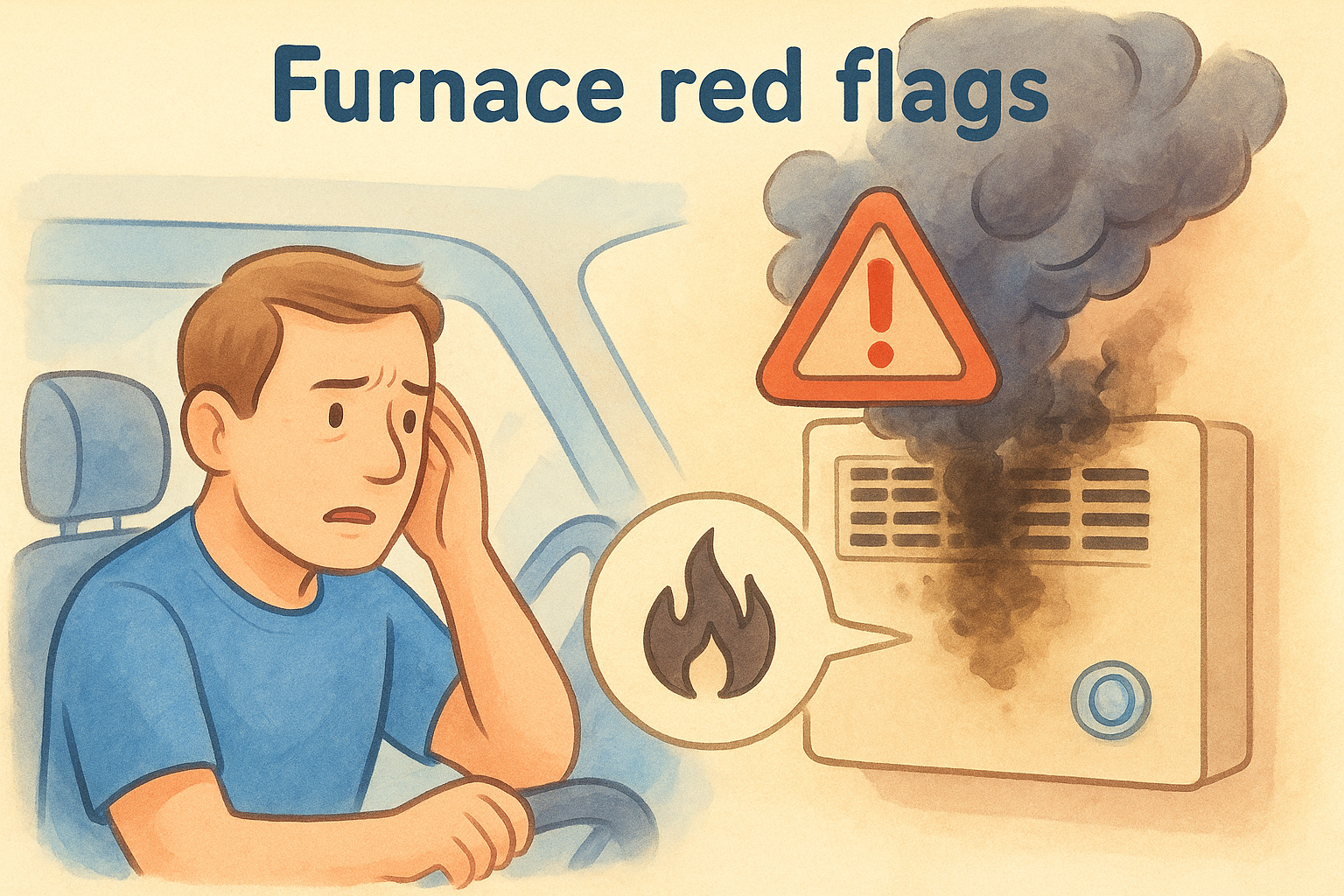
- Repeated clicking with no ignition, which usually points to a bad igniter or clogged sail switch
- A burning or scorched smell when the furnace kicks on
- Blower runs but no heat comes through the ducts
- Soot buildup around the exterior exhaust vent
- Furnace shuts off mid-cycle before your rig reaches temperature
Soot around the vent or a scorched smell isn't a wait-and-see situation. That combination points to incomplete combustion, and it's a carbon monoxide risk, not just an inconvenience.
If you smell burning near your furnace vent, stop using it and call a mobile tech the same day.
AC warning signs
Cooling problems show up differently but follow the same logic: intermittent quirks can often wait, constant symptoms usually can't, and an older unit nearing how long RV air conditioners typically last tends to fail on the constant side. If you're already typing mobile rv air conditioning repair near me into your phone, chances are you're seeing one of these:
- Airflow feels weak even on the highest fan setting
- Unit blows air that's barely cooler than the outside temperature
- Loud grinding, rattling, or squealing from the roof unit
- Water dripping from the ceiling vent inside the rig
- Breaker trips every time the compressor tries to start
A breaker that trips repeatedly means the compressor is drawing more current than it should, and running it anyway can burn out the motor entirely. That's a same-day call, not a next-week appointment.
When to skip the DIY route
Certain symptoms should send you straight to a professional technician instead of a screwdriver and a YouTube tutorial. Propane smells, any hint of carbon monoxide, exposed wiring, or a unit that trips breakers on startup all fall into that category. Everything else, like a dusty filter or a loose vent cover, is fair game to check yourself first. Knowing which bucket your problem falls into saves you money on a service call you didn't need, and it keeps you from making a small issue into an expensive one.
Step 1. Search for mobile RV repair services near you
Start with a zip code search instead of a generic city name. Mobile techs cover specific service radiuses, and a search tied to your exact location filters out shops that would need three hours of drive time to reach you. On MobileRVService.com, you punch in your zip code and pull up a list of vetted technicians ranked by distance, so you're not calling around county lines wondering who actually services your campground.
Widen your search terms
Generic searches like "RV repair" often surface RV dealerships and parts stores, not the mobile techs who'll drive to your site, so it helps to know what mobile RV repair includes and how it works. Try these variations to filter for the right kind of help:
- "mobile rv furnace repair near me"
- "mobile rv air conditioning repair near me"
- "rv furnace repair [your zip code]"
- "emergency rv technician [campground name or city]"
Swapping in your zip code or campground name usually surfaces smaller, independent techs that a broad city search buries under bigger shops.
Filter for availability, not just proximity
A five-star technician forty minutes away does you no good if he's booked solid until Thursday. Filter results by current availability first, then rating, especially if you're dealing with no heat overnight or no AC in triple-digit heat. Our directory lets you filter by service category and availability at the same time, so you're not calling five numbers before finding someone who can actually show up today.
A nearby technician with a three-day wait helps you less than a slightly farther one who's free this afternoon.
If you strike out on your own after checking a handful of listings, that's exactly what the VIP membership tier exists for. It hands your search to a concierge who tracks down a qualified tech in your area, so you're not stuck refreshing search results while your rig sits in the heat.
Step 2. Check technician certifications and brand experience
Once you've got a shortlist of available technicians, don't book the first one who answers the phone. A quick certification check separates a qualified technician from someone who just watched enough videos to sound confident. This step takes five minutes and can save you a repeat visit if the first repair doesn't hold.
Certifications that matter
Look for these credentials before you commit to an appointment:
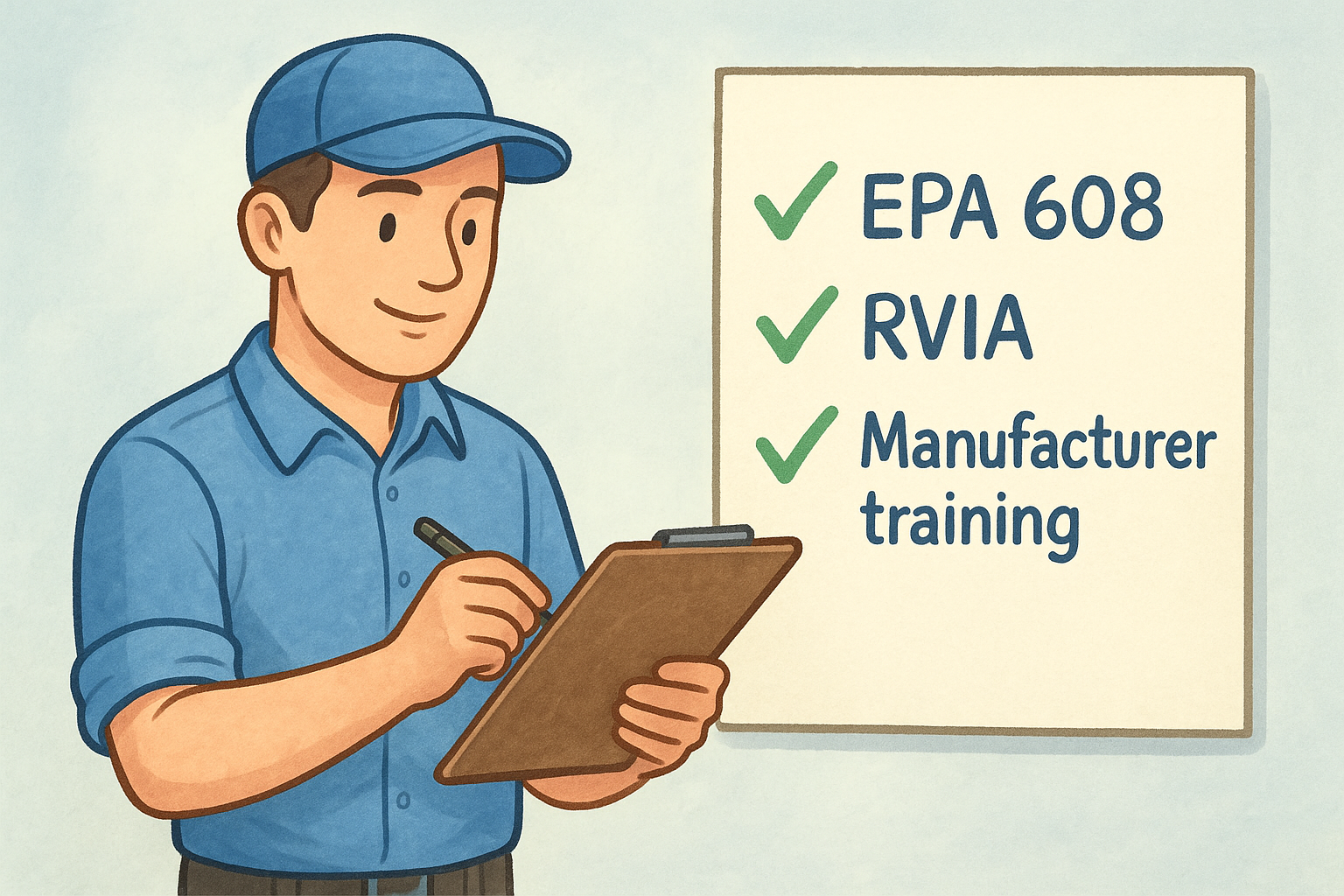
- EPA Section 608 certification, required for anyone handling refrigerant in your AC unit
- RVIA or RVDA-affiliated training, including RVTI technician training levels, which covers RV-specific systems beyond general HVAC work
- Manufacturer training from Suburban, Atwood, Dometic, or Coleman-Mach, the brands behind most RV furnaces and rooftop ACs
- Liability insurance, so you're covered if something goes wrong during the repair
Asking "are you EPA 608 certified" is a fair question to open with, and any legitimate mobile tech will answer it without hesitation.
A tech without EPA certification legally can't touch your refrigerant lines, so skip anyone who dodges the question.
Match the technician to your specific brand
Brand experience matters more than general HVAC background here. A furnace igniter on a Suburban unit doesn't work the same way as one on an Atwood, and a tech who's only worked Dometic ACs might fumble a Coleman-Mach compressor. Before booking, tell the technician your unit's make and model, then ask directly if they've serviced that brand before.
Technicians listed on MobileRVService.com show their service categories and specialties up front, so you can filter for furnace or AC experience with your exact brand instead of guessing over the phone. Confirming brand experience upfront beats discovering mid-repair that your tech is troubleshooting a system he's never opened.
Step 3. Request quotes and compare repair costs
Before you agree to anything, get a written quote that breaks down parts, labor, and any trip or diagnostic fee. Phone estimates without a breakdown tend to grow once the tech is standing in your driveway, and "it'll probably run around $200" isn't a number you can hold anyone to. Ask specifically what happens if the diagnosis reveals a second problem, since that's the most common way a quote balloons mid-repair.
What repairs typically cost
Costs swing based on your rig's brand, the part needed, and whether you're paying for a house call on top of labor, and the full RV air conditioner repair cost breakdown shows where parts end and labor begins. Use these ranges as a baseline when comparing quotes:
Furnace igniter or sail switch replacement $150 to $350 Furnace circuit board replacement $250 to $450 AC capacitor or fan motor replacement $200 to $400 AC compressor replacement $600 to $1,200 Mobile service/trip fee $50 to $150A quote that skips the trip fee usually isn't the full picture, so ask for it in writing before you agree.
Compare at least two quotes when time allows
If your situation isn't a same-day emergency, get quotes from two technicians before booking. A price comparison catches the outlier, whether that's someone overcharging for a common part or someone underbidding because they're skipping a step. On MobileRVService.com, provider profiles show ratings and past customer feedback, which gives you a sense of whether a low quote reflects efficiency or corner-cutting. When every hour counts and you can't wait for a second bid, lean on the certification check from Step 2 instead, and book the available tech you already trust.
Step 4. Schedule your appointment and prep your RV
Once you've picked a technician and locked in a quote, confirm the appointment window in writing, whether that's a text, email, or the booking confirmation from the platform you used. Get a clear arrival time, not just a day, since mobile techs often juggle several stops and a vague "sometime Tuesday" can turn into a wasted afternoon waiting around your campsite.
What to ask before the tech arrives
Nail down these details ahead of time so nothing stalls the visit once your technician pulls up:
- Confirm your exact site location, including campground name, lot number, or gate code if you're in a resort or RV park
- Ask if the tech needs shore power or generator access to run diagnostic tools
- Clarify whether you need to be present the entire time or just at the start and finish
- Ask what payment methods they accept, since some independent techs don't take cards on-site
Skipping the location details is the single most common reason a mobile tech shows up late or not at all.
Prep your RV before the technician shows up
Clear a path to your furnace or AC unit before your appointment window opens. That means moving anything stored near the furnace access panel and, for roof AC repairs, making sure the ladder or roof access isn't blocked by an awning or slide. Pull out your owner's manual if you still have it, since it often lists the exact model number the tech needs to order RV parts online on the spot instead of coming back a second time.
Run the unit one more time right before the tech arrives so you can describe the exact symptom you're seeing, whether that's a clicking furnace or a compressor that trips the breaker. A tech who watches the failure happen in real time diagnoses faster than one working off your secondhand description from three days ago.
Staying comfortable on the road
A broken furnace or AC doesn't have to derail your trip. Once you know the warning signs, a zip code search puts a vetted mobile technician on your schedule in hours, not weeks. Check certifications, get a written quote, and prep your rig before the appointment, and you'll skip the repeat visits and surprise charges that make RV repairs so frustrating.
The fastest fix beats the cheapest one when you're sitting in a hot campsite or a cold driveway. Trust the process, lean on a vetted network instead of a random search result, and you'll be back to comfortable temperatures faster than you'd expect.
If you want ongoing peace of mind beyond a single repair, from priority scheduling to help sourcing hard-to-find parts, see the RV owner membership features built specifically for travelers who don't want to scramble the next time something breaks.