How Long Do RV Air Conditioners Last? Lifespan & Signs
Your RV air conditioner works hard, sometimes running for hours on end during summer trips through the desert or humid coastal campgrounds. So it's fair to ask: how long do RV air conditioners last, and how do you know when yours is on its way out? The answer isn't a single number. It depends on usage patterns, maintenance habits, and the climate you travel through most.
Most rooftop RV AC units last somewhere between 3 and 10+ years, but that range is wide for a reason. An owner who cleans filters regularly and runs the unit within its limits will get far more life out of it than someone who ignores maintenance entirely. Knowing where your unit falls on that spectrum can save you from a breakdown in the middle of a July road trip, or from replacing a unit that still has years left.
In this article, we break down what determines your RV air conditioner's lifespan, the warning signs that replacement is coming, and when a repair might be the smarter call. And if your AC does fail while you're on the road, MobileRVService.com connects you with mobile RV technicians near your location who can diagnose and fix the problem on-site, no need to tow your rig to a dealer.
Typical RV air conditioner lifespan in the real world
When people ask how long do RV air conditioners last, the honest answer is that the "real world" lifespan looks different from the manufacturer's spec sheet. Most units are built to handle years of demand, but how you use and maintain them determines where your unit lands in that range. A well-maintained rooftop AC on a Class A motorhome used seasonally can outlast a neglected unit on a travel trailer that runs 12 hours a day.
The standard range most owners see
For most RV owners, a rooftop air conditioner lasts between 3 and 10 years, with many units hitting closer to 5 to 7 years under average conditions. That said, some owners report running the same unit for 12 or more years with consistent maintenance and moderate use. The lower end of that range usually reflects heavy seasonal use, skipped filter cleanings, or exposure to harsh coastal or desert climates over several years.
A unit that gets regular filter cleaning, annual coil inspections, and proper storage prep during winter months can often reach the upper end of that range without major issues.
Units rated at 13,500 BTU or 15,000 BTU are the most common on the market, and both carry roughly the same general lifespan. The difference between a unit dying at year 4 versus year 10 almost always comes down to maintenance frequency rather than the unit's rated cooling power.
How usage patterns shift the numbers
Full-time RVers face a different reality than weekend travelers. If you live in your RV year-round and park in hot southern climates like Texas, Arizona, or Florida from May through October, your AC compressor runs far more hours per year than a seasonal camper. High compressor run time accelerates wear on capacitors, fan motors, and seals, which are the components most likely to fail first.
Seasonal travelers who use their RV two to four months per year and store it properly during the off-season tend to see longer AC lifespans simply because the total run hours stay low. It comes down to basic wear mechanics: more cycles mean more stress on the components doing the work.
How rooftop placement affects longevity
Rooftop AC units take a beating from UV exposure, rain, hail, and road vibration that a standard home window unit never faces. The shroud (the plastic cover on top of your roof) protects the internal components, but it also degrades over time. Cracks in the shroud let water into the unit, which can corrode the evaporator coil and cause premature failure.
Road vibration is also a factor that many owners overlook. Every mile you drive loosens screws, shifts foam gaskets, and stresses the mounting bolts that seal your unit to the roof. A unit that isn't checked and re-tightened periodically can develop leaks and increased vibration noise long before the compressor itself gives out. Checking your roof shroud and mounting hardware once a year takes under 30 minutes and can add meaningful years to your unit's life.
What makes RV AC units wear out faster
Understanding what shortens an AC unit's life helps you answer the question of how long do RV air conditioners last for your specific situation. Several factors push a unit toward early failure, and most of them are within your control. Skipped maintenance and harsh operating conditions are the two biggest culprits, and they often work together to cut years off what could have been a long-running unit.
Neglected filters and coils
The air filter on your rooftop unit does one job: keep debris off the evaporator coil. When you skip regular filter cleaning, dust and dirt build up on the coil surface, reducing airflow and forcing the compressor to work harder to reach the same cooling output. Over time, that added strain shortens the compressor's life in a direct and measurable way.
Dirty evaporator and condenser coils are one of the leading causes of premature AC failure in RVs. A coil clogged with grime cannot transfer heat efficiently, which causes the system to run hotter and longer than it should. Most manufacturers recommend cleaning the filter every two weeks during heavy use, but many owners go entire seasons without touching it.
Compressor failure is often the final result of years of restricted airflow, and replacing a compressor typically costs more than buying a new unit outright.
Running the unit beyond its limits
Oversized rigs paired with undersized AC units create constant stress on the system. If your air conditioner runs non-stop for hours without ever cycling off, that is a strong signal the unit is too small for the space it is trying to cool. That continuous run time wears out the fan motor, capacitors, and contactors far faster than a properly matched unit cycling on and off throughout the day.
Extreme heat adds another layer of strain. When outside temperatures climb above 100°F, most rooftop units work hard just to keep your RV below 80°F. Running other heat-generating appliances at the same time only makes it worse. Reducing your interior heat load through window shades, awnings, and roof vents takes direct pressure off your AC and extends how long it holds up.
How to make your RV air conditioner last longer
The question of how long do RV air conditioners last has a lot to do with what you do between trips. A few simple habits, repeated consistently, add years to a unit that would otherwise wear out early from neglect. None of these steps require special tools or professional training, and most take under an hour to complete.
Clean the filter and coils on a regular schedule
Your air filter is the first line of defense against coil contamination. Cleaning it every two weeks during heavy use keeps airflow strong and reduces the strain your compressor carries on every cooling cycle. Pull the filter out from inside your RV (usually behind the ceiling vent cover), rinse it with water, let it dry fully, and reinstall it. That process takes about ten minutes.
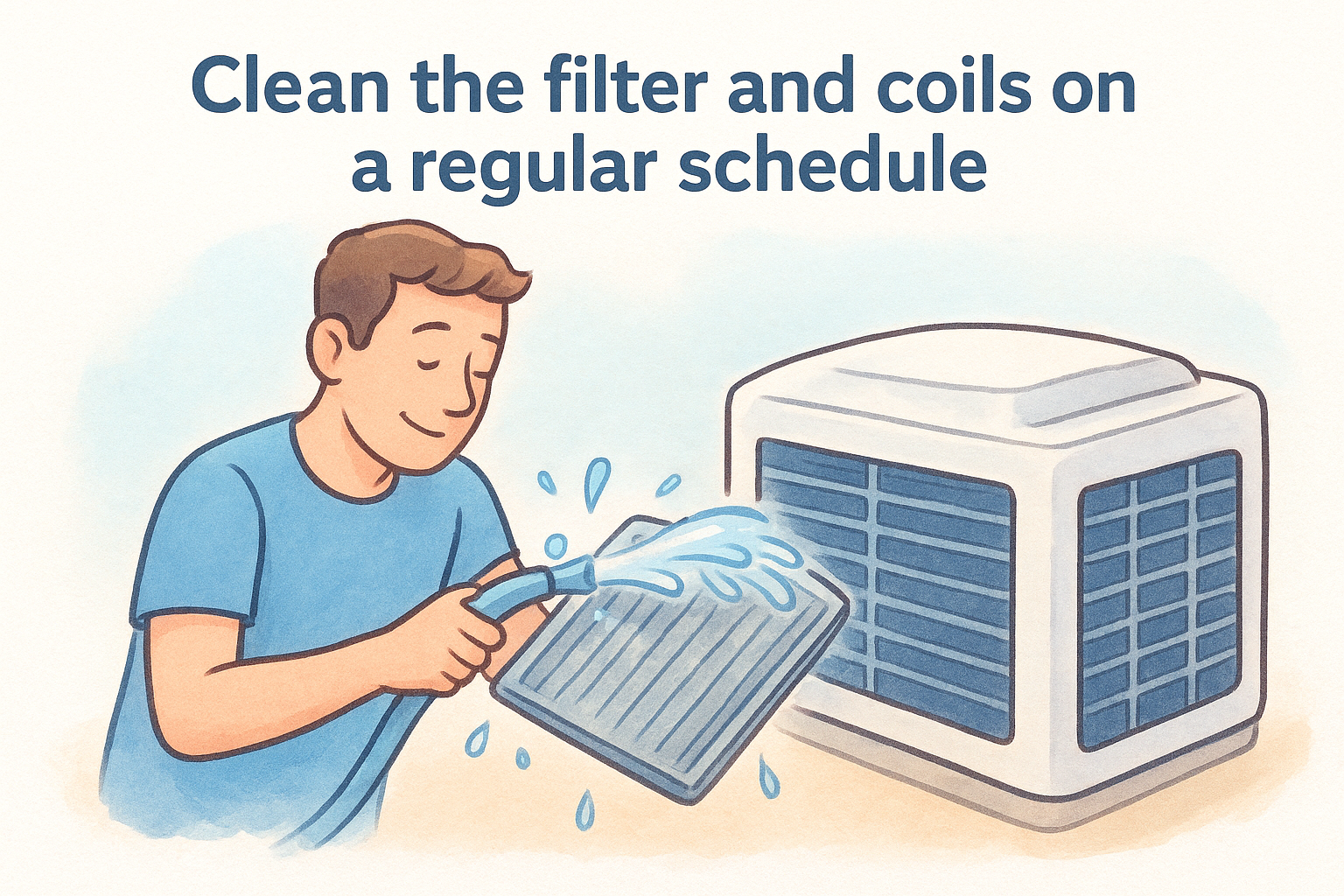
Evaporator and condenser coils need attention at least once per season. Dirty coils force the system to run longer to hit the same temperature, which accelerates wear on every moving part. A soft brush or coil cleaner spray removes built-up grime without damaging the fins. If you are not comfortable working on the roof, a mobile RV technician can handle the coil cleaning during a routine service visit.
Skipping filter and coil maintenance is the single fastest way to shorten your AC unit's life, often by several years.
Reduce the heat load inside your RV
Reflective window shades and awnings make a real difference in how hard your AC works. When you block direct sunlight from entering your windows, your interior temperature stays lower, and your unit cycles on and off rather than running continuously. That cycling pattern is far easier on the compressor than constant operation during peak afternoon heat.
Parking in shade whenever possible compounds the benefit. Even partial shade on the roof of your RV reduces the surface temperature your AC unit sits on, which keeps the condenser coil working in a lower ambient temperature and improves overall efficiency.
Prep the unit before and after storage
Before you put your RV away for the season, clean the shroud, check the mounting bolts, and replace any cracked foam gaskets around the base of the unit. Water infiltration during storage causes more off-season damage than most owners realize. Cover the rooftop unit if your storage location exposes it to prolonged UV rays or hail, and run a short test cycle before your first trip of the new season to catch any issues before you leave home.
Signs your RV air conditioner is going bad
Catching a failing unit early can save you from a full breakdown during a heat wave or on a long haul through the Southwest. Most RV air conditioners give clear warning signs before they quit entirely, and knowing what to look for helps you decide whether a quick repair will fix it or whether replacement is the smarter call.
Reduced cooling output and longer run times
One of the earliest signs of a declining unit is that it takes noticeably longer to cool your RV than it used to. If your interior climbs to 85°F before the AC finally brings it down, and it used to handle that same load in half the time, your system is losing capacity. This usually points to low refrigerant levels, a failing compressor, or dirty coils cutting into efficiency.
When you think about how long do RV air conditioners last, a gradual performance drop like this is often the first real sign that a unit is entering its final years. A healthy unit cycles on and off predictably. One that runs almost continuously without reaching your set temperature is working too hard and wearing down faster with every cycle.
If your AC runs non-stop for hours and your RV still feels warm, that is a sign worth investigating before it turns into a full failure.
Unusual noises from the unit
Rattling, grinding, or squealing sounds from your rooftop unit are never normal. Rattling typically means a loose shroud, a worn fan blade, or debris caught in the housing. Grinding usually points to a failing fan motor bearing, which will get worse quickly and eventually seize the motor entirely.
Here are the most common noises and what they usually indicate:
- Rattling: loose shroud panels, worn fan blades, or debris
- Grinding: fan motor bearing failure
- Squealing: belt or motor issues on older units
- Clicking on startup: bad capacitor or contactor
Ice buildup, water leaks, and bad smells
Ice forming on the evaporator coil during operation signals restricted airflow, low refrigerant, or both. If you see frost around the vent cover inside your RV, shut the unit off and let it thaw before running it again. Continuing to run an iced-up unit accelerates compressor damage significantly.
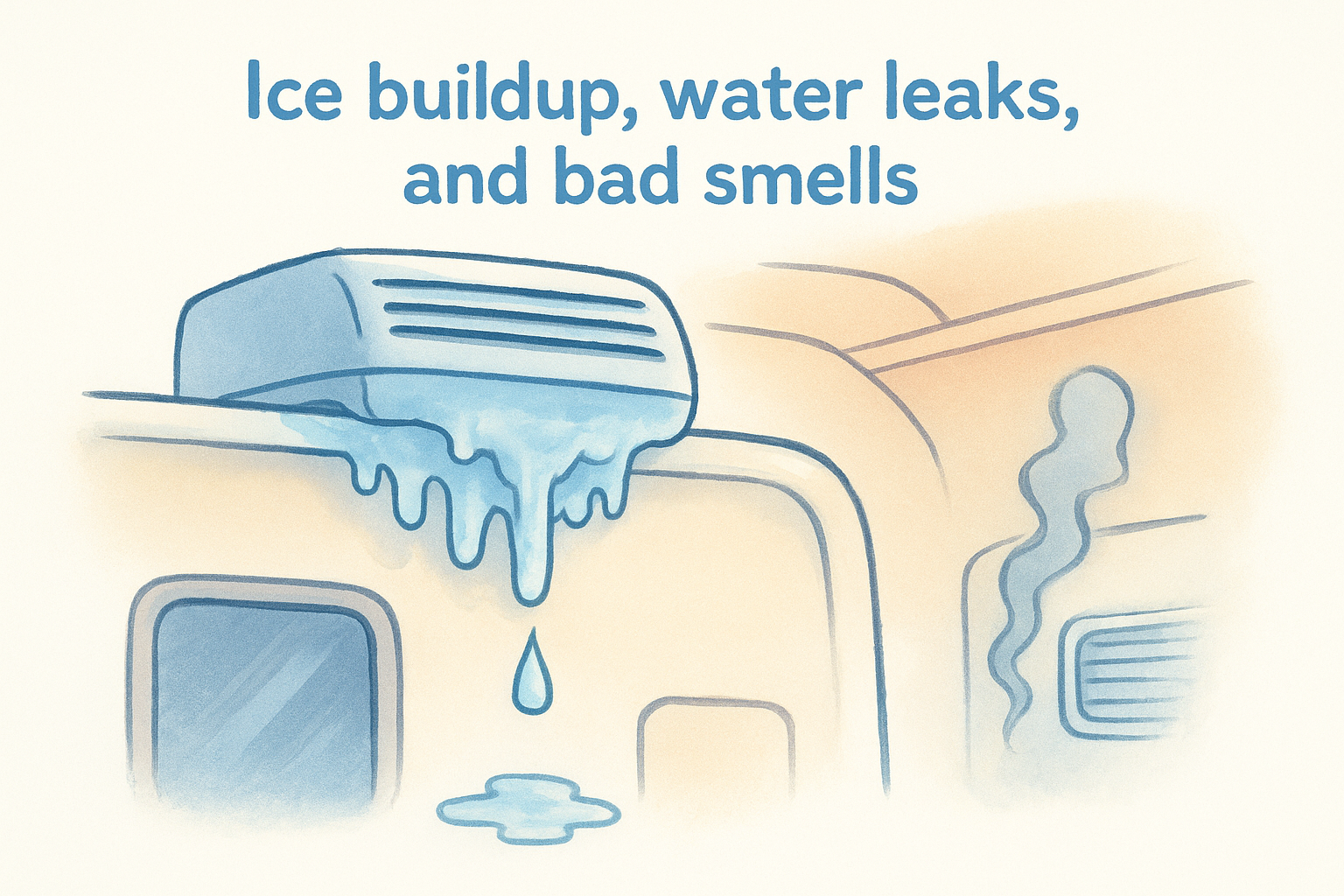
Water dripping from the ceiling vent or a persistent musty smell from the air supply both need attention. Dripping water inside your RV usually means the drain pan is cracked or the roof seal has failed, while a musty odor typically signals mold growth on the evaporator coil.
Repair vs replace and what it usually costs
The decision to repair or replace your RV AC comes down to cost relative to the remaining useful life of the unit. If a repair costs $100 and your unit has several good years left, that is an easy call. But if the same unit needs a $600 compressor rebuild and it is already seven years old, replacement often makes more financial sense than extending its life for another season or two.
Common repairs and what they typically cost
Most repairs that extend a unit's life fall into a predictable set of components. Capacitors and contactors are the most common failures and also the least expensive to fix, typically running between $50 and $150 in parts and labor. Fan motor replacements usually cost between $150 and $300 depending on the unit model and whether you hire a technician or do the work yourself.
Here is a quick reference for the most common RV AC repairs:
Capacitor replacement $50 - $150 Contactor replacement $75 - $175 Coil cleaning (professional) $75 - $150 Fan motor replacement $150 - $300 Compressor replacement $400 - $700+Compressor replacement typically costs more than a new budget rooftop unit, which makes it one of the clearest cases for full replacement rather than repair.
When replacement makes more sense
Replacing your unit makes more sense when repair costs approach or exceed half the price of a new unit, or when your current unit is already near the end of the typical lifespan range. A new 13,500 BTU rooftop unit from a major brand runs between $700 and $1,200 before installation, while a 15,000 BTU unit typically lands between $900 and $1,500. Factoring in professional installation, budget around $200 to $400 on top of the unit cost for most setups.
Understanding how long do RV air conditioners last in practice helps you make that call with real confidence. A unit that has already given you eight solid years and now needs a major component is usually better replaced than patched, especially if you plan to keep traveling heavily for the next several seasons.
When to call a mobile RV technician
Some AC problems are straightforward enough to handle yourself, like cleaning a filter or tightening a loose shroud bolt. But electrical faults, refrigerant issues, and compressor problems require a trained technician with the right tools and certifications. Trying to diagnose these on your own without the proper equipment can make the underlying problem worse and add to your repair cost. Knowing when to stop troubleshooting and call for help is one of the most practical things you can take away from understanding how long do RV air conditioners last and what goes wrong along the way.
If your unit trips a breaker, makes grinding noises, or stops cooling entirely during a trip, those are situations where a mobile technician will save you time and money compared to guessing.
Situations that need a professional
Not every AC symptom is a clear call for professional help, but several of them are. Refrigerant handling requires EPA Section 608 certification, which means it is illegal for uncertified individuals to purchase or work with refrigerants. If your unit is low on refrigerant, that job belongs to a licensed technician, full stop.
Here are the situations that warrant a call rather than a DIY attempt:
- The unit trips a circuit breaker repeatedly during startup or operation
- You notice ice on the evaporator coil that returns after thawing
- The compressor hums but does not start
- You smell burning from the unit or the ceiling vent
- Water is leaking inside your RV from the AC housing
How a mobile technician handles the job on-site
A qualified mobile RV technician carries diagnostic tools, replacement capacitors, and motor components that address the most common failures without requiring you to tow your rig anywhere. They can test your capacitor, check your refrigerant charge, inspect your coil, and give you a clear recommendation on whether the unit is worth repairing or ready to be replaced.
MobileRVService.com lets you search by zip code to find vetted mobile technicians near your current location, which matters most when you are parked at a campground two states from home and your AC stops working on a 95°F afternoon. You enter your location, browse available providers, and connect with someone who can come directly to your site.
Keep your trip on track
Understanding how long do RV air conditioners last gives you a real advantage before problems start. Most units last between 3 and 10 years, and the gap between those endpoints comes down almost entirely to how consistently you maintain them. Clean filters, annual coil checks, and smart parking habits add years to a unit that would otherwise fail early.
When your AC does show warning signs, catching them early gives you options. A failing capacitor or dirty coil is a straightforward fix. A dead compressor on an aging unit usually points toward replacement. Knowing the difference saves you from throwing money at a unit that has already run its course.
If you are on the road and need a qualified technician to diagnose or repair your system on-site, MobileRVService.com has you covered. Search by zip code, find a vetted mobile technician near your location, and get back to comfortable travel faster with RV owner membership features built for exactly this situation.