RV Air Conditioning Repair near Me: What to Know before You Call
Your RV's AC dies at 2 PM in July, the campground is baking, and you're typing rv air conditioning repair near me into your phone hoping for a fast answer. Before you start calling every shop in Wichita, it helps to know what actually causes RV AC failures and what a fair RV air conditioner repair should cost, because not every noisy or warm-blowing unit needs a full replacement.
Most of the time, the fix is simpler than you think. A tripped breaker, a clogged filter, or a failing capacitor can make it look like your RV AC compressor is not turning on, and knowing the difference saves you from an unnecessary rooftop unit replacement that can run over a thousand dollars.
This article walks through the common causes of RV AC problems, what a mobile technician checks first, and roughly what you should expect to pay in the Wichita area. We'll also cover how to find a qualified local technician fast instead of guessing from a search results page, so you can get your rig cool again without losing another travel day to a shop appointment across town.
Why your RV air conditioner needs specialized repair
RV rooftop units aren't shrunk-down versions of the central air system in your house. They're built to run on 120-volt shore power or a generator, squeezed into a low-profile housing, and mounted directly to your roof where vibration, UV exposure, and temperature swings all take a toll. A home HVAC technician who's never pulled a shroud off a Dometic or Coleman Mach unit can misdiagnose a problem in minutes, because the compressor, capacitor, and thermostat wiring are laid out nothing like a residential system.
A generic HVAC tech can fix your furnace, but your RV's rooftop AC speaks a completely different mechanical language.
That's the core reason searching for rv air conditioning repair near me should point you toward someone with RV-specific experience, not just any appliance repair company. A mobile RV technician also has to work with tighter tolerances: rooftop access, 12-volt control boards that run the thermostat, and ductwork that's often integrated into the ceiling itself. Get one wire crossed, or use the wrong sealant on the roof gasket, and you've traded a $200 repair for a leak that damages the ceiling.
Here's what sets RV AC systems apart from standard home units:
- Voltage and power draw: most rooftop units need a dedicated 15-amp circuit and struggle on underpowered generators.
- Compact compressors: sealed systems with less refrigerant volume, so small leaks cause bigger performance drops.
- Roof-mounted housing: exposed to weather and road vibration, which loosens screws and cracks gaskets over time.
- 12-volt control boards: separate from the AC's main power, often the actual point of failure.
If you're browsing roof and AC service providers in your area, look for someone who lists RV rooftop units specifically, not just general appliance work.
Common RV AC problems and what they usually mean
Most RV air conditioning complaints fall into a handful of recognizable patterns, and knowing which one you're dealing with helps you talk to a technician instead of just describing "it's not cold anymore." A weak or warm airflow usually points to a dirty filter, a low refrigerant charge, or a failing capacitor, none of which require a new unit. Loud rattling or banging noises often mean a loose fan blade or a motor mount that's worked itself free from road vibration, a common issue if you've put on serious highway miles this season.
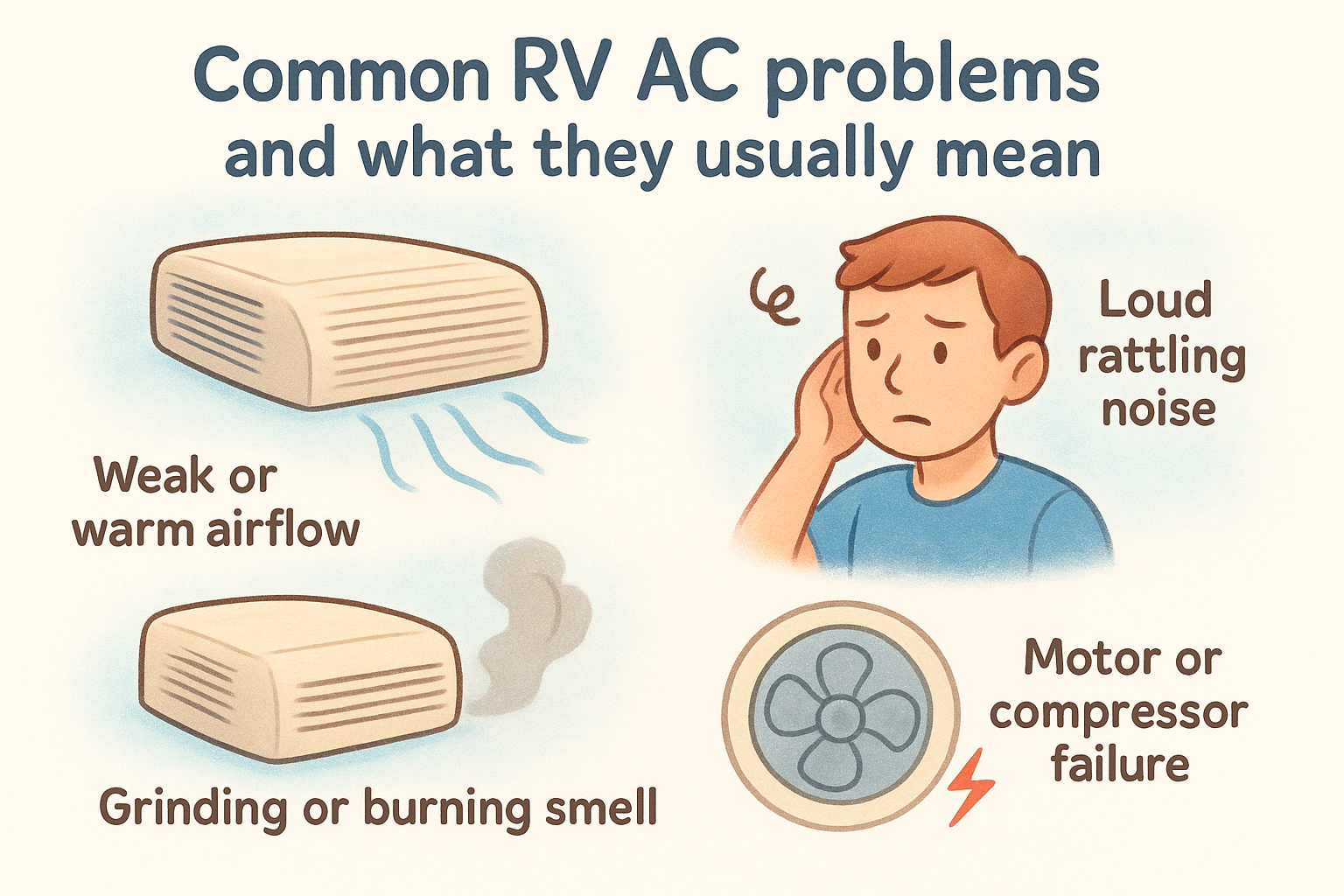
Nine times out of ten, a warm-blowing AC is a repair, not a replacement.
Grinding or a burning smell is different and points to a motor or compressor failure, which is the scenario that usually justifies swapping the whole rooftop unit rather than patching parts, especially if the unit is already near the end of a typical RV air conditioner lifespan.
Warm air, weak flow Dirty filter, low refrigerant Clean/recharge Rattling noise Loose fan or mount Tighten/replace Unit won't start Tripped breaker, bad capacitor Reset/replace part Burning smell Motor or compressor failure Full unit replacementSearching for rv ac repair near me Wichita gets you started, and a shortlist of Kansas RV repair mobile techs and shops narrows it further, but matching the symptom to the likely cause first keeps you from overpaying.
How to find and vet a qualified RV AC repair technician near you
Finding someone who actually knows rooftop units takes more than a search results page and a phone call. You want a technician who names your AC brand outright, whether it's Dometic, Coleman Mach, or Atwood, and can quote a price range before showing up.
Questions worth asking before you book
Getting straight answers to a few questions weeds out the guys who'll just diagnose by trial and error on your roof.
- Do you carry parts for my specific brand and model, or will this require a return trip?
- What's your diagnostic fee, and does it apply toward the repair?
- Can you give a rough quote based on the symptoms I'm describing?
- Are you insured for rooftop work?
A technician who can't answer basic brand questions over the phone probably can't fix your unit on the first visit either.
Skip the guesswork
Rather than cold-calling shops, a directory built for RV owners filters providers by service category and location, so you're not vetting blind. On MobileRVService.com, you can search by zip code, check ratings, and see which providers list rooftop AC repair specifically, which saves you the trial-and-error calls that eat up your afternoon.
What to expect during a mobile RV AC repair visit
When a technician pulls up, expect the visit to start on the roof, not inside the cabin. A diagnostic check usually takes 20 to 30 minutes: pulling the shroud, testing the capacitor, checking refrigerant pressure, and inspecting the 12-volt control board before touching anything else. Most techs carry common parts like capacitors, fan motors, and thermostats on the truck, so a straightforward fix often gets resolved same-day without a second trip, which is part of how mobile RV repair works.
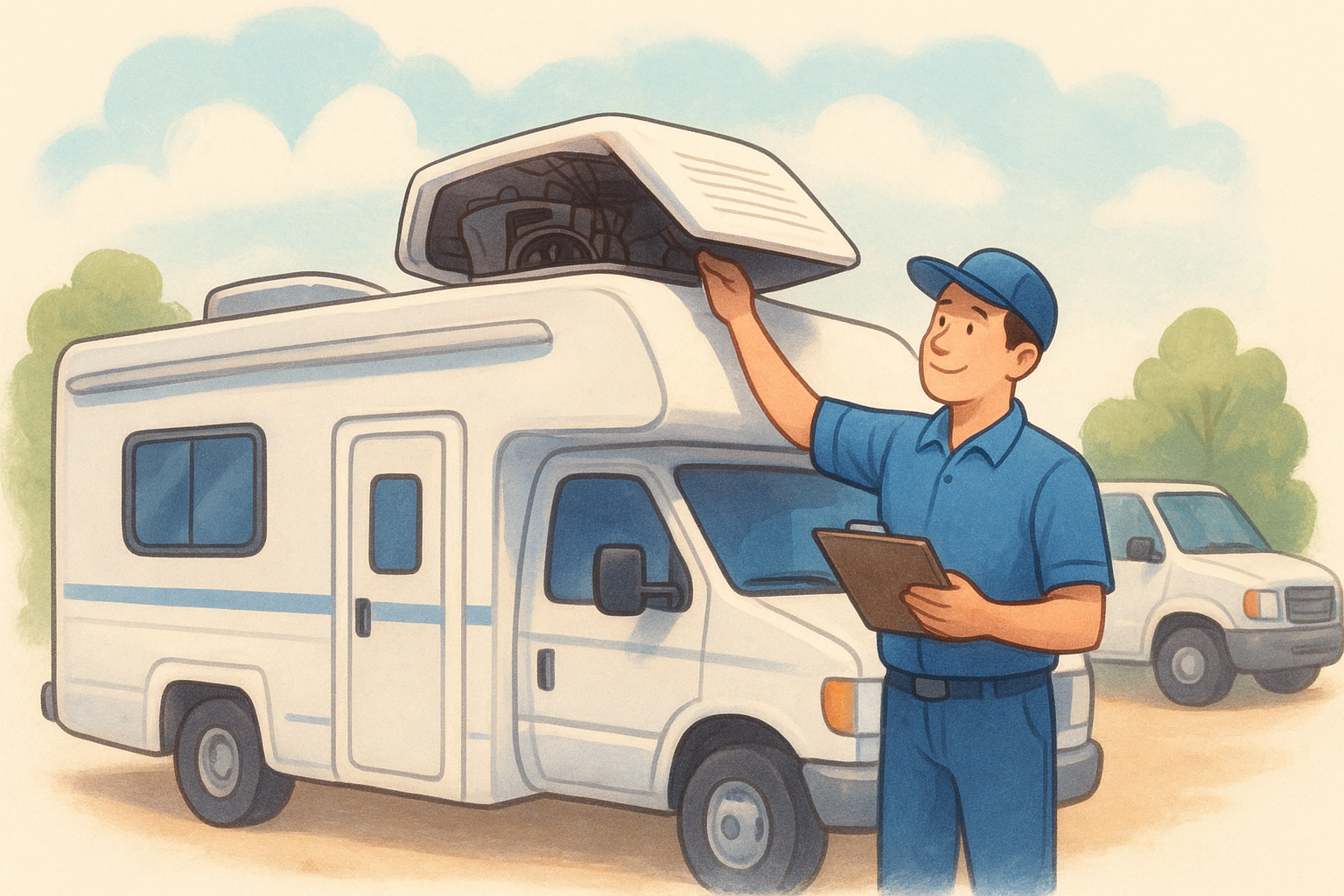
The best mobile visits end with a working AC, not a follow-up appointment.
What a typical visit includes
- Rooftop inspection and shroud removal
- Electrical and capacitor testing
- Refrigerant pressure check
- Filter cleaning or replacement
- Written quote before any part gets replaced
Expect the technician to explain the diagnosis in plain terms before quoting a fix, whether that's a $150 capacitor swap or a full rooftop unit replacement running $900 to $1,500 installed. Vague answers or pressure to replace the whole unit without testing individual parts first is a signal to get a second opinion before signing off.
How to keep your RV AC running smoothly between repairs
Maintenance beats emergency calls every time, and most of what keeps an RV rooftop unit healthy takes ten minutes a month. Cleaning the filter, coils, and fins every two to four weeks during heavy use prevents the dirty-filter symptom that mimics a refrigerant leak or failing compressor. Working through an RV roof inspection checklist twice a year, especially after a hard freeze or a long highway run, catches gasket cracks before they turn into water damage inside the ceiling.
A clean filter and a sealed roof gasket prevent more service calls than any warranty ever will.
Running the unit periodically even in cooler months keeps the compressor seals from drying out, which is a common cause of failures early in the next season. If you're storing the rig, avoid shutting it down bone dry, a small amount of use keeps moving parts lubricated.
Here's a simple maintenance routine worth following:
- Clean or replace the filter monthly during travel season
- Inspect the roof gasket and shroud screws twice a year
- Run the AC briefly once a month during storage
- Keep the unit level to avoid drainage issues
A quick self-check like this catches small problems before they become an emergency search for rv ac repair near me on a hot afternoon.
Getting cool air back on the road
A warm-blowing AC doesn't automatically mean a new unit, and now you know the difference between a five-minute fix and a job that actually needs a technician on your roof. Most failures trace back to a dirty filter, a tired capacitor, or a loose gasket, not a dead compressor, so don't let a shop talk you into a full replacement before they've tested the small stuff first.
Getting matched with the right person matters more than how fast you can dial a number. Skip the cold calls and search a vetted provider network instead, one that lists rooftop AC work specifically and shows ratings before you commit to a visit.
Before you're stuck sweating through another breakdown, see the remote assistance and membership features for RV owners built for exactly this kind of moment, so help finds you faster next time.