RV Roof Replacement near Me: 5 Options and What They Cost
The best choice for RV roof replacement near me depends on what is wrong with the roof. For a leak, failed sealant or a patch, a mobile technician who comes to your rig is usually the fastest and cheapest route. For a full tear-off and new membrane, you want a shop with covered space, which points to a dealership, an independent shop, or a roofing specialist. For hail or storm damage your insurer will pay for, start with a body shop. A good provider inspects the roof first, gives a written fixed-price quote, names the membrane and sealant, and warrants the labor.
The problem is that roof trouble rarely waits. A small gap around a vent lets water into the decking, and wet decking rots. By the time you see a stain on the ceiling, the repair can grow from a few hundred dollars to a few thousand. Quotes for the same job also vary widely, and many shops are booked for weeks in camping season.
This article walks through five types of provider that handle roof work, with how each one operates, who it suits, what it costs, and what to ask before you hire. A final section sets out typical repair and replacement prices, a worked cost example, and what insurance usually covers.
1. Mobile RV technician through MobileRVService.com
How it works and who it suits
MobileRVService.com is a free directory of more than 3,200 vetted mobile RV technicians. You enter your zip code, filter by rating, availability and service category such as roof maintenance, and pick a technician who drives to your campsite or driveway. Every provider is vetted for experience, certifications, insurance, and reviews, which matters on a roof job, where a bad seal shows up as a leak weeks later.
Be realistic about scope. Mobile techs are strongest at leak diagnosis, resealing, patching and partial repairs. A full RV roof replacement near you needs several dry days and a level spot, so ask each technician whether they do a tear-off on site. This option suits owners who are mid-trip, full-timers, anyone with an active leak, and buyers who want a roof inspection before purchase.
Fix the leak where the rig sits, and save the shop visit for a true tear-off.
What it costs and what to ask
Finding a provider costs nothing. Technicians give fixed-price quotes after an on-the-spot diagnosis, and repairs carry a 30-day labor warranty. If you cannot find anyone, VIP membership is $49.95 a year. MobileRVService.com then triages the problem, finds and vets a technician, and stays with the issue, with up to 25% off parts. RV Assist is a $50 single-use option, valid for 30 days.
Ask these before you book:
- Do you reseal and patch only, or also replace the membrane?
- What happens to the price if you find soft decking?
- Which sealant or membrane brand do you use?
- What is your plan if rain is forecast mid-job?
2. RV dealership service department
How it works and who it suits
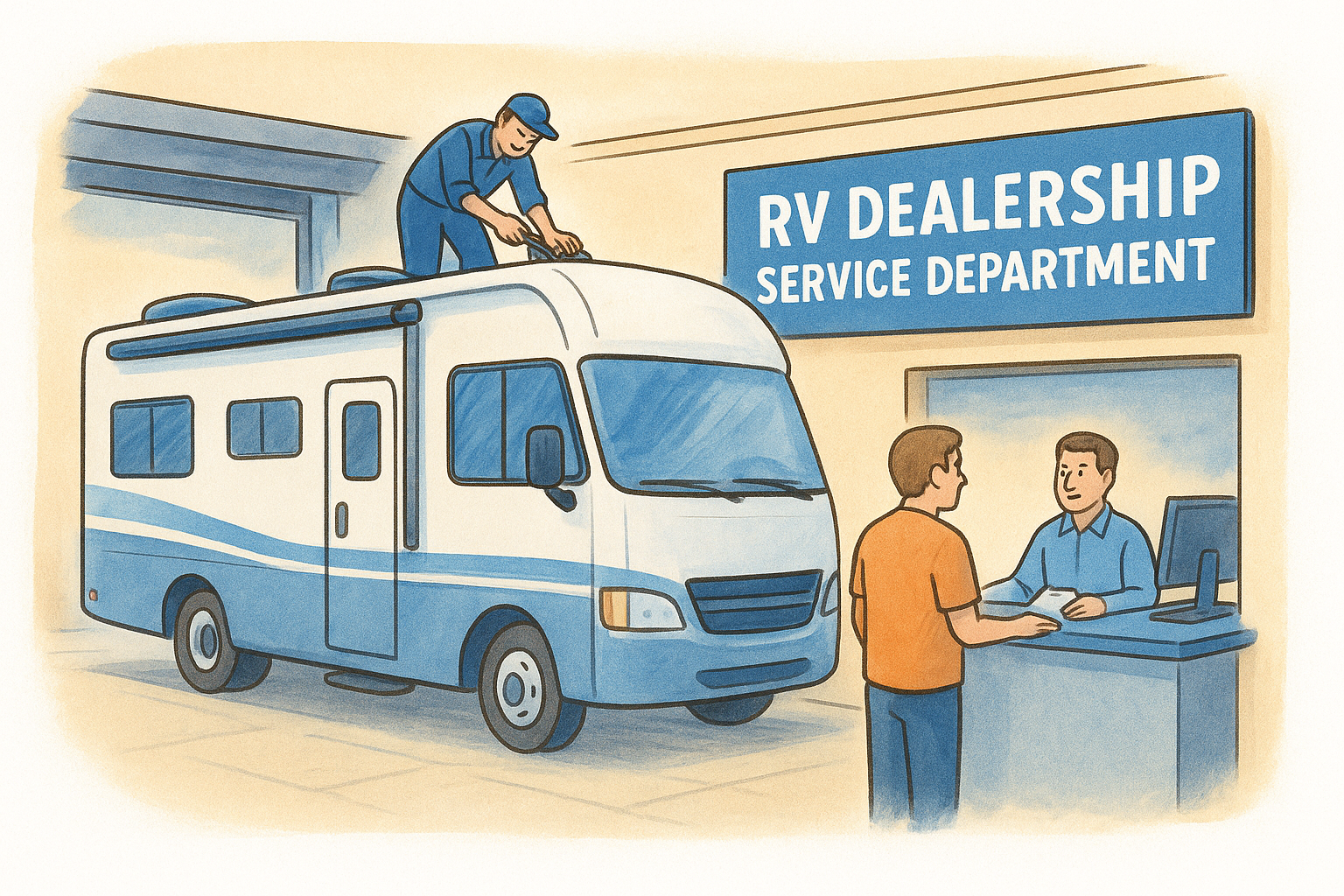
A dealership service department does roof work in its own bays, with factory-trained technicians and direct access to manufacturer parts. It also files warranty claims for you, which is the main reason to start here. This option suits newer rigs still under warranty, brand-specific roof designs, and owners who want one accountable name on the invoice.
The trade-off is time. In peak season, dealership service often books weeks ahead, and you must bring the rig in and leave it. Anyone with an active leak should tarp or tape the roof first and ask for the earliest cancellation slot.
Under warranty, the dealer is the right door. Out of warranty, it is rarely the cheapest.
What it costs and what to ask
Dealerships often charge the highest hourly labor rates of the five options, though the quote may come with OEM parts and a clear paper trail. Ask for an itemized estimate that separates labor, materials and decking repair.
- Does the manufacturer warranty cover this roof damage?
- Will you provide a written estimate before opening up the roof?
- How long will the rig be in the bay?
3. Independent RV repair shop
How it works and who it suits
An independent RV repair shop works on many brands and usually handles roofs, slides, appliances and plumbing under one roof. You drop the rig off, the shop inspects it, and you approve a quote before work starts. It suits out-of-warranty owners who want RV roof replacement near them plus other repairs done in a single visit.
Quality varies more than at dealerships, so check certifications and look at recent roof jobs. A shop that has a covered bay can work through bad weather, which matters for adhesives and sealants that need dry, warm conditions to cure.
A shop's roof photos tell you more than its sales pitch does.
What it costs and what to ask
Independent shops often run lower labor rates than dealerships, but they set their own prices, so compare at least two written quotes. A fair quote names the membrane type, the sealant, and how decking repairs are priced.
- Which roof jobs have you finished in the past year?
- Do you replace rotted decking, or only cover it?
- What is your labor warranty, in writing?
4. Specialist RV roofing company
How it works and who it suits
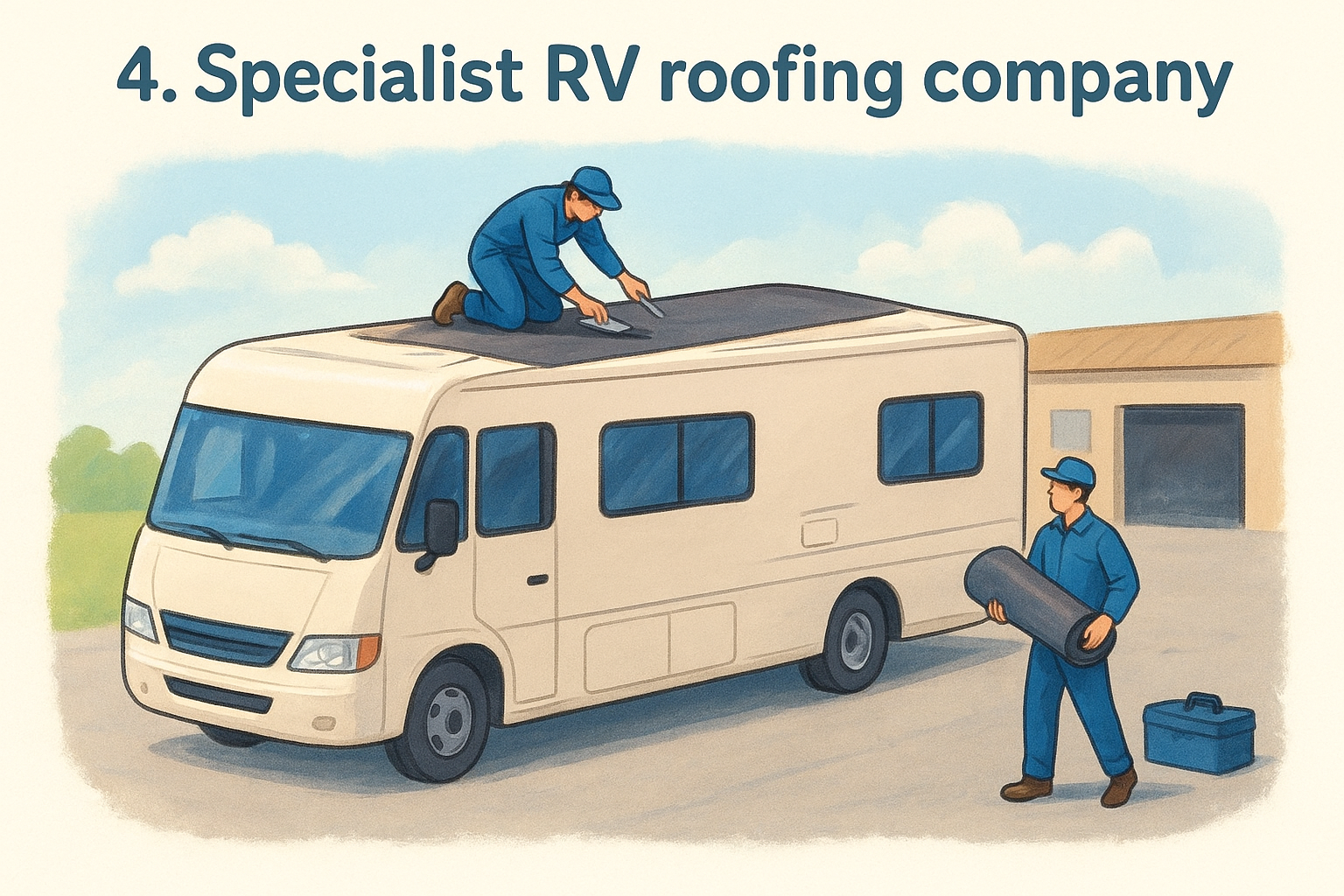
A specialist roofing company does little else but roofs. Crews strip old membrane, repair the decking, and install new EPDM, TPO or fiberglass surfaces, and some travel to your location. Because they do the job daily, they tend to spot problems like delaminated sidewalls and soft spots early. This option suits full roof replacement, large motorhomes, and rigs with known rot.
Ask whether the job happens at their facility or at your site. Facility work is dependable but means leaving the rig. On-site work is convenient but depends on level ground, weather and access to the full roof.
If the whole membrane has to come off, a roofing specialist is built for that job.
What it costs and what to ask
Specialists usually price by roof size and material, so you get a clear number per project. They often cost more than a reseal and less than a dealership tear-off, but prices vary, so get the quote in writing.
- Which membrane do you recommend for my rig, and why?
- Is the workmanship warranty written down?
- Does the price include removing and reinstalling the A/C, vents and antennas?
5. RV body shop or collision center
How it works and who it suits
An RV body shop repairs fiberglass, sidewalls and roofs after storm damage. It also works with insurance adjusters, takes photos, and writes the estimates your insurer needs. The shop suits hail damage, fallen limbs, and any roof problem you plan to claim. It also suits fiberglass roofs, which are repaired rather than recovered with a membrane.
Contact your insurer before authorizing work, because many carriers want to see the damage or approve an estimate first. A good body shop will tell you honestly if the damage falls below your deductible, which saves you a claim that costs more than it pays.
For storm damage, choose the shop that knows how to work with an adjuster.
What it costs and what to ask
Body shops price by estimate, and insurance often sets what is paid. If you pay out of pocket, expect bodywork-level labor rates, so compare against a roofing specialist for a simple membrane job.
- Do you work with my insurance company directly?
- Will you document the damage with dated photos?
- How do you handle extra damage found after teardown?
What RV roof replacement costs and what insurance covers
Repair, reseal, or replace
Match the job to the damage. Resealing and patching fix localized failures. Replacement is for roofs that are worn, cracked across large areas, or sitting on rotted decking. These are ballpark ranges, and your quote depends on rig length, membrane type and how much decking is soft.
Spot patch Clean, then apply tape or membrane patch to small damage $100 to $500 Reseal Replace lap sealant around seams, vents, skylights and edges $300 to $1,000 Full replacement Remove old membrane, repair decking, install new EPDM or TPO $5,000 to $12,000A worked cost example
Take a 28-foot travel trailer with a failed EPDM roof and some soft decking. Say the shop bills 30 hours at $140 an hour and $1,500 in membrane, adhesive, sealant and decking material. Labor is $4,200, so the total is $5,700. A second sheet of rotted decking can add several hundred dollars, which is why a quote should state how decking is priced before work begins.
Does insurance cover a roof replacement?
Insurance often pays for sudden, accidental damage, such as hail or a falling branch, under the comprehensive part of an RV policy. It usually does not pay for wear, age, or leaks that built up slowly from neglected maintenance. Check your policy wording, and photograph the damage before anyone touches it.
Call your insurer before you authorize work, and compare the repair estimate with your deductible. If the repair costs only slightly more than the deductible, a claim may not be worth it.
Interior damage and upholstery after a leak
Water damage inside is a separate job from the roof. Stained ceiling panels, soaked cushions and swollen trim need their own repair, and mobile RV upholstery repair near you is a trade of its own. Do it only after the roof is sealed and the interior is completely dry, or the new fabric gets wet again.
Choosing your roof provider
Start with the damage. A leak or failing seal is a job for a mobile technician. A full tear-off belongs in a shop or with a roofing specialist, and storm damage belongs with a body shop that handles insurance. Whoever you pick, ask for a written, fixed-price quote, a named membrane and sealant, and a labor warranty.
If you want help finding a qualified technician quickly, see what VIP membership includes. Searching the directory is free, and VIP adds dedicated support from triage to the finished repair.