RV Tank Cleaning Service: Cost, Process, And When To Book
That stubborn odor won't go away. Your tank sensors read "full" even after dumping. You've tried every home remedy and chemical treatment, but nothing works. When standard maintenance fails, it's time to call in a professional RV tank cleaning service to handle what DIY methods can't fix. These specialists use commercial-grade equipment like hydro-jetting systems to blast away years of buildup, restore accurate sensor readings, and eliminate odors at the source.
The challenge? Finding a qualified technician who comes to you. Most RV owners don't want to drive their rig across town for tank work, and that's exactly why mobile services exist. Through MobileRVService.com, you can locate vetted mobile technicians in your area who specialize in holding tank maintenance and repairs.
This guide breaks down what professional tank cleaning costs, how the process works, and when it makes sense to book a service appointment versus handling it yourself.
What an RV tank cleaning service includes
A professional RV tank cleaning service goes beyond what you can accomplish with a garden hose and tank rinse wand. Technicians arrive with specialized equipment designed to break up solid waste deposits, eliminate biofilm buildup on tank walls, and restore your system to factory-level cleanliness. Most services include a full inspection of your black and gray water systems, identifying issues that could lead to bigger problems down the road.
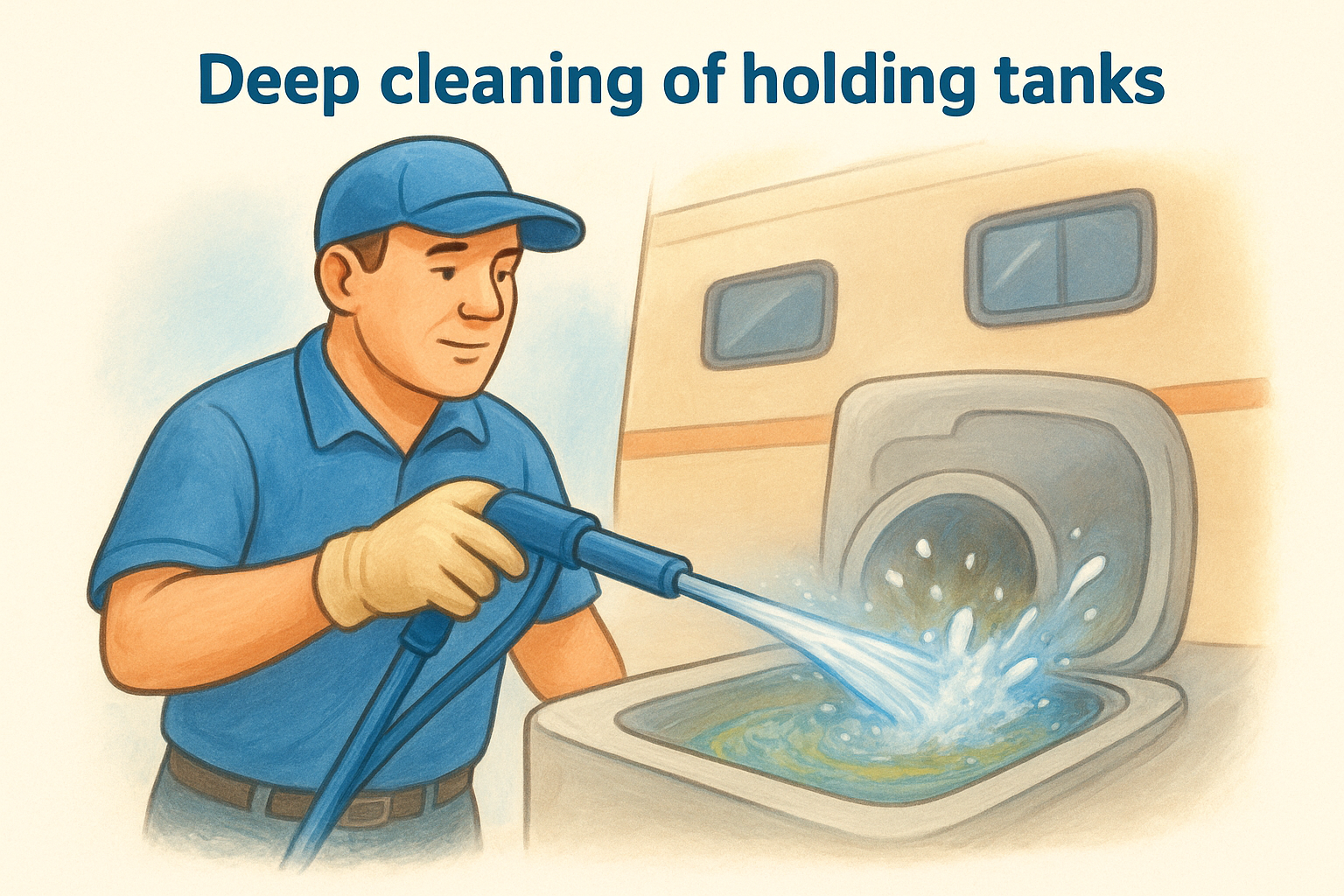
Deep cleaning of holding tanks
The core service involves hydro-jetting both tanks using high-pressure water streams that reach every corner and surface. This process dislodges compacted waste, toilet paper pyramids, and grease that standard flushing can't touch. Technicians typically spray from multiple angles to ensure complete coverage, paying special attention to areas beneath the toilet flange where buildup commonly occurs. The hydro-jet wand enters through your sewer connection or toilet opening, depending on your RV's configuration.
Professional hydro-jetting uses 3,000 to 4,000 PSI, far more powerful than any home cleaning method.
Sensor cleaning and testing
Tank sensors fail when waste residue coats the probes inside your holding tanks. A proper cleaning service includes scrubbing or replacing these sensors to restore accurate level readings. Technicians test the sensors after cleaning to verify they register empty, one-third, two-thirds, and full correctly. Some services also check your termination valve seals and gate mechanisms for proper operation while they're already working on the system.
Your technician may also treat tanks with enzyme-based products or apply protective coatings that help prevent future buildup. These extras typically cost more than the base service but extend the time between professional cleanings.
Why professional tank cleaning matters
You can maintain your tanks with regular flushing and chemical treatments, but some situations demand professional intervention. Home cleaning methods lack the pressure and reach needed to remove hardened deposits that form over months or years of use. When DIY approaches fail repeatedly, you're dealing with buildup that requires commercial equipment to eliminate. Putting off professional cleaning only makes the problem worse and more expensive to fix later.
DIY methods have clear limits
Your garden hose produces around 40 to 60 PSI, while tank wands might reach 80 PSI. Compare that to professional hydro-jetting systems that deliver 3,000 PSI or more. This massive pressure difference explains why a simple rinse wand can't touch the compacted waste, struvite crystals, and grease accumulation coating your tank walls. Chemical treatments help with odor control but can't physically scrub away solid buildup.
Most tank problems requiring professional service develop slowly over 2 to 5 years of normal use.
Persistent problems signal deeper issues
Sensors that stay stuck on "full" after dumping indicate coating buildup that home cleaning won't fix. Recurring odors despite fresh water flushes suggest biofilm growth deep in your system. An rv tank cleaning service addresses these root causes instead of temporarily masking symptoms with chemicals.
How the cleaning process works step by step
When a mobile technician arrives for your scheduled appointment, they bring self-contained equipment that doesn't require your RV's water or electrical systems. The entire process takes 90 minutes to 2 hours depending on tank size and severity of buildup. You'll need to empty your tanks before the appointment, though some technicians handle this step as part of their service if your dumping valve still functions properly.
Initial inspection and setup
Your technician starts by checking both holding tanks through access points and inspecting visible components like your termination valve and drain hoses. They'll ask about symptoms you've noticed, such as sensor malfunctions or persistent smells. After assessing the situation, they connect their hydro-jetting equipment to your sewer outlet and prepare cleaning solutions if needed for heavy buildup.
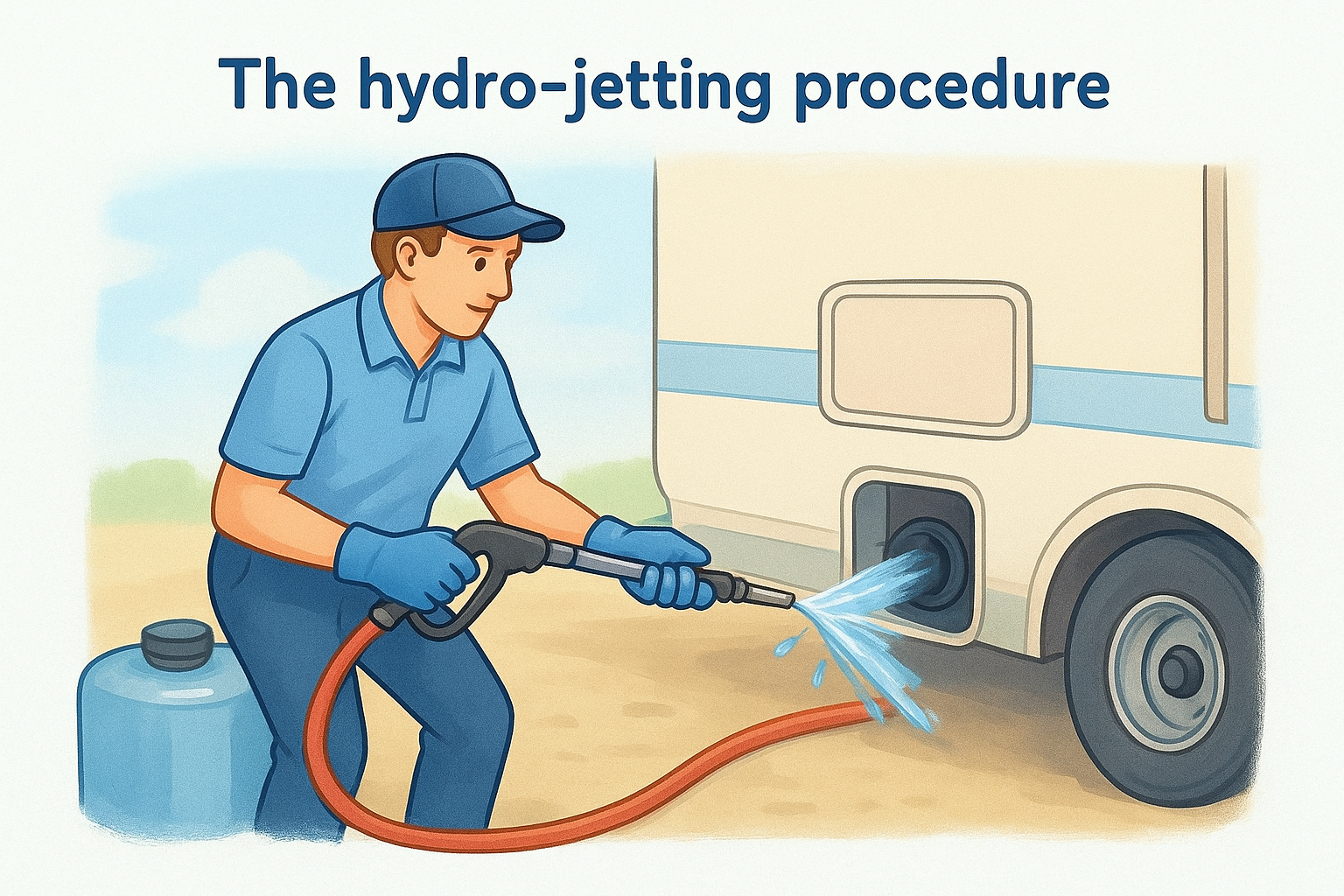
The hydro-jetting procedure
High-pressure water enters through your black tank's toilet opening or directly through the sewer connection. The technician moves the jetting wand systematically to cover all interior surfaces, breaking up deposits and flushing debris through your drain valve. They repeat this process for your gray tank, then run clean water through both systems to remove loosened material. After finishing, they test your sensors to verify accurate readings and check for leaks around seals and connections.
Professional cleaning removes 95% or more of accumulated waste that standard flushing leaves behind.
How much RV tank cleaning costs and what affects it
Most mobile RV tank cleaning services charge between $150 and $350 for a complete job covering both black and gray water tanks. This price typically includes hydro-jetting, sensor cleaning, and a basic system inspection. You'll pay more for emergency calls or weekend appointments, with some technicians adding $50 to $100 for urgent service. Geographic location matters too, as rates in major metro areas run higher than rural regions where competition is limited.
Factors that change the price
Tank size directly impacts cost since larger holding tanks require more time and water to clean thoroughly. A 40-gallon black tank takes less work than a 100-gallon system found in Class A motorhomes. Severity of buildup also affects pricing, as technicians charge extra when they encounter struvite deposits or compacted waste that demands multiple cleaning passes. Some services include sensor replacement in their base rate, while others bill this separately at $30 to $75 per sensor.
Expect to pay 20% to 30% more if your tanks haven't been professionally cleaned in over 5 years.
Distance traveled by the mobile technician may add a trip fee ranging from $25 to $75 to your total bill.
When to book and how often to schedule
You should schedule an rv tank cleaning service when home maintenance methods stop working or before problems become severe. Most RV owners wait until sensors fail or odors persist, but booking service earlier prevents costly repairs down the road. Timing depends on your usage patterns, tank size, and water quality in areas where you camp. Full-timers need professional cleaning more frequently than weekend warriors who use their rigs a few times per year.
Warning signs that indicate you need service now
Book an appointment immediately when your sensors show incorrect readings after dumping or when you smell sewer gases inside your RV despite regular flushing. Slow draining from sinks or showers points to gray tank buildup that blocks proper flow. You'll also want professional help if your black tank valve won't open completely or if you see unusual residue in your toilet bowl after flushing.
Ignoring sensor problems for more than 6 months typically doubles the cleaning cost due to hardened deposits.
Recommended cleaning frequency
Schedule professional cleaning every 2 to 3 years for moderate use, or annually if you live in your RV full-time. Adjust this timeline based on water hardness in your camping areas, as mineral-rich water accelerates buildup inside tanks.
What to do next
Professional tank cleaning restores your RV's waste system to proper working condition and prevents expensive repairs caused by neglected buildup. You now understand what the service includes, how much it costs, and when to schedule an appointment. The next step depends on your current situation: if you're experiencing sensor problems or persistent odors, book an rv tank cleaning service immediately. Otherwise, add professional cleaning to your maintenance schedule every 2 to 3 years to avoid future headaches.
Finding a qualified mobile technician starts with searching your local area for certified professionals who specialize in holding tank work. MobileRVService.com connects you with vetted technicians across North America who bring commercial-grade equipment directly to your location. Browse our owner features to see how our platform helps you locate reliable mobile services for tank cleaning and other RV maintenance needs. Members get priority access to our network and concierge assistance finding the right technician when you need help fast.