Full-Time RV Living With Family: What It Really Takes
Full time RV living with family sounds simple until you're parked at a campground with three kids, a leaking water heater, and no idea who to call for help. The dream of swapping a mortgage for the open road is real, but so are the logistics nobody mentions in the glossy YouTube videos: bunk space, school schedules, and what happens when your slide-out jams 400 miles from home.
This guide answers the questions families actually ask before they sell the house. You'll get a clear picture of realistic monthly costs, how to pick a rig that survives kids and dogs, and what the CPS and legal residency concerns look like when your address changes every few weeks. We pull from real family experiences, not just marketing copy about van life freedom.
We'll also cover the maintenance side most articles skip: what breaks first, how to budget for repairs, and why having a plan for on-site help matters more once you're living in the rig full time instead of just weekending in it. By the end, you'll know what this lifestyle really takes, not just what it promises.
Why families are choosing full-time RV living
More families than ever are trading fixed addresses for wheels, and the reasons go beyond wanting a longer vacation. Remote work flexibility opened the door first. When one or both parents can log in from anywhere with decent Wi-Fi, the question shifts from "can we do this" to "why haven't we already." Add in rising rent and mortgage costs in most metro areas, and a paid-off travel trailer starts looking like a genuinely smart financial move, not just a lifestyle experiment.
The appeal of shared time and flexible schooling
Parents consistently mention one thing above cost savings: time together. In a stationary house, a family might see each other for two hours on a school night. On the road, you're cooking, driving, hiking, and problem-solving side by side most of the day. That density of shared experience is hard to replicate any other way.
Homeschooling and roadschooling options have also matured. Curriculum providers built for travel families now exist, co-ops meet up at campgrounds nationwide, and reciprocal museum memberships turn a Tuesday afternoon into a history lesson. Families aren't choosing RV life despite the schooling logistics anymore; many are choosing it partly because of what roadschooling offers.
Full-time RV living works for families when it replaces stress with shared time, not when it just replaces one set of chores with another.
Financial and lifestyle motivations compared
Different families weigh the tradeoffs differently, but a few motivations show up again and again in surveys and forums of full-time RV families:
Cost reduction Lower fixed housing costs, though fuel and repairs add variability Family bonding More shared meals, activities, and unstructured time together Flexible schooling Roadschooling replaces rigid schedules with location-based learning Career flexibility Remote jobs make location irrelevant to income Simplified living Smaller space forces fewer possessions and less clutter Adventure and novelty Kids see more of the country by age 10 than many adults see in a lifetimeNone of these motivations exist in isolation. A family chasing cost savings alone often burns out fast once they hit unexpected repair bills or fuel price spikes. The families who stick with it usually have at least two or three reasons pulling them forward, not just one.
It's not just an escape, it's a deliberate choice
Regret and burnout stories exist too, and they usually trace back to families who treated full-time RV living as an escape from problems rather than a deliberate lifestyle choice. Marriage stress, financial trouble, or job dissatisfaction don't disappear inside 300 square feet; they just get more concentrated. The families who thrive tend to go in with clear expectations, a financial cushion, and agreement between partners on what success looks like after six months on the road.
Social connection matters more than newcomers expect, too. Isolation can hit hard, especially for the parent managing most of the day-to-day logistics. Successful families build in regular contact with other RV families, whether through organized caravans, campground meetups, or online communities built specifically for parents doing this with kids in tow.
How to prepare your family for life on the road
Selling the house is the easy part. Preparing your family mentally and logistically for a life without a fixed address takes months, not weeks, and most families underestimate how much groundwork goes into a smooth transition. Start with a trial run before you commit to anything permanent.
Test the lifestyle before you commit
Rent a rig or borrow one for a two-week trip that mimics your real routine, work calls, school hours, meal prep, and all. This single step catches problems no amount of research or forum reading will reveal.
- Test connectivity in areas similar to where you'll actually park, not just your driveway.
- Track daily friction points, like where the kids do homework or where dishes pile up.
- Watch how your kids react to constant movement versus staying put for a stretch.
- Note what you miss, whether it's a bathtub, a yard, or just quiet.
A two-week trial trip tells you more about full-time RV living with family than a hundred hours of YouTube videos ever will.
Get the paperwork and logistics sorted early
Domicile state matters more than most new full-timers expect. Your choice affects vehicle registration, health insurance options, and even where your kids' school records officially live. Texas, Florida, and South Dakota are popular choices among full-timers because of favorable vehicle registration rules and no state income tax, but the right answer depends on your specific situation, not just what other families picked.
Mail forwarding services, a permanent mailing address through a family member, and a plan for banking and taxes all need to be locked down before you leave. Waiting until you're already on the road to figure out domicile and mail creates unnecessary stress during an already disorienting transition.
Prepare kids emotionally, not just logistically
Declutter as a family activity rather than a solo parent chore. Kids who help decide what stays and what goes adjust faster once they're living in 300 square feet instead of a bedroom with a door that closes. Talk openly about what will be hard, missing friends, missing a regular bedroom, missing predictability, before it happens rather than after the complaints start. Families who set expectations early report far fewer meltdowns in month two than families who framed the move as nonstop adventure with no downside.
Choosing the right RV for your family's needs
Space and durability matter more than floor plan photos once you're actually living in a rig full time with kids. Full time RV living with family puts far more wear on cabinets, slides, and plumbing than a two-week vacation ever would, so the rig that looked perfect at a dealership might not hold up after six months of daily use. Think in terms of square footage per person, not just total length, and prioritize storage you can actually access without unpacking half the rig.
Class A, C, and fifth wheels compared
Each rig type trades off differently on cost, towing needs, and livable space, and families rarely agree on which one wins.
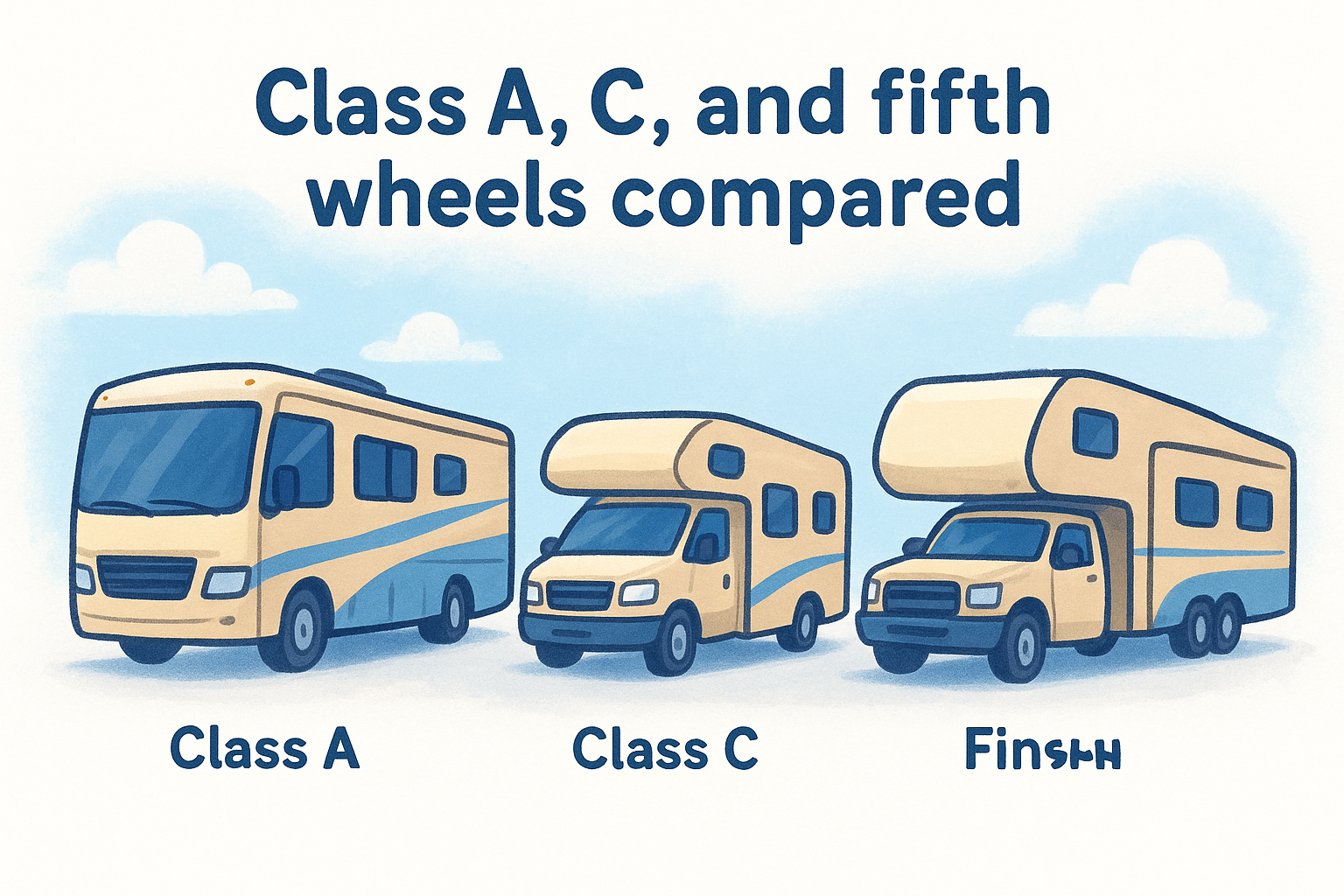
Fifth wheels tend to offer the best bunk-to-cost ratio for families with three or more kids, since manufacturers build more bunkhouse layouts into that category than any other.
The right RV for your family isn't the one with the nicest photos, it's the one your kids can actually live in without daily friction.
Bunk space and layout considerations
Layout decides daily peace more than any spec sheet number. Walk through a floor plan and picture actual mornings: where does the toddler nap while an older sibling does schoolwork, and where does anyone go for five minutes of quiet?
- Bunkhouse models give kids separate sleeping space and a small sense of ownership.
- Slide-outs add real square footage but add one more system that can fail on the road.
- Outdoor kitchens keep cooking mess outside during warm-weather stretches.
- Residential-style bathrooms reduce daily complaints in larger families.
Buyers who skip a walkthrough with kids in tow often regret it within the first month on the road.
Budgeting for full-time family RV life
Money conversations sink more full-time RV attempts than mechanical breakdowns do. Full time RV living with family typically runs $2,500 to $5,000 a month once you factor in fuel, campground fees, food for extra appetites, and the repair costs that come with daily wear on a rig. Families who budget based on van-life influencer numbers, often single travelers with no kids, end up shocked within the first two months.
Monthly cost breakdown families report
Costs vary by region and RV type, but most full-time families report a similar spread once they've tracked a few months of real spending.
Campground fees $600-$1,500 Monthly rates far cheaper than nightly Fuel $300-$800 Depends on travel pace and rig size Food $700-$1,200 Higher with growing kids Insurance $150-$300 RV, health, and vehicle combined Maintenance reserve $150-$400 Set aside even in months nothing breaks Connectivity $100-$250 Cellular plans plus boostersBudget for the month you don't travel much, not the month everything goes right, and you'll never be caught short.
Hidden costs that catch new families off guard
Slowing your travel pace cuts costs faster than any other single decision. Families who move every few days pay far more in fuel and campground fees than families who stay put for a month at a time and explore locally instead.
- Propane and generator fuel during shoulder seasons when weather swings unpredictably.
- Laundromat fees if your rig lacks a washer, which adds up fast for a family of five.
- Vehicle registration and permits across multiple states if you don't lock in a domicile early.
- Emergency repair costs for slides, water heaters, or appliances that fail at the worst possible time.
Build a dedicated repair fund separate from your regular monthly budget. A jammed slide or dead water heater can cost $500 to $2,000 to fix, and families without a cushion often go into debt over a problem that a modest emergency fund would have covered without stress.
Homeschooling, healthcare, and legal considerations
Legal questions trip up more families than mechanical failures do. Full time RV living with family means your kids' education, your health coverage, and your legal address all need answers before you cross a state line, not after a school district or insurance company asks for proof of residency you don't have.
Homeschooling and roadschooling requirements
Governing law follows your domicile state, not wherever you're parked that week, so register your homeschool under the state you claim as home base. Requirements swing widely: some states ask for nothing beyond a notice of intent, others require standardized testing or portfolio reviews. Keep records anyway, even in low-regulation states, because a future school enrollment or a curious campground neighbor asking questions goes smoother with paperwork on hand.
- File your notice of intent with your domicile state before you leave, not mid-trip.
- Save work samples monthly in case you need to prove instruction later.
- Join a roadschool co-op for structure and social contact with other kids.
Healthcare access on the move
Health coverage gets harder once you're out of a fixed network area. Many full-time families choose national PPO plans specifically because HMOs restrict care to a local network that won't help you 1,200 miles from home. Telehealth has become the practical backbone for routine care, prescription refills, and minor illness, with urgent care clinics filling the gap for anything telehealth can't handle.
A national PPO and a reliable telehealth plan matter more on the road than proximity to any single doctor ever did.
CPS concerns and legal residency
Child Protective Services concerns come up often in RV parenting forums, usually from families worried that transient living itself raises red flags. It doesn't, on its own. What matters is a stable domicile address, consistent medical and dental records, and documented schooling. Families who keep those three things current rarely run into problems, even after moves across multiple states. The U.S. Department of Health and Human Services outlines general child welfare standards that apply regardless of address type, and none of them penalize mobility when a family's documentation is in order.
Keeping your RV running smoothly on the road
Daily wear catches families off guard once a rig stops being a weekend toy and becomes a full-time home. Full time RV living with family puts constant stress on slides, seals, and appliances that a two-week vacation rig never sees, so a maintenance routine matters as much as a repair budget. Skipping small checks now almost guarantees a bigger bill later, usually at the worst possible moment on a highway shoulder.
Preventive maintenance families can't skip
Setting a monthly checklist prevents most of the failures that strand families far from home. Run through these basics on a fixed schedule rather than waiting for something to act up:
- Reseal roof seams and windows every three to six months, especially after freezing weather.
- Check tire pressure and tread before every long drive, not just once a season.
- Flush the water heater quarterly to stop sediment buildup that shortens its life.
- Test the generator monthly, even when you're plugged into shore power and don't need it.
These habits take an afternoon and cost almost nothing compared to the repair they prevent.
What breaks first on a full-time rig
Certain systems fail faster once a family lives in the rig daily instead of a few weekends a year.
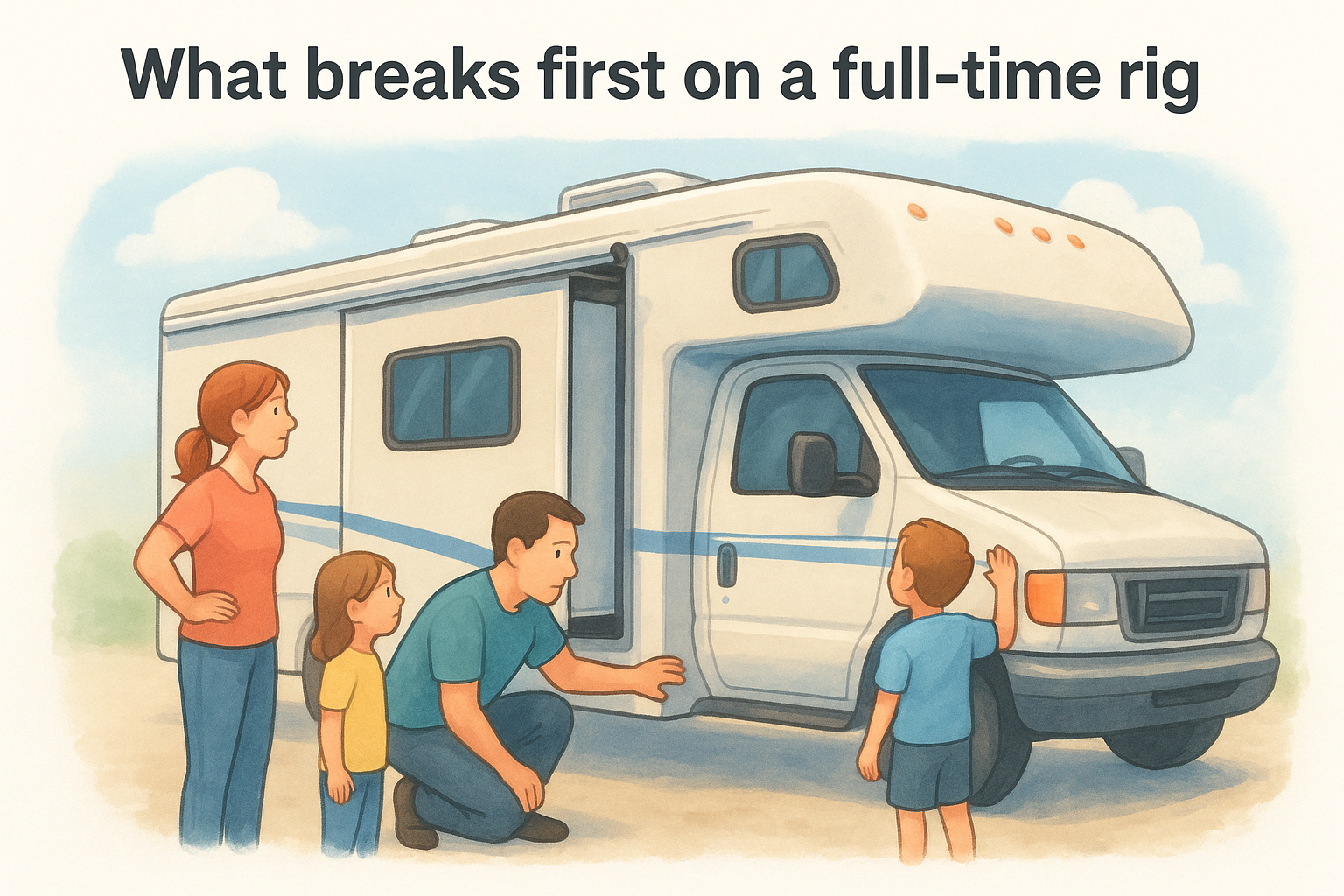
Slides and water heaters fail first because they work hardest, so check them first too.
When to call for mobile help
Problems eventually outpace what a family can fix with a wrench and a YouTube video, and that's fine. A jammed slide 300 miles from the nearest dealership needs a technician who can come to you, not a tow to a shop with a two-week wait. Knowing where to find vetted mobile RV technicians before you need one, rather than searching in a panic at a campground, saves both money and a ruined week of travel.
Finding your family's rhythm on the road
Every family finds a different pace, and that's the point. Some thrive moving every few days, others settle into a campground for a month and never look back. Full time RV living with family works when you stop chasing someone else's version of the lifestyle and build a routine that fits your kids, your work, and your budget instead. The families who last aren't the ones with the newest rig or the most followers online. They're the ones who planned for the boring parts: the paperwork, the maintenance, the repair fund.
Expect breakdowns. Expect a slide to jam at the worst time. What separates a stressful week from a ruined one is knowing who to call before you need them. When something on your rig fails and you need a vetted technician who comes to you, browse mobile RV service providers near you and get back on the road faster.