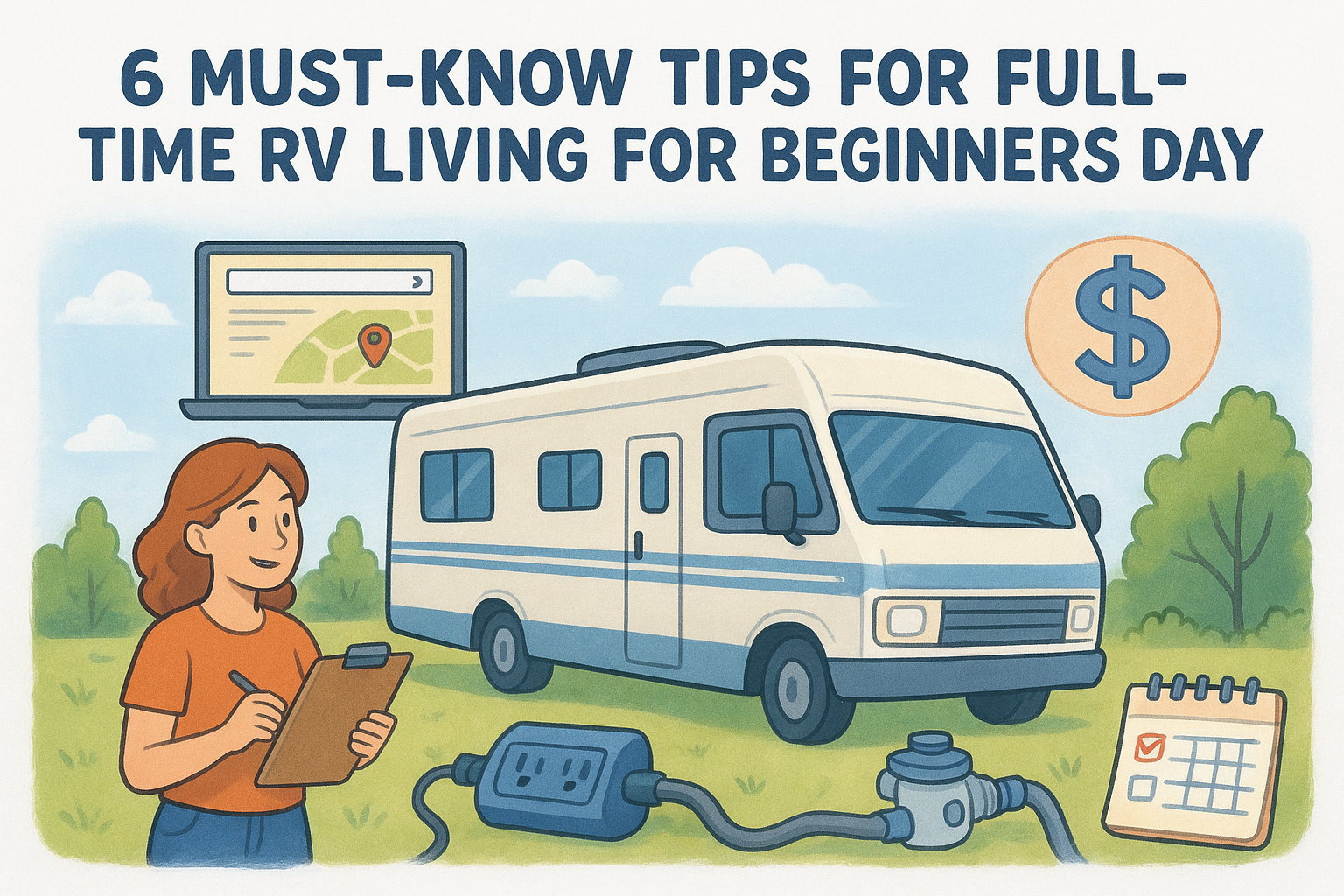
6 Must-Know Tips for Full Time RV Living for Beginners Today
Every year, thousands of people sell their houses, downsize their belongings, and hit the road full time in an RV. Some do it to escape the grind. Others want to travel while they still can. Whatever the reason, full time RV living for beginners comes with a steep learning curve, and the mistakes can be expensive if you're not prepared.
The freedom is real, but so are the broken water heaters at 11 p.m., the generator failures in the middle of nowhere, and the roof leaks you didn't catch before buying a used rig. These aren't hypotheticals. They're Tuesday. And when your home is on wheels, knowing how to handle maintenance and repairs isn't optional, it's survival. That's exactly why we built MobileRVService.com: a free directory of over 3,200 mobile RV technicians across North America who come to you, wherever you're parked.
This guide covers six practical tips we wish someone had handed us before making the jump. You'll find honest advice on costs, gear, logistics, and the hard-earned lessons experienced full-timers have learned the painful way. No sugarcoating, no "just follow your dreams" fluff, just the stuff that actually matters when you're about to make an RV your only address.
1. Use a mobile RV tech directory before breakdowns
When your slide stops retracting or your water heater quits mid-shower, you won't have time to start Googling for help. Most beginners assume they'll figure repairs out as they go, but waiting until something breaks to find a technician costs you time, money, and sometimes your campsite reservation.
Why beginners miss this
New full-timers tend to rely on roadside assistance programs or assume their RV warranty covers everything. In reality, most roadside plans handle towing only, and warranties expire or exclude wear-and-tear items faster than you'd expect. When a real breakdown hits, you end up calling a dealership that's booked three weeks out or paying premium rates to whoever shows up first.
Finding a qualified mobile technician before you need one is the single most practical step you can take before leaving your driveway.
How to do it step by step
Start by bookmarking a mobile RV technician directory, like MobileRVService.com, before your first trip out. Enter the zip code of your destination to see which technicians operate in that area. Check their ratings and service categories to confirm they handle your specific rig type, whether that's a Class A diesel pusher or a bumper-pull travel trailer.
- Search by zip code at each planned destination
- Filter results by service type (electrical, appliances, roof, slides)
- Save two or three contact numbers in your phone for each region you'll travel through
- Note your RV's make, model, year, and VIN for faster service requests
Costs and trade-offs
Mobile technician service calls typically run $75 to $150 just for the visit, before parts or labor. That sounds steep until you compare it to towing fees and dealership hourly rates. For full time rv living for beginners, the real cost of not having a contact lined up is a blown travel day and a bill you negotiate from a position of zero leverage.
Quick checklist
Run through this before each new leg of your trip:
- Look up technicians in your next destination's zip code
- Confirm at least one covers your RV type and needed service category
- Save their number offline so you can reach it without cell service
- Keep your RV's make, model, and year written somewhere easy to access
2. Build a realistic RV budget and repair fund
Most people moving into full time rv living for beginners spend months planning their route and almost no time planning their finances. That gap catches up with them fast, usually within the first three months on the road.
Why beginners miss this
New full-timers tend to calculate their campsite fees and fuel costs, then stop there. They forget that an RV is both a vehicle and a home, which means it breaks down like one and wears out like the other. Roof repairs, tire replacements, and appliance failures hit without warning, and they don't wait for payday.
Setting aside a dedicated repair fund before you leave is not optional. It's the difference between a setback and a trip-ending crisis.
How to do it step by step
Start by listing your fixed monthly costs: campsite fees, insurance, phone, and any subscriptions. Then add a 10% buffer on top of your total and route that directly into a repair fund every month.
- Budget $150 to $300 per month for routine maintenance
- Set a minimum repair fund target of $2,000 before departing
- Track spending weekly using a simple spreadsheet or budgeting app
Costs and trade-offs
Living full time in an RV can run $2,500 to $5,000 per month depending on how much you move and where you camp. Staying in one region longer reduces fuel costs significantly, but repair expenses stay constant regardless of mileage.
Quick checklist
- Calculate fixed monthly costs before departure
- Set a $2,000 minimum repair fund
- Add 10% buffer to your total monthly budget
- Review actual spending against your budget every two weeks
3. Follow simple travel rules that prevent burnout
Full time rv living for beginners often looks effortless from the outside, but moving too fast is one of the quickest ways to quit. New full-timers pack their itineraries too tight, drive too many days in a row, and wonder why the lifestyle feels exhausting by month two.
Why beginners miss this
Most new full-timers build their schedule around destinations they want to see rather than the pace they can actually sustain. They treat the road like a checklist instead of a lifestyle, stacking back-to-back moves and skipping rest days entirely. The result is that what felt like freedom starts to feel like pressure.
A good rule of thumb: spend at least three nights in each location before moving on.
How to do it step by step
Limit your driving days to 300 miles or fewer, and never plan more than three or four moving days in a single week. Block at least one full stationary day per week where you park, relax, and don't touch the steering wheel.
- Cap daily drives at 300 miles
- Plan no more than three or four move days per week
- Schedule one complete rest day per week
- Review your route every Sunday and cut stops that feel forced
Costs and trade-offs
Slowing down saves money on fuel and reduces wear on your tires and drivetrain. You'll cover less ground, but your rig and your mental health will both last longer.
Quick checklist
- Set a firm 300-mile daily driving cap
- Block one rest day per week on your calendar
- Review and adjust your schedule weekly
- Drop any stop that no longer excites you
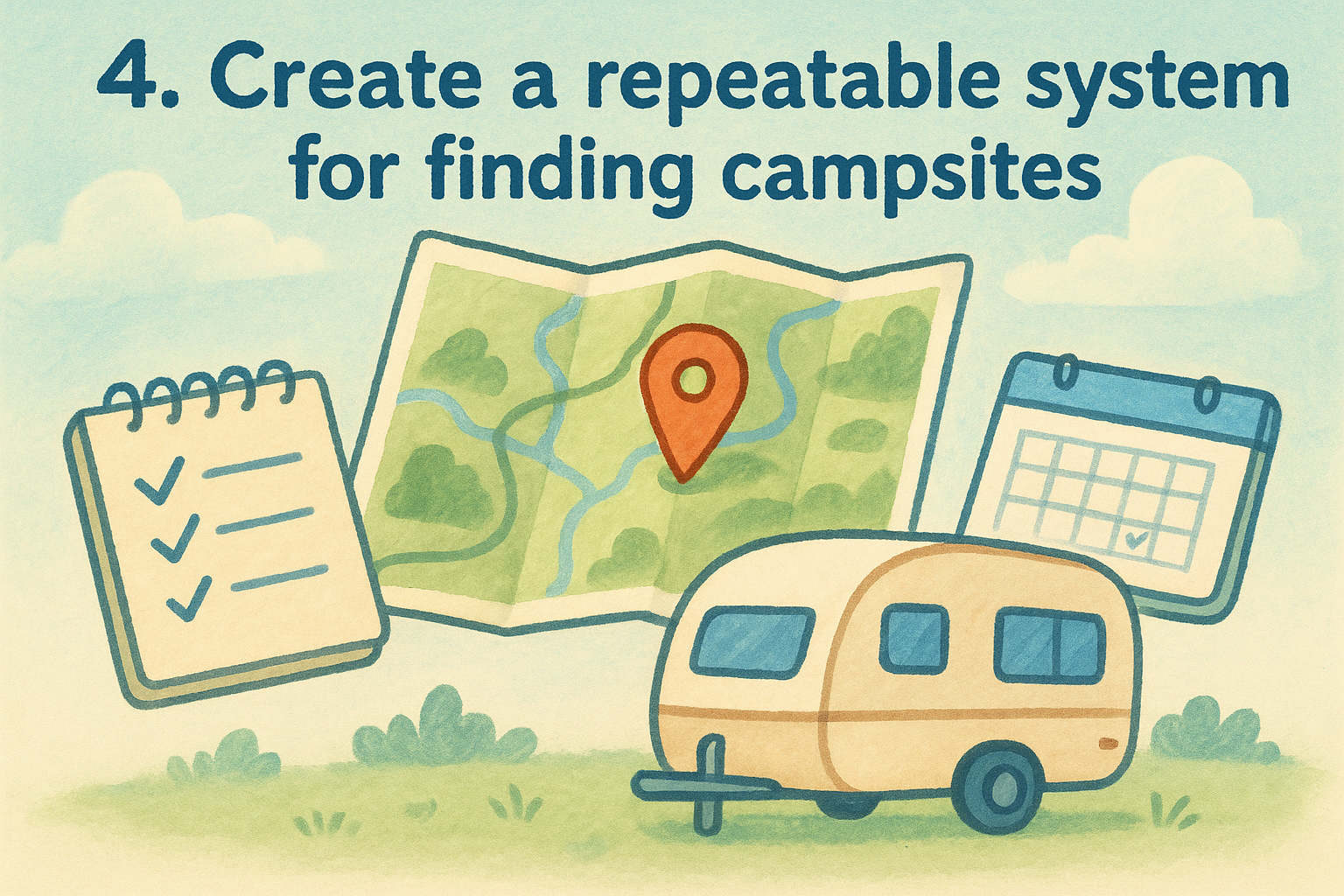
4. Create a repeatable system for finding campsites
New full-timers often scramble to find a campsite the night before they arrive, which leads to overpaying, settling for bad locations, or pulling into a full campground after dark with nowhere to go. Building a simple, repeatable booking routine solves this before it becomes a pattern.
Why beginners miss this
Most beginners treat campsite booking as a one-off task rather than a built-in part of their travel rhythm. They search randomly, switch between different apps each time, and never build any real process. When a spot falls through or a campground closes unexpectedly, they have no backup plan and no system to fall back on.
How to do it step by step
Start your search at least two weeks ahead for popular destinations and one week out for rural areas. Keep a running log of campgrounds you've stayed at, noting hookup availability, cell signal strength, and pull-through access for your rig size.
Book your next three stops before you leave your current site, not after you're already rolling down the highway.
- Search by region two weeks out
- Log past sites with hookup types and signal notes
- Identify one backup site per destination
Costs and trade-offs
Full hookup sites typically run $35 to $75 per night, while dry camping on Bureau of Land Management land can cost nothing. Mixing both styles keeps your monthly campsite costs manageable for anyone navigating full time rv living for beginners.
Quick checklist
Run through this list before every departure to keep your campsite system consistent and prevent last-minute scrambles that eat into your travel day.
- Book three stops ahead before each move
- Log sites you'd return to with hookup details
- Confirm site dimensions fit your rig before booking
- Identify one free or low-cost backup per destination
5. Set up domicile, mail, and paperwork early
When you leave your permanent address behind, your legal and financial life doesn't follow automatically. Sorting out domicile, mail forwarding, and vehicle registration before you leave saves you from scrambling through bureaucratic headaches at a campground with spotty cell signal.
Why beginners miss this
Most new full-timers focus on the physical move and assume the paperwork will sort itself out later. Without a legal domicile state, you can't renew your driver's license or register your vehicle without a permanent address attached to your name, which creates compounding problems the longer you delay.
How to do it step by step
South Dakota, Texas, and Florida are the most popular domicile states for full-timers because they have no state income tax and straightforward registration processes. Pick one, establish residency through a mail forwarding service, and update your driver's license and registration before you depart.
Choosing your domicile state before you leave is one of the most important administrative steps in full time rv living for beginners.
- Choose a domicile state with no income tax
- Sign up for a mail forwarding service in that state
- Update your driver's license and vehicle registration
Costs and trade-offs
Mail forwarding services typically run $100 to $200 per year. That cost is minor compared to the penalties that come from letting your registrations and licenses lapse while you're parked three states away from where you're registered.
Quick checklist
Run through this list before your departure date. Missing any one of these steps creates legal and financial complications that are far harder to resolve from a moving vehicle than from a fixed address.
- Select a domicile state before departure
- Set up mail forwarding through a registered service
- Update your driver's license and registration
- Confirm your insurance policy reflects your new domicile state
6. Pack essential gear and stick to maintenance basics
Most people entering full time rv living for beginners pack the wrong things and skip the right ones. You end up with three cast iron pans and no sewer hose connector, realizing too late that your gear list should start with function, not comfort.
Why beginners miss this
New full-timers treat packing like a camping trip rather than a permanent move into a home with active mechanical systems. They bring what feels familiar instead of what an RV actually needs to run day to day, and skip basic maintenance supplies entirely.
How to do it step by step
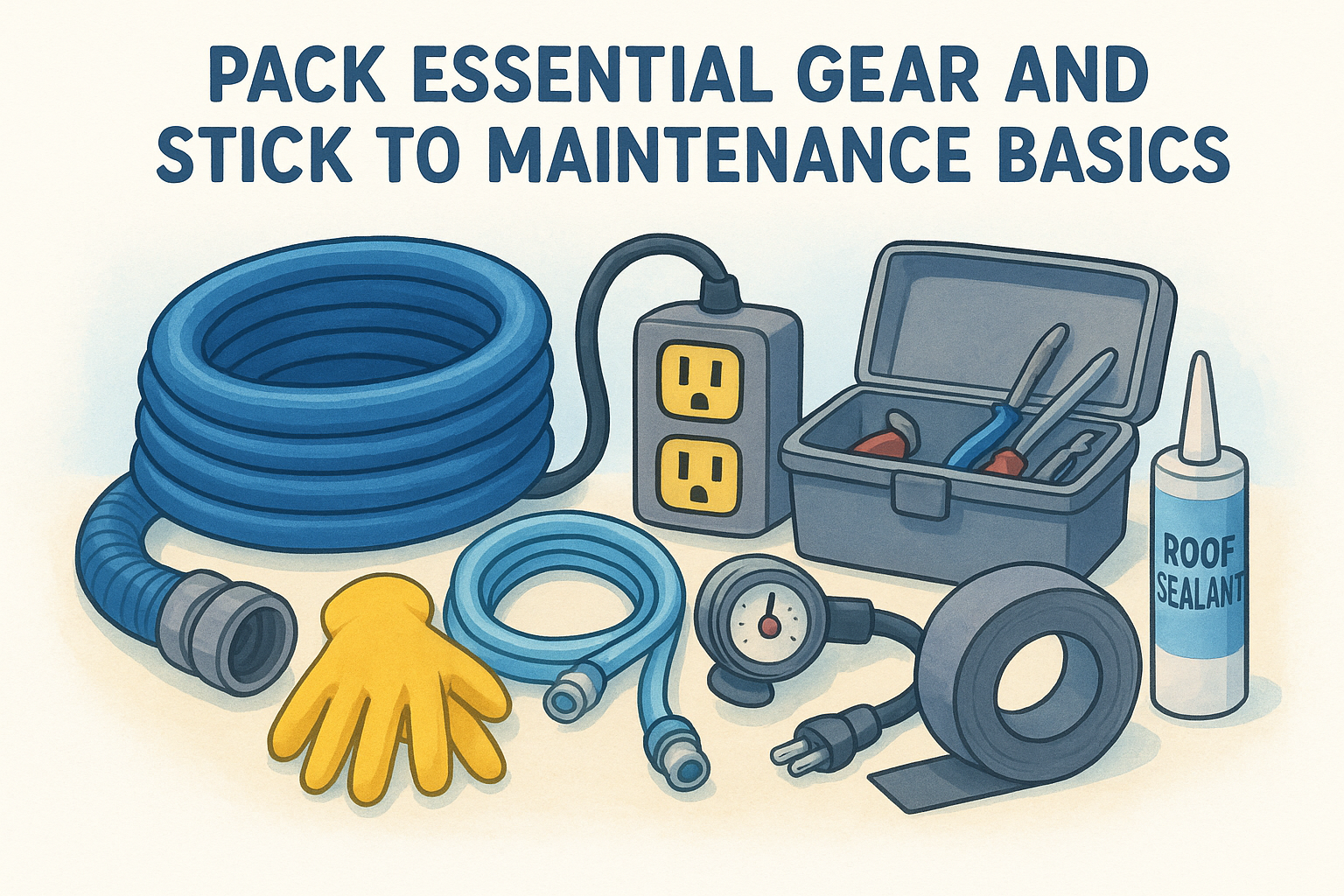
Build your gear list around the core systems inside your rig: water, electrical, sewer, and propane. Stock a small toolkit and maintenance kit before you ever leave your driveway.
- Sewer hose, connectors, and gloves
- Water pressure regulator and potable water hose
- Surge protector for shore power hookups
- Basic hand tools and a tire pressure gauge
- Roof sealant and lap tape for spot repairs
Costs and trade-offs
Starter gear runs $200 to $400 for the full list above. Skipping the surge protector alone can cost you a $1,500 converter replacement after one bad campground hookup.
Buying the right gear before you leave is always cheaper than replacing the systems it was meant to protect.
Quick checklist
- Pack a surge protector, water regulator, and sewer kit
- Store basic tools and roof sealant in a dedicated compartment
- Inspect roof seams and slide seals every three months
Your next move
Full time RV living for beginners gets a lot easier when you stop trying to figure everything out alone. The six tips in this guide cover the ground that trips up most new full-timers: finding technicians before you need them, building a real budget, pacing your travel, booking campsites ahead, sorting your domicile paperwork, and packing the gear that actually matters.
You don't have to implement all of it at once. Start with the two or three areas where you feel the least prepared, and build from there.
When it comes to keeping your rig running on the road, the single best move you can make right now is getting familiar with what support looks like before a breakdown happens. Check out our RV owner membership features to see how MobileRVService.com connects you with qualified mobile technicians and remote assistance, so you're never stuck without options when something goes wrong.