Certified RV Inspector Near Me: How to Find and Hire One
Searching for a certified RV inspector near me comes down to four moves. Search by zip code in a directory that lists NRVIA-certified inspectors. Verify the credential and the inspector's independence. Get a written quote that spells out the scope. Then attend the inspection so you can act on the report. The fee is a small fraction of what you pay for the RV.
The problem is that a used RV can look perfect and still hide a soft roof, delaminated walls, or a failing slide. A seller's word, a dealer's walkthrough, or your own once-over will not find water intrusion behind a clean sidewall. Repairs like those often run into the thousands, and you usually learn about them after you have signed.
This guide walks you through each step, from building a shortlist to turning the report into a negotiating position. MobileRVService.com connects RV owners and buyers with mobile technicians and inspectors across the United States and Canada, and searching is free. So the steps below use that kind of location-based search, and they work with any directory.
Why a certified RV inspection is worth it
A certified inspection gives you an unbiased, documented look at the whole RV before money changes hands. It replaces the seller's claims with findings you can check, and it gives you something concrete to negotiate with.
What NRVIA certification tells you
The National RV Inspectors Association (NRVIA) trains and certifies inspectors to examine RVs in a consistent way and write a standard report. An RV is a house, a vehicle, and a set of appliances in one body, and few buyers can judge all three. NRVIA certification gives you a baseline of training, and the level (Level 1, Level 2, or Master Certified) tells you how much experience sits on top of it.
An independent inspector also works for you, not for the seller. That means a third-party opinion from someone with no stake in the sale, which is the whole point of paying for one.
A certified inspector is the only person in the deal who gets paid the same whether you buy or walk away.
What a pre-purchase inspection covers
Expect the inspector to test and observe every major system, not just walk around the RV:
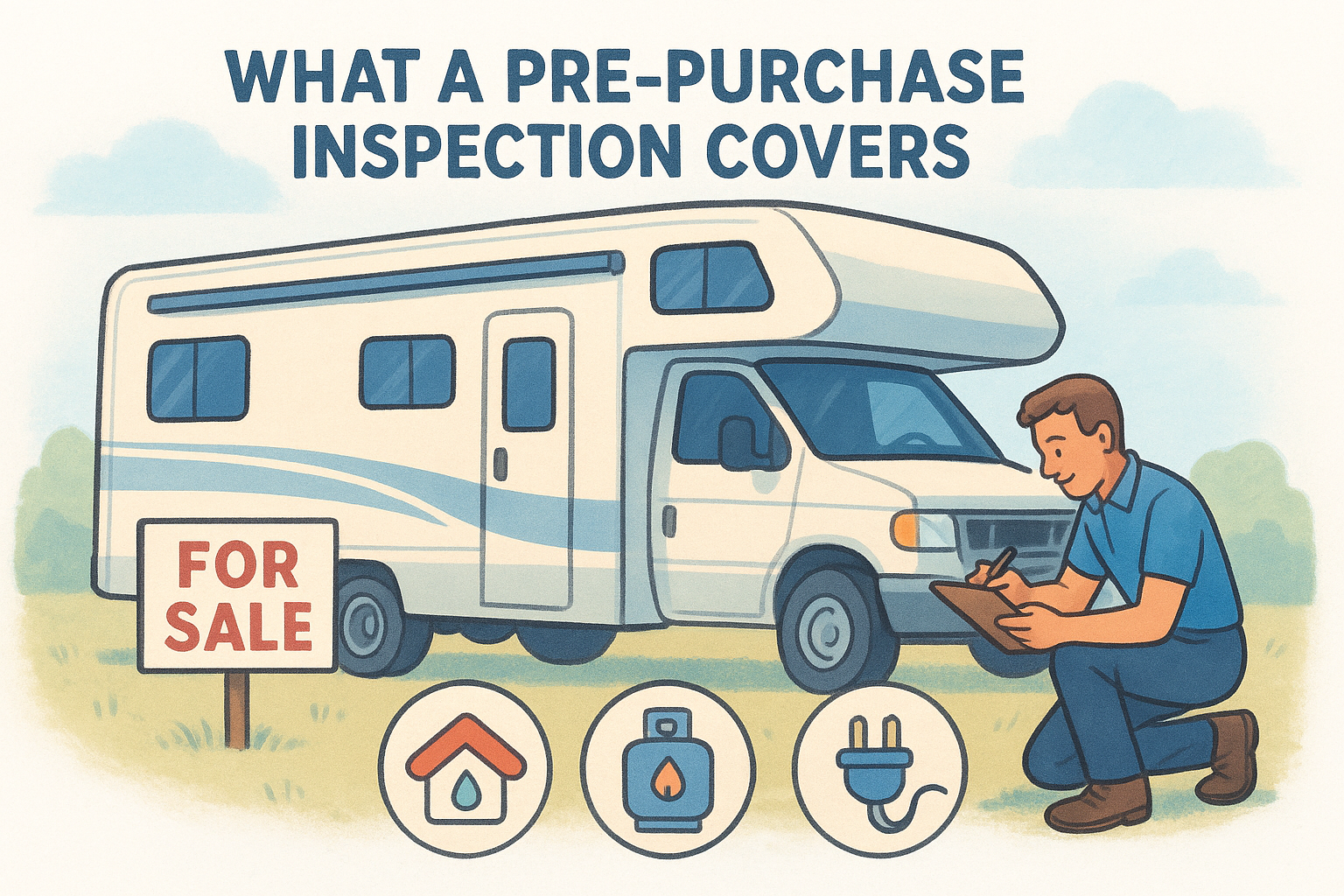
- Roof, seams, and seals, plus moisture readings on walls and floors
- Slide-outs, awnings, and leveling systems
- Propane system and leak test
- 12-volt and 120-volt electrical, including the converter and inverter
- Plumbing, water pump, and tanks
- Furnace, air conditioner, water heater, and refrigerator
- Tires (including age), brakes, axles, and frame
Motorhomes add the engine, generator, and chassis. The result is a written report you can keep and share with a lender, an insurer, or the seller.
Step 1. Search by zip code
Start with a location-based search and build a shortlist of three inspectors. Three gives you enough quotes to compare without turning the search into a project.
Start with directories that filter by location
On MobileRVService.com, enter a zip code and filter by the pre-purchase inspection category, ratings, and availability. The network lists 3,200+ vetted mobile technicians, and every provider is vetted for experience, certifications, insurance, and reviews. The NRVIA also runs its own inspector locator. Check both, and note which names appear in each.
Search where the RV is, not where you live
Mobile inspectors drive to the RV, so the zip code that matters is the one where the RV sits. If you are buying from a seller in another state, search the seller's zip code. Hiring a local inspector at the RV's location also means you do not have to move the rig first.
Use the RV's zip code, not your own, because the inspector travels to the rig.
If your search comes up empty
Some areas have few certified inspectors. In that case, VIP membership ($49.95 per year) has MobileRVService.com triage the request, find and vet a technician, and stay with it until it is handled. If you only need help once, RV Assist Single Use costs $50 and is valid for 30 days from purchase.
Step 2. Verify the credential
Confirm every claim before you book. A website banner that says "certified" is not proof, so check the details yourself.
Check the certification and level
Ask each candidate for their NRVIA certification details and the level they hold, then confirm them with the NRVIA. Level 2 and Master Certified inspectors have additional training and experience. Some also hold a Registered RV Tech credential from the RVIA-RVDA, which shows hands-on repair knowledge. Ask how many inspections they have done on your type of RV, such as a fifth wheel, a Class A, or a toy hauler.
Confirm independence and insurance
Avoid inspectors recommended by the seller or the dealer, because the referral creates a conflict of interest. Then ask three things:
- Do they carry liability or errors and omissions insurance?
- Do they sell repairs on the RVs they inspect?
- Can they send a sample report?
A sample report shows you the level of detail you will get, including photos, moisture readings, and clear ratings for each finding.
If the seller chose the inspector, you have a referral, not an inspection.
Step 3. Get a written quote
Get each quote in writing and confirm what it includes. Price differences between inspectors usually come from scope, not from quality.
Ask these questions before booking
Send your three candidates the same message so the quotes line up:
Hi, I'm buying a [year, make, model, type, length] located at [zip code].
Are you NRVIA certified, and at what level?
1. What is your total fee, including travel?
2. Does it include a roof walk, moisture readings, and a propane leak test?
3. For motorhomes: are the engine, generator, and a test drive included?
4. How long does the inspection take, and when do I get the report?
5. What do you need from the seller (power, water, propane, access)?
What to expect to pay
The fee depends on the RV's type and size, the inspector's level, and how far they travel. It commonly runs from a few hundred dollars for a small towable to $1,000 or more for a large motorhome. Treat the price as a ratio. Say a travel trailer is listed at $28,000 and the inspection quote is $500. That is under 2% of the price. If the report turns up $3,000 in roof and slide repairs, you have a documented reason to renegotiate.
A $500 inspection on a $28,000 RV is under 2% of the price, and one finding can repay it many times.
Step 4. Attend and use the report
Be at the inspection if you can, and treat the report as a decision tool. The report is only useful if you act on it.
Prepare the RV and be there
Ask the seller to have the RV fully accessible with shore power, water, and propane available, and to leave storage bays and compartments empty enough to open. Plan on a few hours, depending on the RV. Walk through with the inspector and ask them to show you each problem. A leak stain looks different once someone explains what caused it and what the repair involves.
Turn the report into a decision
Sort the findings into three groups: safety issues, major repairs, and minor items. Safety problems like a propane leak or bad brakes should be fixed before you buy, or they should end the deal. For major repairs, get a repair estimate and ask the seller to lower the price or fix them. Minor items are your call after purchase. Mobile technicians can quote fixed-price repairs at your location, and repairs booked through MobileRVService.com carry a 30-day labor warranty.
Rank the findings by safety first and cost second, then negotiate from the list.
Buy with the facts in hand
Finding a certified RV inspector is a short process. Search by the RV's zip code, verify the NRVIA credential and independence, compare written quotes, and attend the inspection. Then use the report to buy, renegotiate, or walk away. The fee is small against the cost of a hidden roof or slide problem.
If your search does not turn up a qualified inspector in time, VIP membership and RV Assist options can have our team find and vet a technician for you. Searching the directory remains free.