9 RV Solar And Inverter Kits For Reliable Off-Grid Power
Cutting the cord from hookups and campground electrical pedestals starts with one upgrade: a solid RV solar and inverter setup. Whether you're boondocking in the desert for a week or just want backup power at a campground, a combined kit gives you everything you need, panels, inverter, charge controller, and wiring, in one box, matched and ready to install.
But picking the right kit isn't straightforward. Wattage, battery compatibility, inverter capacity, and expandability all matter, and getting it wrong can mean underpowered appliances or a system that doesn't scale with your needs. That's exactly why we put this guide together, to break down nine kits worth considering and help you figure out which one actually fits your rig and travel style.
Once you've chosen a system, installation is the next step. Some RV owners handle it themselves, while others want a qualified technician to do it right the first time. That's where MobileRVService.com comes in, our directory connects you with over 3,200 mobile RV technicians across North America who can install, inspect, or troubleshoot solar and electrical systems right at your campsite or driveway. No need to haul your rig to a dealership.
Below, you'll find nine RV solar and inverter kits ranked and reviewed, covering budget-friendly starter setups to full-size systems built for extended off-grid living. Let's get into it.
1. MobileRVService.com to match you with a solar tech
MobileRVService.com isn't a boxed kit you order and hope for the best with. It's a nationwide directory of over 3,200 mobile RV technicians who come directly to you, whether that's your driveway, a campground, or a roadside stop. When it comes to an rv solar and inverter installation, having a qualified tech handle the work means your system gets wired correctly from the start, your battery bank is sized to match your actual usage, and your inverter is configured to handle your real load, not a rough guess.
Getting the component combination wrong is one of the most common and costly mistakes RV owners make with solar installs. A professional can catch those problems before they cost you twice.
What you get
MobileRVService.com connects you with vetted mobile technicians who specialize in RV electrical work, including solar panel mounting, charge controller configuration, inverter wiring, and battery bank integration. You search by zip code, filter by specialty and ratings, and contact providers directly through the platform. If you can't locate someone independently, the VIP Membership tier offers concierge-style assistance to find a qualified tech in your region.
The platform itself is free to use for RV owners. You pay the technician directly for labor and any parts they supply, so there's no platform markup on the work itself.
Best for
This option is the right move if you already own your components and need professional installation, or if you want a tech to assess your rig and power needs before you buy anything. It also works well for owners who attempted a DIY install and ended up with a system that underperforms or throws error codes.
Full-time travelers running complex 12V or 24V systems, owners with multiple slide-outs, or anyone dealing with existing solar problems that need accurate diagnosis will get real value from this route versus trying to troubleshoot alone.
Sizing and install notes
Before the technician arrives, it helps to know your daily power draw in amp-hours and have a sense of how many panels your roof can physically support. A qualified tech will run through load calculations with you and recommend the right inverter capacity based on your largest single appliance draw, typically an air conditioner, microwave, or electric water heater. Most full system installs run four to eight hours depending on complexity and existing wiring conditions.
Typical cost
Labor rates for mobile RV solar installs generally run $75 to $150 per hour, with most complete system installs landing between $400 and $900 in labor alone. Parts and components are priced separately. Diagnostic visits for existing system faults typically cost $100 to $200 for the service call plus hourly time on site.
2. Renogy RV solar kits with inverter add-ons
Renogy is one of the most recognized names in portable and rooftop solar, and their RV-specific kits give you a solid foundation for building an rv solar and inverter system without having to source every component separately. Their kits typically ship with monocrystalline panels, a PWM or MPPT charge controller, mounting hardware, and cabling, while Renogy's separate inverter lineup lets you pair the right unit to match your actual load.
What you get
Their tiered lineup ranges from 100W starter setups to 400W expandable systems, most bundled with their Wanderer or Rover series charge controllers. You add an inverter separately from their product catalog, choosing between pure sine wave models for sensitive electronics and modified sine wave units for simpler loads. This modular approach lets you scale the system over time rather than replacing it entirely when your power needs grow.
Pure sine wave inverters protect appliances like CPAP machines, laptops, and variable-speed devices far better than modified sine wave units, so factor that into your purchase before you commit.
Best for
These kits work well for weekend and part-time RV users who want a reliable entry-level system with room to expand later. If you're new to solar and want a well-documented setup backed by a large owner community, Renogy's ecosystem of compatible components and published wiring guides makes the process significantly more approachable.
Sizing and install notes
Most Renogy kits assume 12V battery banks, so confirm your rig's electrical system matches before you order. Their 200W and 400W configurations pair well with a 1000W to 2000W pure sine inverter for running mid-range loads like a small microwave, a fan, or a coffee maker.
Typical cost
Kit bundles from Renogy run $150 to $600 depending on wattage and controller type. Adding a compatible pure sine wave inverter from their lineup typically adds $100 to $350 to your total, making this one of the more budget-accessible starting points on this list.
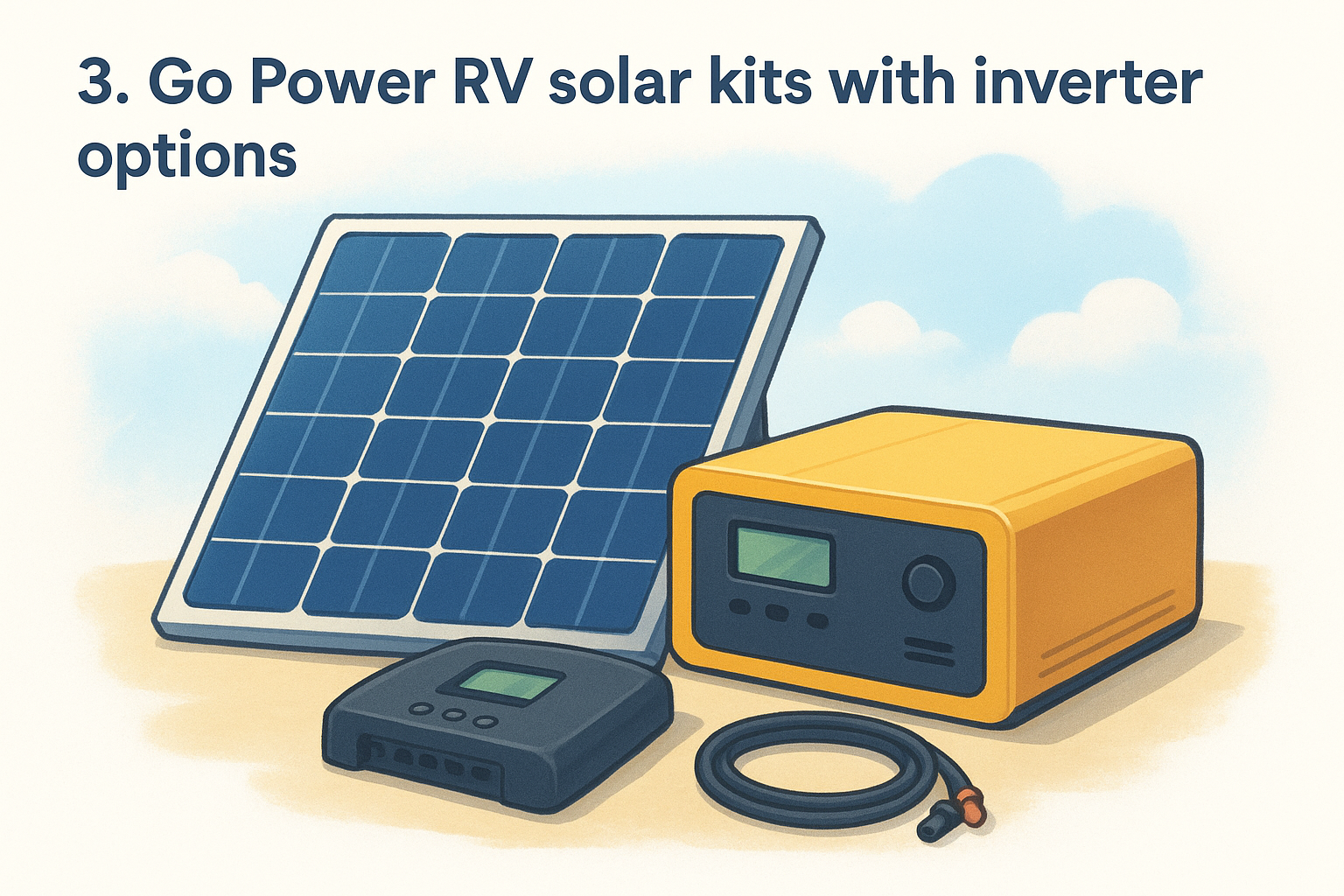
3. Go Power RV solar kits with inverter options
Go Power is a Canadian-based manufacturer with a long track record in the RV industry, and their kits are specifically engineered for recreational vehicles rather than adapted from residential or commercial solar products. Their lineup stands out because they sell integrated solar and inverter bundles designed to work together out of the box, which removes much of the guesswork around component compatibility that comes with mixing brands.
What you get
Go Power's RV kits come in configurations ranging from 80W to 570W, bundled with their GP-PWM or GP-MPPT charge controllers and mounting hardware. Their inverter-charger units, including the GP-IC series, combine a pure sine wave inverter with a built-in battery charger, which is a practical setup for RV owners who spend time both on and off hookups. This dual-function design means you're running one unit instead of two separate boxes competing for cabinet space.
An inverter-charger combination simplifies your rv solar and inverter setup significantly, especially if you regularly move between boondocking and campgrounds with shore power.
Best for
Go Power kits are a strong fit for Class A and Class C motorhome owners who want a clean, purpose-built system with full manufacturer support. If you're upgrading an existing 12V system and want components that won't require significant rewiring, Go Power's pre-matched bundles make the transition straightforward.
Sizing and install notes
Their 190W and 380W kits pair cleanly with the GP-3000HD inverter-charger for running appliances like a microwave or hair dryer without overloading your battery bank. Plan for at least 200Ah of battery capacity at the 190W level to get reliable performance between sun exposure windows.
Typical cost
Expect to spend $400 to $900 for the panel and controller bundle. Adding one of their inverter-charger units typically brings the total system cost to $1,200 to $2,000, depending on inverter capacity and whether you're sourcing batteries separately.
4. AIMS Power RV solar and inverter kits
AIMS Power builds its reputation on heavy-duty inverter-charger units rather than lightweight starter kits, which makes their product line a better match for RV owners with serious power demands. Their components are used in off-grid cabins, work trucks, and RVs, and you can source matched panels, charge controllers, and inverters directly from their catalog to build a complete rv solar and inverter system without mixing brands.
What you get
AIMS Power offers pure sine wave inverter-chargers ranging from 1,000W to 12,000W, paired with monocrystalline solar panels and MPPT charge controllers. Their inverter-charger units handle both off-grid power conversion and shore power battery charging in a single box, which reduces the number of components you need to wire and mount in your RV's electrical compartment.
Their heavy-gauge construction and UL-listed products give you a layer of assurance that lighter consumer-grade units often skip.
Best for
AIMS Power gear fits best if you're running power-hungry appliances like a residential refrigerator, air conditioner, or power tools from your RV. Full-time liveaboards and frequent boondockers who regularly push past 2,000 watts of continuous load will find AIMS equipment better suited to their demands than most entry-level kits on the market.
Sizing and install notes
Their inverter-chargers run on 12V, 24V, or 48V systems, so confirm your battery bank voltage before you order anything. A typical RV build using AIMS components looks like this:
- 400W to 600W of solar panels on the roof
- 2,000W to 3,000W pure sine wave inverter-charger
- 200Ah or more of lithium or AGM battery capacity
Typical cost
AIMS Power components sit in the mid-to-upper price range. A quality inverter-charger runs $300 to $800, and a complete system with panels and a charge controller brings your total to $900 to $2,000 depending on capacity and battery type.
5. The Inverter Store RV solar and inverter packages
The Inverter Store focuses on pre-configured system bundles that pair solar panels, charge controllers, and inverters into a single purchase, removing the guesswork around compatibility. Unlike manufacturers who specialize in either panels or inverters, The Inverter Store builds packages specifically around matching component capacities, so you're less likely to end up with an undersized inverter running an oversized panel array.
What you get
Their RV packages typically include monocrystalline solar panels, an MPPT charge controller, and a pure sine wave inverter, bundled together and sold as a complete rv solar and inverter system. Package sizes range from entry-level 200W configurations to larger 800W setups designed for extended off-grid use. Each bundle is assembled to work as a cohesive unit, which means the charge controller input rating aligns with the panel output and the inverter capacity matches the expected battery bank.
Buying a pre-matched bundle from a single source is one of the fastest ways to avoid the component mismatch problems that trip up DIY builds.
Best for
These packages work well for RV owners who want a complete system without spending hours cross-referencing specs across multiple brands. If you're comfortable doing your own install but don't want to source components piece by piece, The Inverter Store's bundled approach saves meaningful time during the planning phase.
Sizing and install notes
Their mid-range 400W to 600W bundles are a practical fit for RVs with standard roof space and moderate daily power needs like lighting, a 12V refrigerator, phone charging, and a small television. Most bundles assume a 12V battery bank, so verify your existing battery configuration before placing an order.
Typical cost
Package pricing generally falls between $500 and $1,400, depending on panel wattage and inverter capacity, making this a competitive mid-range option compared to buying each component separately from different suppliers.
6. SunGoldPower RV solar panel kits with inverter pairing
SunGoldPower offers a range of solar panel kits that pair cleanly with their own inverter lineup, giving you a budget-conscious path to building a complete rv solar and inverter system without sacrificing too much on component quality. Their products sit in the affordable tier of the market, which makes them attractive for RV owners who want functional off-grid power without the premium price tag of more established brands.
What you get
SunGoldPower kits include monocrystalline solar panels paired with PWM or MPPT charge controllers, and their inverter catalog covers both modified and pure sine wave units ranging from 1,000W to 6,000W. Their SGP series pure sine wave inverters are the most practical pairing for RV use, handling sensitive electronics without the signal noise issues that modified sine wave units introduce. Most kits ship with mounting hardware and basic wiring, though you'll want to source quality battery cables separately for a clean install.
Pure sine wave inverters are worth the extra cost if you run a CPAP machine, laptop, or any appliance with a variable-speed motor.
Best for
SunGoldPower works best for cost-conscious RV owners who are newer to solar and want a functional starter system without a heavy upfront investment. Their kits suit part-time campers and weekend travelers who aren't pushing their system to its limits daily.
Sizing and install notes
Their 200W to 400W panel kits pair well with a 2,000W pure sine wave inverter for running moderate loads like lighting, a fan, and small appliances. Plan for a 100Ah to 200Ah battery bank to store enough capacity between sun windows on cloudy days.
Typical cost
SunGoldPower kits run $200 to $500 for panels and a controller. Adding one of their pure sine wave inverters brings the total system cost to roughly $400 to $800, making this one of the most accessible options on this list.
7. RICH SOLAR RV inverters with matched solar kits
RICH SOLAR builds products specifically around the needs of off-grid and mobile power users, which makes their lineup a natural fit for an rv solar and inverter setup. Their catalog covers high-efficiency monocrystalline panels, MPPT charge controllers, and pure sine wave inverters, and the components are sized to work together without the mismatch issues that come from mixing brands across different product ecosystems.
What you get
RICH SOLAR's panel kits range from 100W to 200W individual panels that you can combine into larger arrays, paired with their 20A to 40A MPPT charge controllers. Their pure sine wave inverters start at 1,000W and scale up to 3,000W, covering most standard RV appliance loads without overloading your battery bank. Each inverter includes built-in protection for overload, short circuit, and low battery voltage, which adds a layer of reliability during extended off-grid use.
Pure sine wave output is non-negotiable if you run a CPAP machine, laptop, or any appliance with a sensitive motor or processor.
Best for
RICH SOLAR gear suits RV owners who want reliable components at a price point that sits comfortably between budget brands and premium names. Their kits work particularly well for part-time and full-time travelers running moderate daily loads, including lighting, USB charging, a small refrigerator, and basic electronics.
Sizing and install notes
Their 200W to 400W panel configurations pair cleanly with a 2,000W pure sine wave inverter and a battery bank of at least 100Ah to 150Ah. Confirm your roof space accommodates your target panel count before ordering, since rigid panels require secure mounting hardware for highway travel.
Typical cost
RICH SOLAR panel kits run $150 to $400 depending on wattage. Adding one of their compatible inverters brings your total system cost to roughly $400 to $900 before batteries.
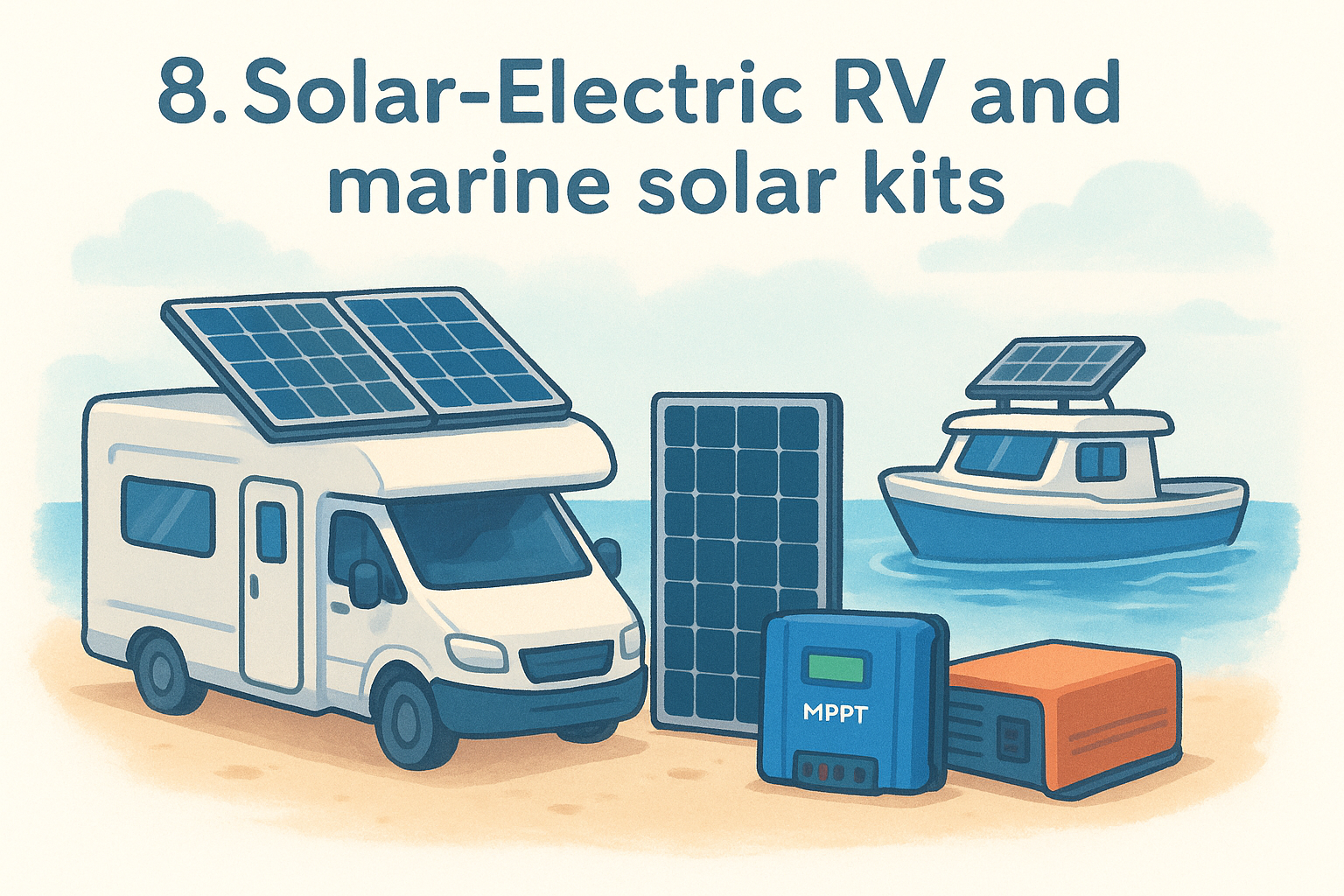
8. Solar-Electric RV and marine solar kits
Solar-Electric is a specialty retailer that stocks solar components built to handle the demands of mobile and marine environments, which means their products are tested for vibration, moisture exposure, and variable charging conditions that standard residential panels aren't designed for. Their catalog pulls from multiple established brands rather than manufacturing in-house, which gives you access to a curated selection of panels, charge controllers, and inverters matched for RV and boat applications.
What you get
Solar-Electric carries flexible and rigid monocrystalline panels alongside MPPT charge controllers and pure sine wave inverters from brands like Victron Energy and Magnum Energy. Rather than one locked-in bundle, you configure your rv solar and inverter system by selecting compatible components from their product pages, with their team available to advise on sizing before you commit to a purchase.
Victron Energy components are widely regarded as some of the most reliable in the mobile power space, and having them available through a single retailer simplifies the sourcing process significantly.
Best for
This option fits experienced RV owners and liveaboards who want premium-grade components without sourcing from multiple vendors. If you run a complex 24V or 48V system or want Victron's monitoring and integration features, Solar-Electric gives you the components and the expertise to build it correctly.
Sizing and install notes
Their team can walk you through load calculations and battery sizing before you order, which is especially useful if you're building a larger 400W to 800W array paired with a high-capacity inverter-charger. Most systems at this level require lithium battery banks to handle the higher charge and discharge rates efficiently.
Typical cost
Component pricing varies widely based on brand and capacity. Expect $600 to $2,500 or more for a full system, with Victron-based builds sitting at the higher end of that range.
9. RockSolar off-grid RV systems with inverter bundles
RockSolar positions itself as an accessible brand for RV owners who want complete off-grid power systems without navigating a complicated component selection process. Their catalog focuses on bundled solar kits paired with inverters, making it straightforward to get a working rv solar and inverter setup ordered and delivered in a single transaction.
What you get
RockSolar's RV-focused bundles include monocrystalline solar panels, MPPT charge controllers, pure sine wave inverters, and mounting hardware, all selected to work together at compatible voltages and capacities. Their kits range from 200W starter configurations to larger setups built for extended boondocking. The inverters included in their bundles produce clean pure sine wave output, which means you can run sensitive electronics like laptops and medical devices without signal interference.
Pure sine wave output matters most when you're running appliances with variable-speed motors or built-in processors, so confirm your kit includes it before purchasing.
Best for
RockSolar kits suit newer RV solar users who want a complete, matched system without spending hours comparing specs across different brands. Their bundles work well for weekend campers and part-time travelers who need reliable off-grid power for moderate daily loads like lighting, USB charging, and a 12V refrigerator.
Sizing and install notes
Their 200W to 400W bundles pair best with a battery bank of 100Ah to 150Ah, which gives you enough storage to run basic appliances through a cloudy day or overnight. Most RockSolar kits assume a standard 12V system, so confirm your RV's electrical configuration aligns before ordering.
Typical cost
RockSolar bundles generally run $300 to $800, depending on panel wattage and inverter capacity. That price point puts them in the same affordable range as SunGoldPower and RICH SOLAR, making them a competitive choice for budget-conscious buyers who want a complete kit without purchasing components separately.
Next steps for off-grid power
Choosing the right rv solar and inverter kit comes down to three things: your daily power needs, your roof space, and how much of the install you want to handle yourself. The nine options in this guide cover a wide range of budgets and use cases, from entry-level 200W starter kits to premium Victron-based builds for full-time liveaboards. Pick the one that matches your actual load requirements, not the biggest system you can fit on the roof.
Once you have your components selected, the install matters just as much as the hardware. A poorly wired system wastes energy, damages batteries, and can create real safety risks. If you want a qualified mobile technician to handle the work at your location, find a certified RV solar installer near you through MobileRVService.com. You get the system done right the first time, without moving your rig.