RV Repair and Parts near Me: 6 Ways to Find Trusted Help
When your slide won't retract or your fridge quits in July, you don't have time to scroll through random listings. Searching rv repair and parts near me often returns dealerships with six-week waitlists, stale reviews, and parts counters that are closed on Sunday. You need a fix, and you need to know who to trust.
The fastest route is usually a mobile RV repair technician who comes to your site, paired with a parts source you can verify before you pay. That combination saves you a tow, a lost campsite, and days of waiting. Shops still make sense for major structural work, but most breakdowns don't need one.
Below are 6 practical ways to find trusted repair help and replacement parts, from local searches to online suppliers. For each, you'll see how to compare reviews, confirm availability, and get quotes. At MobileRVService.com, we list over 3,200 mobile providers across the US and Canada, so we'll also show where a zip code search fits in.
1. Use MobileRVService.com to find a mobile RV technician
How it works
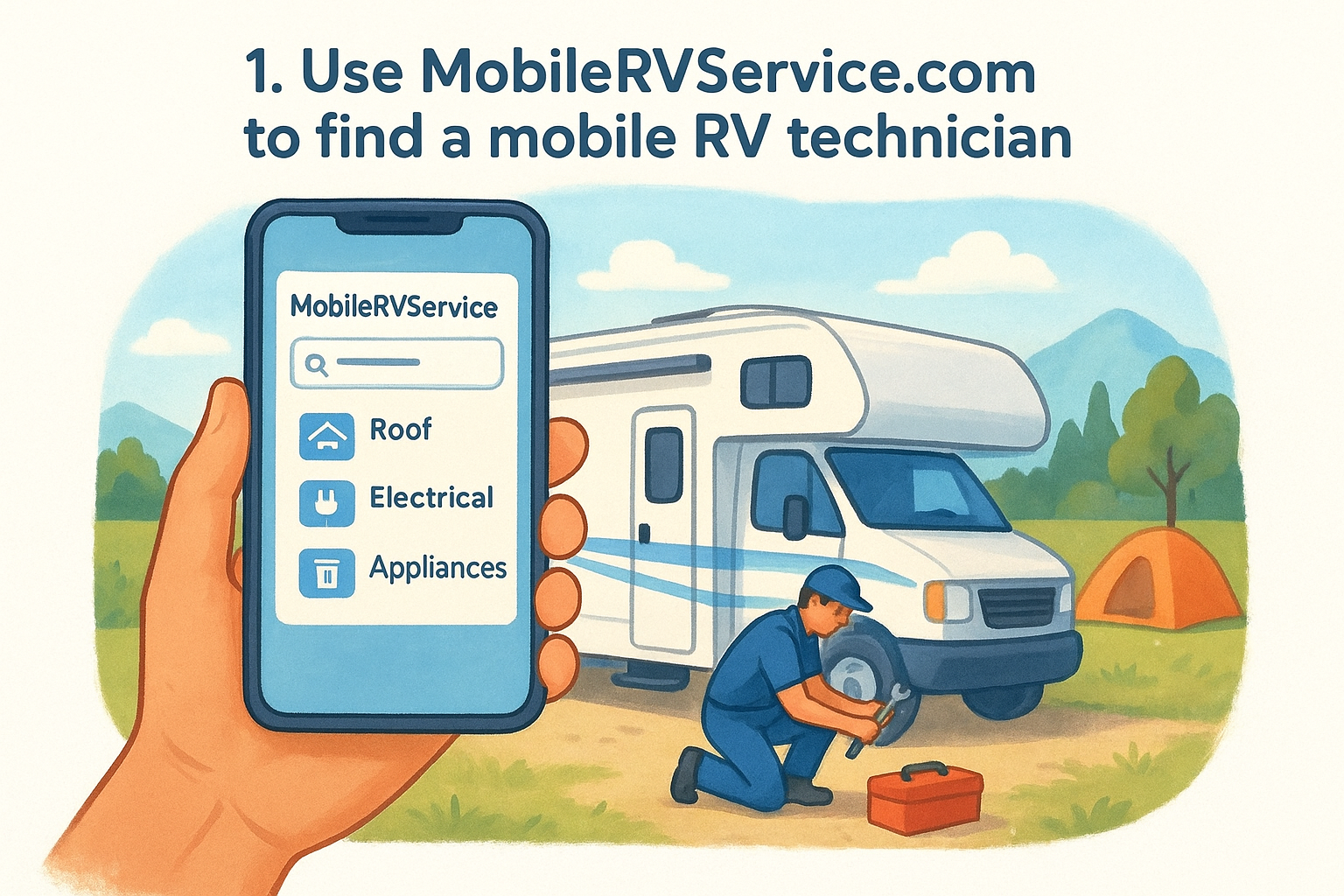
Think of it as a sharper version of an rv repair and parts near me search. Enter your zip code at MobileRVService.com and you get nearby technicians from more than 3,200 listings across the US and Canada. You can filter by rating, availability, and service category, then contact providers directly.
- Enter your zip code.
- Pick a category, such as roof, tanks, electrical, or appliances.
- Sort by rating and availability.
- Message two or three techs for quotes.
A mobile technician turns a tow and a week in a shop into a repair at your own campsite.
Best for
Travelers stuck at a campground and full-timers who can't give up their home for days will get the most from this route. It also suits pre-purchase inspections on used rigs, since inspectors come to the seller's lot.
Emergencies fit too. The directory works 24/7, so you can search at 10 p.m. with a dead slide motor. If nobody answers, the VIP Membership tier adds concierge help finding a qualified tech.
What to check before you book
Before you commit, vet the technician the way you would any contractor:
- Specialty match: confirm they handle your issue and your rig type.
- Recent reviews: look for repairs similar to yours in the last few months.
- Fees: ask about travel, diagnostic, and after-hours charges.
- Paperwork: request a written estimate and ask about warranty on labor.
Cost and parts access
Searching the directory is free. You pay the technician directly, usually a service call fee plus labor and parts. Rates vary by region, so compare at least two quotes.
Many mobile techs stock common items like fuses, seals, and igniters, and they can order the rest. Ask whether they source parts themselves or accept yours. Some won't warranty customer-supplied parts, so settle that before you buy anything.
2. Visit an RV dealership service center
How it works
Call the service department, describe the symptoms, and book a drop-off appointment. Technicians diagnose the rig in the shop and send an estimate for your approval.
Expect to leave the RV there. In busy seasons, waits of several weeks are common, so ask for the next opening before you commit.
Best for
Warranty claims, recalls, and major structural or chassis work belong here. Newer rigs still under factory coverage fit best, since manufacturer warranty repairs often must go through an authorized dealer.
A dealership is the right call for warranty and structural work, and an expensive one for everything else.
What to check before you book
Before you commit, ask these questions on the phone. They keep a two-day job from becoming a two-week one.
- Are the technicians RVIA/RVDA certified for your type of repair?
- Are the parts in stock, or on order?
- Is the diagnostic fee applied to the repair if you approve it?
- Can you stay in the RV while it's in the shop?
Cost and parts access
Dealerships usually charge higher hourly labor rates than independent shops. Get the estimate in writing and ask about shop supply fees.
The upside is OEM parts access. Dealers can often order factory components the same day, which helps with brand-specific items you won't find at a local parts counter.
3. Call an independent RV repair shop
How it works
Searching rv repair and parts near me on Google Maps surfaces most locally owned shops. Call, describe the problem, and book a drop-off or diagnostic slot.
Most are small crews, so the person on the phone often knows the technician who will work on your rig. Follow-up questions get easier answers than at a big service desk.
Best for
Owners of out-of-warranty rigs get the most value here. Brakes, axles, hitches, and general mechanical repair are routine work for these shops.
Regulars also benefit. Build a relationship with one shop and you often get priority scheduling when something fails mid-season.
An independent shop can match dealership skill at a lower labor rate, if you vet it first.
What to check before you book
Before you hand over keys, confirm they service your rig type and read reviews from the last six months. Then ask:
- Do they carry liability insurance on customer vehicles?
- Will you get an itemized written estimate?
- What warranty covers their labor?
Cost and parts access
Labor usually runs below dealership rates, though prices vary by region. Compare two estimates for any job over a few hundred dollars.
Parts access depends on the shop. Many order from distributors within a day or two, and some let you supply your own parts, but they may not warranty the repair.
4. Shop at a local RV parts store
How it works
The parts half of any rv repair and parts near me search is the local counter. Walk in or call with your rig's make, model, and year, plus a part number or a photo of the broken piece. Staff check stock or order it.
Bring the old part when you can. Comparing it side by side prevents a second trip for the wrong size.
Best for
Small, urgent fixes fit this route: fuses, water pump fittings, hoses, seals, and LP regulators. It also suits DIY owners who want advice from staff and need the part today, not in three days.
When a part is cheap and urgent, the local counter beats any shipping estimate.
What to check before you book
Call first, because stock varies by store. Ask these before you drive over:
- Is the exact part on the shelf right now?
- What are today's hours, including Sunday?
- What is the return policy on electrical parts?
- Can they order OEM if it isn't stocked?
Cost and parts access
Shelf prices usually run higher than online, but you skip shipping and leave with the part in hand.
Many stores order special items overnight, and some price-match. Ask whether a part is OEM or aftermarket, since aftermarket versions often cost less.
5. Order RV parts from an online retailer
How it works
Search by part number first, then by make, model, and year. Add the part to your cart, pick a shipping speed, and send it to your campground office or a nearby delivery locker. When an rv repair and parts near me search turns up nothing in stock, ordering parts online is your backup supply line, with far wider selection than any single counter.
Best for
Planned repairs, upgrades, and rare items suit this route best. If the part isn't urgent, you can compare prices across several sellers and save real money. Full-timers with a mailing address or campground package service do especially well.
Order online when you can wait a few days, and buy local when you can't.
What to check before you book
Fitment errors are the main risk, so verify these before you pay:
- Match the OEM part number, not just the listing title.
- Confirm the return policy and any restocking fees.
- Read recent reviews for fit and quality complaints.
- Check the delivery date against your campsite reservation.
Cost and parts access
Online prices usually beat local shelves, and many sellers offer free shipping over a set amount. Factor in return shipping on bulky items like awnings or water heaters.
Finally, ask your technician first. Some won't install customer-supplied parts or warranty the work, so confirm before the box arrives.
6. Ask RV communities and campground neighbors
How it works
Post in a brand-specific Facebook group or owner forum, or simply ask your campground host. Share your rig make, model, and location, plus the symptom. Replies often land within an hour.
A good tip can beat an rv repair and parts near me search when listings look stale. Fellow campers point you to techs they've actually used, often someone already working in the park.
Best for
Rural stops, holiday weekends, and brand-specific quirks suit this route. Owners of the same model have likely seen your exact problem before.
It also works as a second opinion. Ask the group to sanity-check a quote before you approve the work.
What to check before you book
Treat advice as a lead, not a verdict. Verify every recommendation before you hand over money:
- Look up the tech's own reviews or directory listing.
- Confirm insurance and get a written estimate.
- Be wary of praise from friends or accounts with no history.
Peer advice finds you a lead, and your own vetting decides whether you hire them.
Cost and parts access
Asking is free, but prices vary widely. Collect two or three quotes and compare them.
Members also lend tools, share spares, and sell used OEM parts at a discount. Inspect used electrical components closely, since returns are rare in private sales.
Choosing the right help for your RV
The best answer to rv repair and parts near me depends on the problem in front of you. Use a mobile technician for most breakdowns, a dealership for warranty and structural work, and an independent shop for out-of-warranty mechanical jobs.
Parts follow the same logic. Buy at a local counter when the fix is urgent, order online when you can wait, and ask your tech whether they will install customer-supplied parts before anything ships. Whatever route you pick, get a written estimate and check recent reviews.
Next time something breaks, start with a zip code search and compare two or three quotes before you pay. If nobody is available where you are parked, see how VIP Membership helps you find a qualified RV technician and get back on the road sooner.