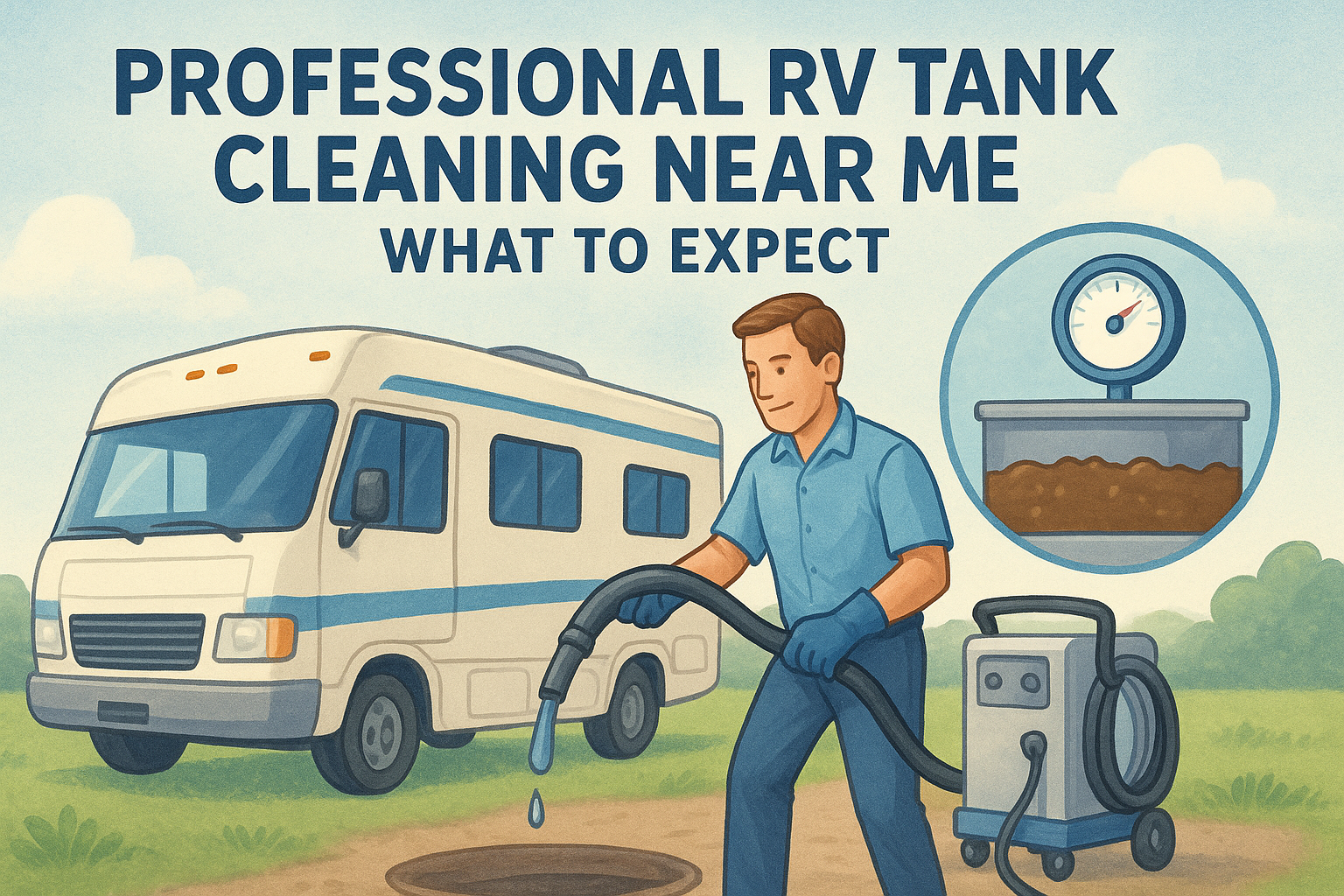
Professional RV Tank Cleaning Near Me: What to Expect
That sulfur smell coming from your bathroom, or a gray tank that never seems to drain clean, usually means it's time to search for professional rv tank cleaning near me instead of grabbing another bottle of tank treatment. Sensor readings stuck on full, sludge buildup in the black tank, and slow drainage are signs that a flush from the inside hose just won't fix anymore.
When you search for this service, you want a technician who shows up at your site, hooks into your tank system, and clears out the waste, mineral scale, and toilet paper residue that build up over months of use. A proper cleaning job restores your sensors to accurate readings and gets rid of odor at the source, not just masks it with chemicals.
In this guide, we'll walk through exactly what a mobile tank cleaning visit looks like, from the equipment technicians use to how long the job typically takes. You'll also learn how to spot a qualified provider, what questions to ask before booking, and where to find vetted help through our nationwide directory.
Why professional tank cleaning matters for your RV
Sludge doesn't just sit at the bottom of your black tank quietly. It cakes onto the sensor probes, coats the tank walls, and eventually blocks the dump valve from draining fully. That's why a search for professional rv tank cleaning near me turns up more often than you'd expect among full-time RVers, they've learned the hard way that DIY treatments only clean the top layer of waste while the hardened residue underneath keeps growing.
Sensor accuracy and odor control
Faulty tank readings are usually the first sign of a bigger problem. Once toilet paper buildup and calcium deposits from hard water coat your sensor strips, your monitor panel will show "full" even after a fresh dump, or worse, it'll read empty when the tank is actually packed. A professional cleaning strips that residue off the sensors and the tank walls, which restores accurate readings and eliminates the sour odor that no amount of enzyme treatment can mask.
A tank that reads wrong is a tank that's already dirty enough to smell.
Preventing permanent tank damage
Hardened waste doesn't stay put. It can crack valve seats, corrode fittings, and force you into a full tank replacement that costs far more than routine maintenance ever would. Mineral scale from campground water hookups makes this worse over time, since it bonds to whatever waste is already sitting in the tank.
Health and safety considerations
Black tank buildup isn't just gross, it's a genuine sanitation issue. Bacteria multiply in stagnant sludge, and sewer gas backup into the cabin can pose real breathing risks on long trips. Keeping your tanks properly cleaned protects both your rig's plumbing and your family's health on the road.
How to find and hire a professional near you
Start with a zip code search instead of scrolling random forum threads. A focused directory search narrows results to techs who actually service your area, rather than a national chain that subcontracts the job to someone three hours away.
What to check before booking
Don't just book the first listing. Look for verified reviews specific to tank cleaning, not just general RV repair, and confirm the provider carries a macerator or flush system built for the job.
- Ask if they clean both black and gray tanks in one visit
- Confirm they carry their own water source and waste disposal setup
- Check availability for same-week or emergency scheduling
- Ask about a written estimate before the truck arrives
A tech who can't answer basic equipment questions isn't ready for your rig.
Using a vetted directory saves time
Running your own background checks on every technician eats into your travel schedule. A searchable provider network that already filters by rating and service category, like the one on MobileRVService.com, gets you a qualified match in minutes instead of days.
What happens during a mobile tank cleaning appointment
Most visits run 45 minutes to an hour, depending on how much buildup has hardened inside your tanks. The technician connects a high-pressure flush wand through your toilet or a dedicated cleanout port, breaking up sludge without you needing to disconnect anything from your rig.
The step-by-step process
Every provider works a little differently, but a standard mobile visit follows the same basic sequence:
- Technician hooks a macerator or flush system to your black tank
- High-pressure water breaks apart sludge and scale on the tank walls
- Sensor probes get scrubbed clean of residue buildup
- Gray tank gets flushed separately to clear soap scum and food particles
- Wastewater gets vacuumed into the tech's own holding tank, not dumped on-site
- Sensors get tested for accurate readings before the tech leaves
If the tech doesn't test your sensors afterward, the job isn't finished.
What you should see afterward
A properly cleaned tank drains fast, smells neutral, and shows accurate sensor readings within a day of normal use. Ask your technician to run the flush cycle twice if you've gone more than a year without service, since first-time cleanings often need a second pass to clear years of hardened residue.
Signs your holding tanks need cleaning now
Your rig usually tells you before things get bad. Persistent odor that lingers even after a fresh dump means waste is baked onto the tank walls, not just sitting in the water column. If you notice this after every hookup, it's time to search for professional rv tank cleaning near me rather than reach for another treatment packet.
Warning signs to watch for
A handful of symptoms show up again and again once buildup gets serious:
- Sensor panel reads full right after a dump
- Slow or gurgling drainage from the black tank valve
- Sour smell that treatments can't cover anymore
- Visible solids or paper in the toilet bowl after flushing
- Gray tank backing up into the shower pan
If your sensors and your nose disagree, trust your nose.
Don't wait for a full failure
Waiting until the valve won't drain at all turns a routine cleaning into an emergency repair call. Hardened sludge near the outlet can jam the dump valve completely, leaving you stuck at a campsite until a tech arrives. Catching these signs early keeps the job quick, cheap, and far less unpleasant for everyone involved.
Cleaning costs and how to avoid overpaying
Most mobile tank cleaning visits run $150 to $350, depending on how many tanks you're cleaning and how much sludge has hardened inside. Rigs that haven't been serviced in a year or more often land at the higher end, since the tech needs extra flush cycles to break up years of buildup.
Typical pricing breakdown
Prices shift based on tank count and buildup severity, so it helps to know what's normal before you book.
Single tank flush (black only) $150-$200 Black and gray tank combo $225-$300 Heavy buildup, second flush pass $300-$350 Sensor cleaning add-on $25-$50How to avoid getting overcharged
Get a written quote before the truck rolls up, and ask whether the price covers both tanks or just the black tank. Some providers tack on travel fees for rural sites, so confirm that upfront rather than after the job's done.
The cheapest quote isn't a deal if it skips the sensor test at the end.
Searching professional rv tank cleaning near me through a directory that shows upfront pricing beats calling five shops blind.
Keeping your tanks in top shape going forward
Regular flushing beats emergency cleaning every time. Schedule a professional cleaning every six to twelve months depending on how often you're on the road, and your sensors, valves, and odor control will stay reliable trip after trip. Waiting for a full backup or a stuck valve always costs more, in money and in ruined travel days, than staying ahead of the buildup.
Finding help shouldn't be the hard part. A quick zip code search through a vetted directory gets you matched with a technician who already carries the right equipment for your tank setup, so you skip the guesswork and the cold calls. If you want ongoing support beyond a single cleaning, from parts sourcing to remote troubleshooting between appointments, check out the membership features built for RV owners and keep your rig road-ready year round.