Mobile RV Repair near Me Within 20 Mi: 5 Ways to Find One
The fastest way to find mobile RV repair near me within 20 mi is to search a directory by zip code, then confirm each tech's service radius and trip fee before you book. A directory like MobileRVService.com suits most owners. Your campground office works best if you are already parked, your roadside plan fits a highway breakdown, and a nearby dealer fits jobs that need a parts counter.
The problem is familiar. A slide won't retract or the fridge quits, and you don't want to tow a heavy rig to a shop 50 miles away. A 20-mile radius is a sensible target. A closer tech usually arrives sooner, and many charge less for the drive than they would for a longer trip.
This article covers five ways to find a tech near you, with how each one works, who it suits and where it falls short. MobileRVService.com has connected RV owners with service providers since 2022, so it comes first. We have tried to be straight about its limits too.
1. Search the MobileRVService.com directory
How it works
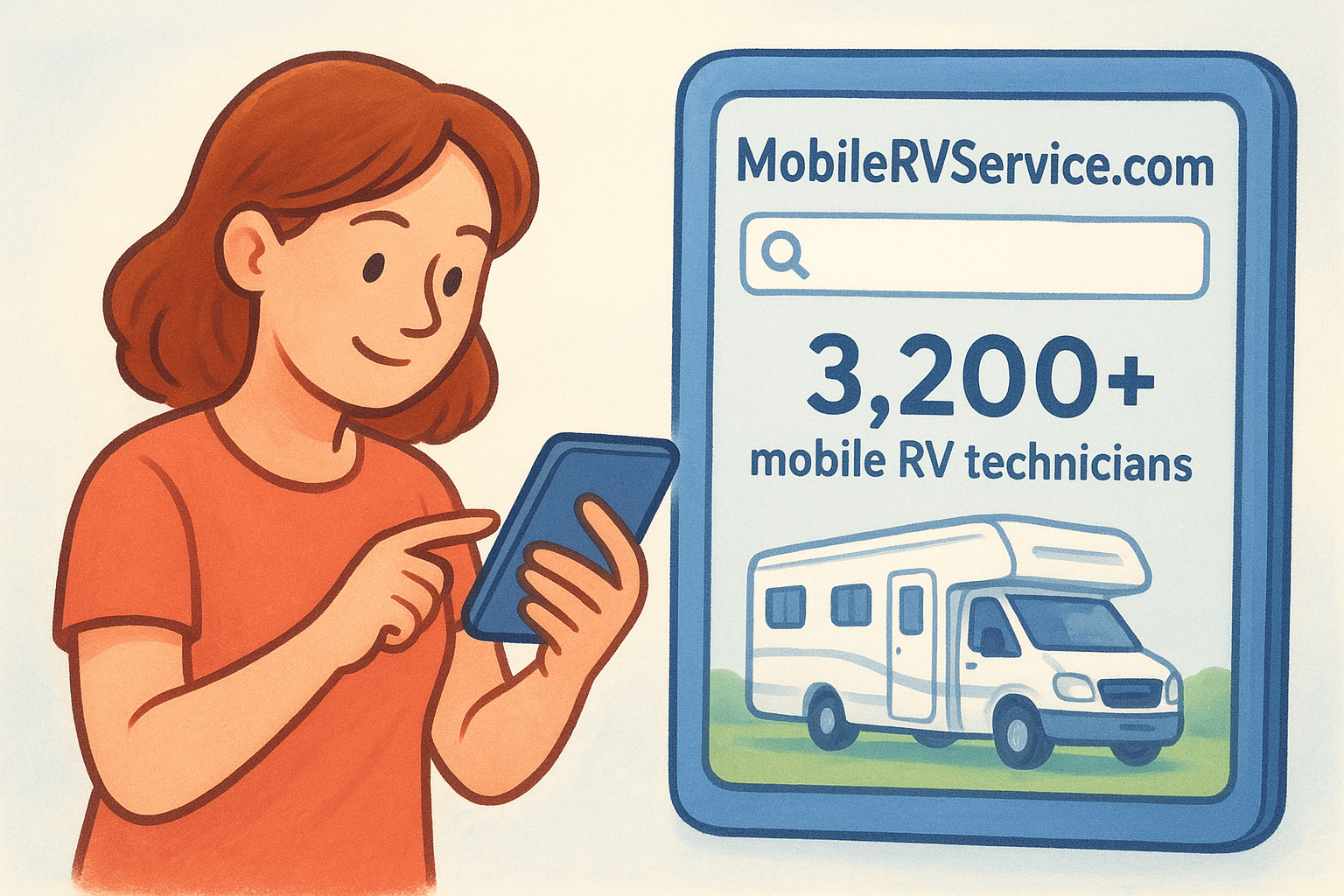
Enter your zip code at MobileRVService.com. The directory lists 3,200+ mobile RV technicians across the US and Canada. You can filter by rating, availability and service category, such as roof work, tank cleaning, electrical, appliance repair or pre-purchase inspections. Check each provider's distance and service area, then contact the ones inside your 20-mile radius.
Every provider is vetted for experience, certifications, insurance and reviews. Finding one is free for owners. Technicians give fixed-price quotes and on-the-spot diagnostics, and repairs carry a 30-day labor warranty. If you don't want to shop around, there are two paid options:
RV Owner Free Search, browse and connect with technicians, plus up to 5% off parts and accessories RV Assist, Single Use $50 One-time help with a single issue, where we find you help; valid 30 days VIP $49.95/year We triage the problem, find and vet a tech, and stay with the issue; up to 25% off parts, with shipping coordinated to your tech or campsiteWho it suits and the catch
This route suits owners who want to compare several vetted techs, and travelers in unfamiliar areas, because it works anywhere you can enter a zip code. Full-timers get the most from VIP, since someone else handles the phone calls.
The catch is coverage. In a thin rural area, no tech may sit within 20 miles, so widen to 30 or 40 miles or let RV Assist or VIP do the hunting. Standard service hours are Monday to Friday, 8am to 5pm, with on-call help on weekends, so weekend emergencies depend on the provider.
Search by zip code first, because it finds nearby help at once.
2. Ask your campground or park host
How it works
The office staff at your campground see techs come and go all season. Ask the front desk or host which mobile techs have worked in the park recently. Neighbors on nearby sites are a second source, and a friendly question about a repair they just had often gets you a name and a rough price.
Before you call anyone, check three things with the office:
- Whether outside technicians are allowed on your site.
- Whether the work needs advance notice or a specific time window.
- Whether any jobs, such as draining tanks, are restricted.
Who it suits and the catch
This works best when you are already parked and the problem is not an emergency. A tech who has serviced that park knows the site layout, hookups and rules, which saves time on arrival.
The catch is that recommendations are anecdotal. Nobody has checked the tech's insurance or certifications, and a tech who impressed your neighbor may be booked for two weeks. Always ask for proof of insurance and a written quote before work starts, whoever referred them.
A campground recommendation gives you a name, not a vetted technician, so verify before you book.
3. Search a map app with the radius in mind
How it works
Open Google Maps and search "mobile RV repair" while viewing your location. Zoom the map until it covers roughly 20 miles, then scan the pins. Read the business description closely. Many listings are RV shops that do not travel, and only some are true mobile operations. Read recent reviews, then call the two or three best matches.

When you call, ask these questions in order:
- Do you come to my site, and is it inside your service area?
- What is the trip fee, and is it waived if you do the repair?
- What is your hourly rate and diagnostic fee? Rates often run around $100 to $200 an hour depending on region, plus a trip charge.
- Do you carry common parts on the truck?
- What is your earliest opening?
Who it suits and the catch
This suits owners who are comfortable calling around and want to check reviews before committing. It also surfaces independent techs who don't advertise anywhere else.
The catch is accuracy. A pin 15 miles away may be a 35-minute drive on country roads, and the reviews may be years old. Nothing here confirms insurance or certification, so ask for both on the phone.
A pin on the map tells you where a business sits, not whether the tech will drive to you.
4. Call your roadside assistance plan or insurer
How it works
Check the card in your wallet or the policy documents for your RV. Many RV roadside plans and some insurance add-ons dispatch a tow truck or a mechanic when you break down. Call the number, give your exact location and the symptom, and ask what the plan pays for. Some cover towing and tire changes only, while others also cover on-site labor.
Ask how far they will tow, because that determines whether you end up inside your 20-mile radius or well outside it.
Who it suits and the catch
This suits highway breakdowns. Dead batteries, flat tires, brake trouble and engine or transmission failures are the situations these plans are built for, and you may already be paying for them.
The catch is scope. Plans typically focus on the chassis, not living-area systems such as slides, appliances, roof leaks or plumbing. The dispatched tech may also come from outside your 20-mile radius, and wait times can stretch during holiday weekends. For problems inside the coach, use another method on this list.
Roadside plans are built for the chassis, so use them for the road and a mobile tech for the living space.
5. Phone nearby RV dealers and service centers
How it works
Call the service departments of dealers within about 20 miles. Ask whether they run a mobile service truck or send a tech to customer sites. If they don't, ask who they refer overflow work to, since many service managers know the independent mobile techs in their area.
Have your RV's year, make, model and a clear description of the problem ready. A specific symptom, like "front slide stops halfway and the motor hums", gets a better answer than "the slide is broken."
Who it suits and the catch
This suits owners with warranty or recall work, newer rigs, or repairs that need specific parts and factory information. A dealer can also handle jobs a mobile tech can't, such as work that needs a lift or a full bay.
The catch is time. Dealer service queues can run for weeks in busy season, and many dealers want the RV brought in rather than visiting you. Ask about the diagnostic fee and the schedule up front, and keep the dealer as your fallback if a mobile tech can't reach your problem.
A dealer is the right call for warranty and shop-sized jobs, and a mobile tech is the faster call for everything else.
Start with the zip code search
To get mobile RV repair within 20 miles, search by zip code first, since that shows vetted options with distances. Use the campground office for local knowledge, a map search to cross-check, your roadside plan for the highway, and a dealer when the job is warranty or shop work.
Whatever route you take, get a fixed quote, proof of insurance and a clear trip fee before the tech starts. If you'd rather have someone find and vet the tech for you, see what VIP membership includes.