How Much Does an RV Cost? Prices by Type & Ownership
So you're asking how much does an RV cost, and you're probably getting wildly different answers depending on who you talk to. A neighbor's popup camper ran him $8,000. Your coworker's Class A diesel pusher cost more than most houses. Both of them are telling the truth, which is exactly why this question needs a real answer instead of a single number.
The honest response is that RV prices range from around $6,000 for a basic teardrop trailer to well over $500,000 for a top-tier motorhome, and the sticker price is only part of the story. Ownership costs like insurance, storage, fuel, and maintenance often add thousands per year on top of whatever you paid at signing. Buying an RV without budgeting for both sides of that equation is how new owners end up surprised six months in.
This article breaks down purchase prices by RV type, from towables to motorhomes, so you can see where your budget realistically lands. We'll also walk through the ongoing costs of keeping an RV road-ready, including the repairs and inspections that come with actual use, so you know what you're signing up for before you buy.
Why RV prices vary so widely
RV prices swing so much because you're not shopping for one product, you're shopping for a category that spans everything from a canvas tent on wheels to a rolling apartment with slide-outs and residential appliances. RV type is the single biggest driver of cost, followed by whether the unit is new or used, then by size, brand, and the features packed inside. Understanding these layers is what turns a vague number into a real budget.
RV type sets the baseline
Each class of RV has its own price tier, and the gap between the cheapest and most expensive options within a single class can still be tens of thousands of dollars.
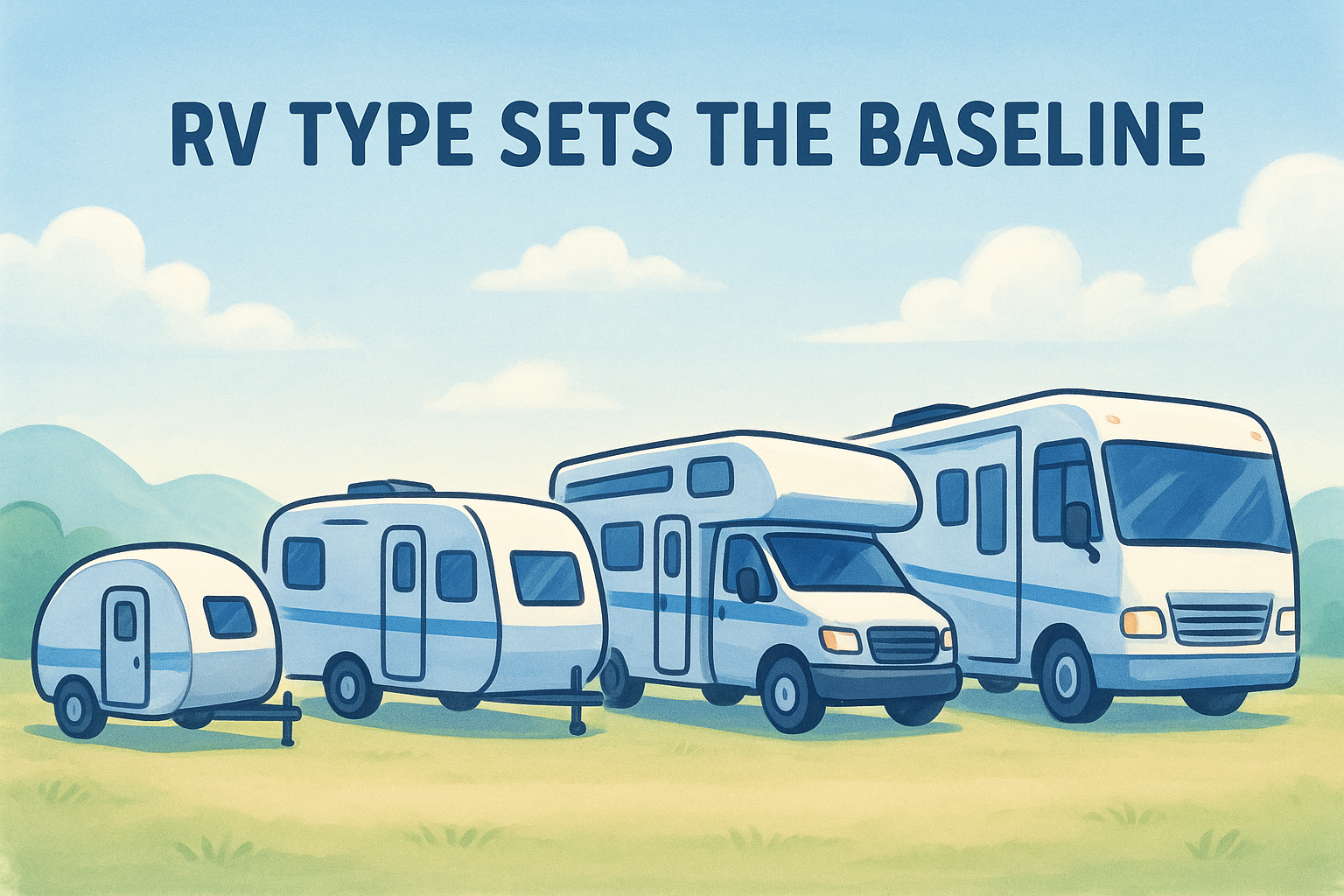
The type of RV you choose sets your price floor before you even look at a single feature list.
Notice how much overlap exists between categories. A loaded fifth wheel can cost more than an entry-level Class C, which is why matching your budget to a specific floor plan matters more than picking a class name off a brochure.
New versus used changes the math fast
Brand new units carry a premium for warranty coverage, current technology, and zero wear, but they also depreciate hard in the first few years, sometimes 20% or more once you drive off the lot. Used RVs, especially those five to ten years old, let you skip that initial depreciation hit while still getting years of usable life, which is why so many experienced owners buy secondhand and put the savings toward upgrades or a pre-purchase inspection.
Size, features, and brand reputation add or subtract thousands
Square footage isn't the only lever here. Solar setups, residential-size refrigerators, automatic leveling systems, and premium chassis brands all push prices upward, sometimes by $10,000 or more per feature category. On the flip side, a stripped-down model from a lesser-known manufacturer can undercut a name-brand competitor by a wide margin even with similar dimensions. If you're weighing two units with a big price gap, that difference is usually sitting in the build quality, warranty terms, or the extras bolted onto the frame, not in the base structure itself.
How to calculate the true cost of RV ownership
Purchase price is just the entry fee. The total cost of RV ownership includes insurance, registration, storage, fuel, and routine upkeep, and those line items can add $3,000 to $8,000 a year depending on your rig and how much you travel. Skipping this math is the fastest way to buy an RV you can't actually afford to use.
Break down the annual expenses
Start with a simple worksheet before you sign anything. Most owners underestimate storage and insurance because those costs don't show up on a dealer's price tag.
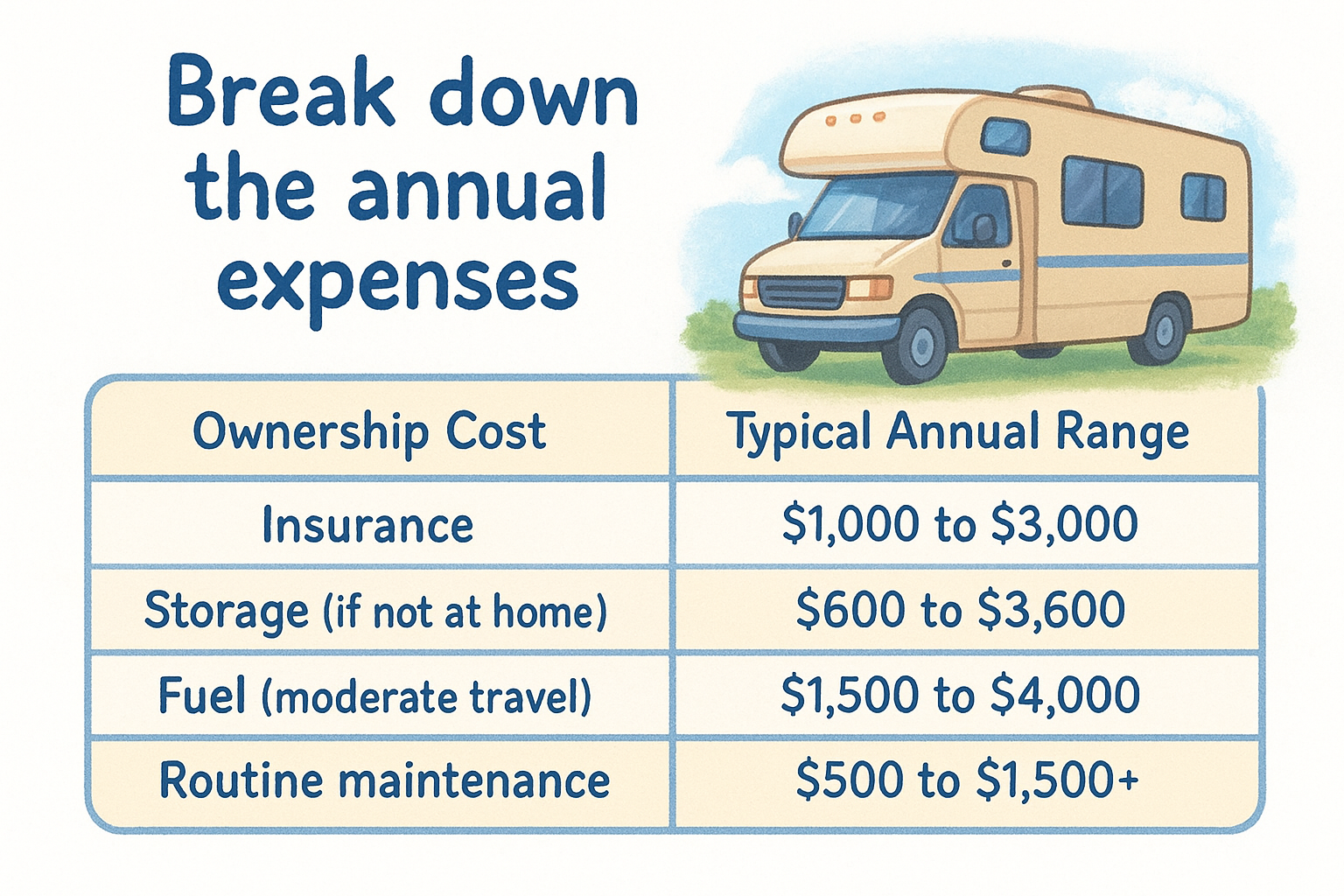
Your monthly payment tells you what you owe. Your annual ownership cost tells you what you can actually afford.
Add these numbers to your loan payment, and you get a realistic monthly figure instead of the misleading one dealers quote. Financing terms matter here too since a longer loan lowers your payment but increases what you pay in interest over time, according to guidance from the Consumer Financial Protection Bureau.
Factor in depreciation as well, since it's a real cost even if you never write a check for it. A new travel trailer can lose 15% to 25% of its value in year one alone, which matters if you plan to sell or trade in within a few years rather than keep the rig long-term.
How to budget for RV maintenance and repairs
Maintenance is where a lot of new owners get caught off guard, because RVs combine a vehicle chassis, a house's worth of appliances, and a roof that takes a beating from sun and rain every single day. RV maintenance costs aren't optional line items you can skip for a year to save cash. Deferred roof sealant or ignored tank maintenance turns into a $2,000 repair instead of a $150 one.
Set aside a dedicated repair fund
Budget at least 1% to 3% of your RV's purchase price annually for maintenance and repairs, even in years when nothing obviously breaks. That fund covers the recurring jobs every owner faces:
- Roof resealing and inspection, roughly once a year
- Tank cleaning and sensor checks
- Appliance servicing for fridges, water heaters, and AC units
- Tire replacement every 5 to 7 years regardless of tread wear
- Electrical system checks, especially on units with solar or inverters
Skipping a $150 roof inspection is how owners end up with a $2,000 water damage repair.
Emergency repairs cost more than planned ones
Breakdowns on the road cost more than the same repair scheduled at home, mostly because you're paying for urgency and location instead of shopping around. Emergency slide-out failures, blown appliances, or electrical shorts often run 20% to 30% higher when you need same-day help at a campground versus a scheduled shop visit. This is exactly why full-time travelers and weekend campers alike keep a list of mobile RV technicians on hand before something breaks, whether they camp in the Smoky Mountains or somewhere farther afield, rather than searching in a panic from a parking lot with no signal. Platforms like MobileRVService.com let you search by zip code, from the Texas Coastal Bend to anywhere else you travel, so you're not starting that search cold when a slide-out jams two states from home.
How to save money on your RV purchase and upkeep
Saving money on an RV isn't about buying the cheapest unit you can find. It's about spending in the right places and cutting costs everywhere else. Smart RV shopping starts before you ever step onto a dealer's lot and continues every year you own the rig.
Time your purchase and negotiate like a pro
Dealers discount hardest at the end of the model year, in late fall, and during the winter off-season when foot traffic dries up. Walking in with financing pre-arranged through your bank or credit union also strengthens your negotiating position, since you're not at the mercy of dealer financing markups. Buying a used RV that's five to ten years old skips the steepest depreciation curve entirely, often saving $20,000 or more compared to a comparable new unit.
The biggest savings usually happen before you ever sign the loan, not after.
Cut ownership costs without cutting corners
Once you own the RV, small habits protect your wallet over the long haul. Consider these moves:
- Store your rig under a carport or covered lot instead of outdoors to cut sun and weather damage
- Handle small repairs yourself, like sealant touch-ups, and order RV parts online to avoid shop labor rates
- Bundle RV insurance with your auto policy for a multi-policy discount
- Join a membership club for discounted campground rates if you travel often
Outsourcing the search for a trustworthy technician also saves money indirectly, since a rushed, panicked search often lands you with whoever's available rather than whoever's affordable. A VIP membership that connects you with a vetted mobile technician on request removes that guesswork and keeps repair costs predictable instead of reactive.
Putting your RV budget into perspective
Asking how much does an RV cost never has a one-line answer, and now you know why. The purchase price is just your starting point. Insurance, storage, fuel, and a dedicated repair fund all shape what you actually spend to keep your rig road-ready year after year. Treat those numbers as real line items, not afterthoughts, and you'll avoid the sticker shock that catches so many first-time buyers off guard.
Running the full math before you buy protects you from the two most common mistakes: overspending on a rig you can't maintain, or underspending on a fund that never covers real repairs. Once you own the RV, the smartest move is lining up support before you need it. Explore the RV owner membership and remote assistance options that keep your ownership costs predictable instead of reactive.