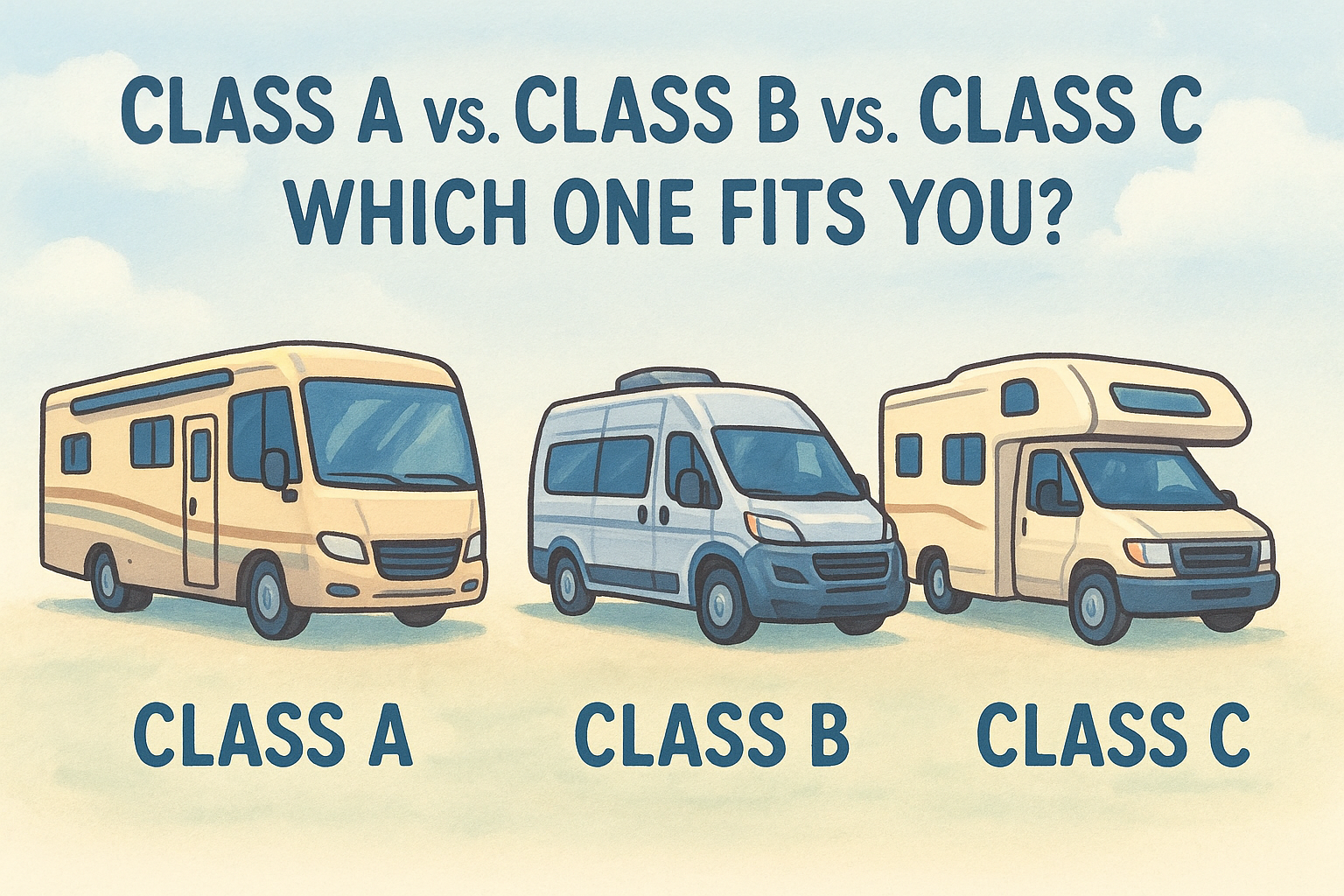
Class A vs. Class B vs. Class C RV: Which One Fits You?
Standing in an RV dealership lot, staring at three completely different-looking vehicles all labeled "RV," is enough to make anyone's head spin. The class a vs class b vs class c rv question trips up nearly every first-time buyer, and honestly, most sales brochures don't help much. Size, price, and drivability vary so much across these three classes that picking wrong can mean years of regret or a rig you can't comfortably park at your favorite campground.
Here's the short answer: Class A rigs are the big buses built for full-time living and long hauls, Class B vans are compact and nimble enough for daily driving and tight campsites, and Class C models split the difference with a van-cab front end and a livable bunk over the cab. Your choice comes down to how you'll drive, sleep, and store the thing between trips.
Below, we break down the real differences in size, comfort, and cost so you can match a class to your travel style instead of guessing. And once you've picked your rig, keep in mind that owning any class means occasional roof leaks, tank cleanings, or electrical gremlins. That's where a mobile RV technician network like ours comes in handy, no matter which class ends up in your driveway.
Why your RV class choice shapes every trip
Every decision you make on the road, where you park, how far you drive in a day, whether you can grab groceries without unhooking the rig, traces back to the class of RV you bought. Class A, Class B, and Class C motorhomes aren't just different sizes of the same vehicle; they're built around completely different lifestyles. Choosing based on price alone, without thinking through how you'll actually use the rig day to day, is the fastest way to end up frustrated three months into ownership.
Size and drivability change your daily routine
Size determines almost everything about your trip, from which campgrounds will accept you to how nervous you'll feel backing into a site. A 40-foot Class A motorhome drives like a small bus and needs a spotter for tight turns, while a 20-foot Class B van slides into a regular parking spot at a grocery store. Class C rigs sit in between, usually 25 to 33 feet, offering more room than a van without the intimidation factor of a full-size coach.
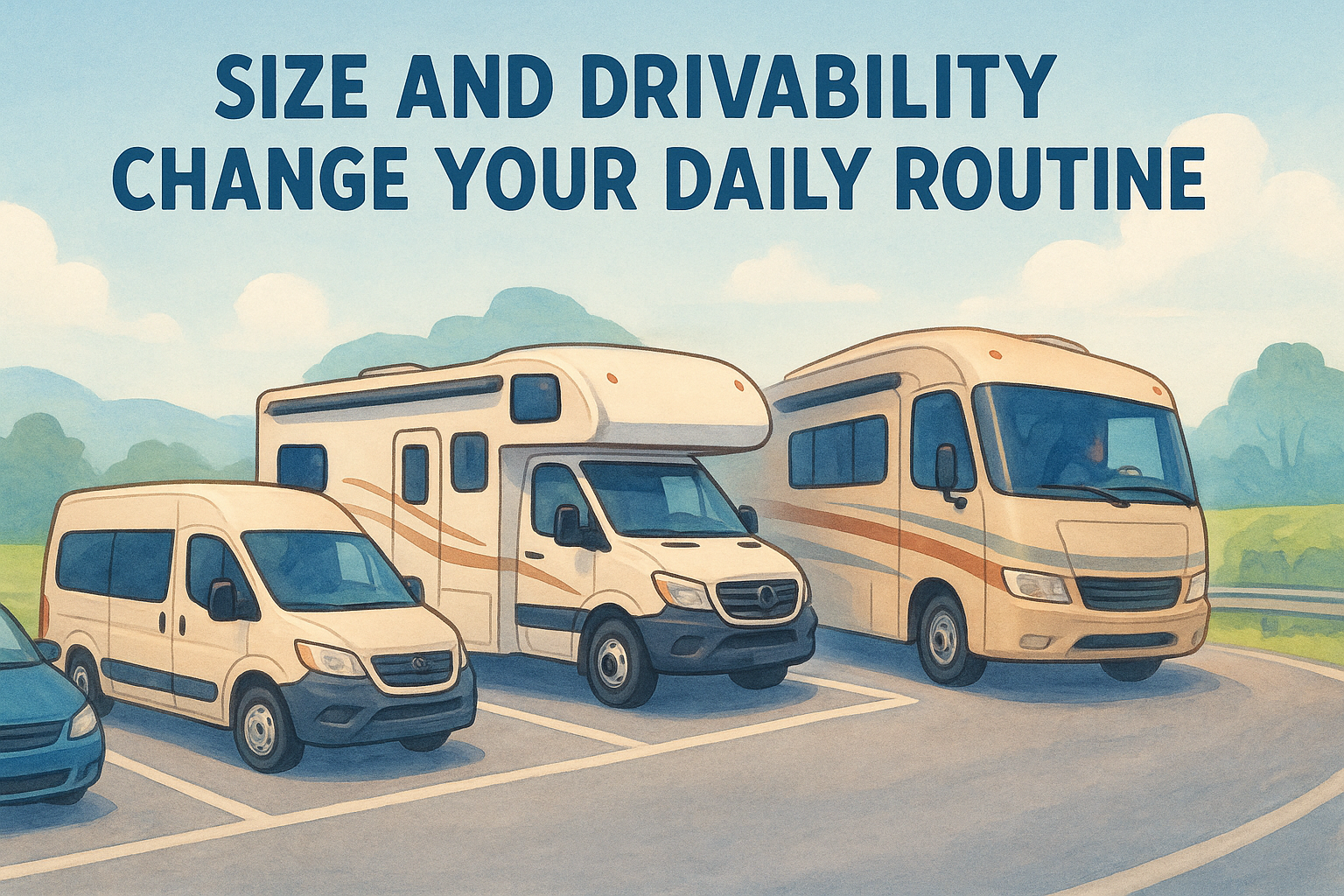
The bigger the rig, the more your trip planning revolves around where you can actually fit.
Comfort and living space dictate how long you can stay
Comfort scales pretty directly with length. Class A motorhomes typically include residential-style kitchens, full bathrooms with separate showers, and slide-outs that turn the living area into something close to a small apartment, which is why full-time travelers and long-term snowbirds gravitate toward them. Class C models offer a cozy but functional layout, often with a sleeping bunk over the cab that works great for kids or extra guests. Meanwhile, Class B vans trade space for simplicity: a wet bath, a compact galley, and a bed that folds out of the seating area, fine for a weekend but tight for a month on the road.
Cost to buy, insure, and fuel adds up differently
Cost follows a similar pattern, though not always in the direction people expect. Class B vans often carry a higher price per square foot than Class C rigs because they're built on premium chassis like the Mercedes Sprinter, a trend the RV Industry Association (https://www.rvia.org/) has tracked as van-based builds gain popularity. Class A coaches cost the most upfront and burn the most fuel, sometimes averaging 6 to 10 miles per gallon, while Class C rigs land in a middle ground on both sticker price and fuel economy.
Class A 30-45 ft 6-10 Full-time living, long hauls Class B 17-23 ft 14-22 Solo or couple travel, daily driving Class C 25-33 ft 10-16 Families, weekend tripsUltimately, the class you pick shapes not just your budget but your entire rhythm of travel, so weigh these tradeoffs honestly before you sign anything at the dealership.
How to choose the right RV class for you
Picking between Class A, Class B, and Class C isn't about which one looks nicest at the dealership. It's about matching the rig to how often you travel, who's coming along, and where you'll actually park it between trips. Start by being honest about your habits instead of your fantasies about full-time travel you might do someday.
Match the class to how often you'll travel
Weekend warriors and occasional campers rarely need the space or expense of a Class A motorhome. If you're taking two or three trips a year, a Class C gives you enough room for a family without the fuel bills or storage headaches of a full-size coach. Full-timers and snowbirds spending months on the road, on the other hand, benefit from the residential-style comfort that only a Class A can offer over long stretches.
Buy for the trips you actually take, not the trips you imagine taking someday.
Consider where you'll park, store, and drive it daily
Storage and daily driving matter more than most first-time buyers expect. A Class B camper van doubles as a daily driver and fits in a standard garage or driveway, which matters if you don't have access to RV storage nearby. Class A and Class C rigs usually need dedicated storage lots, and many campgrounds and national parks have length restrictions that rule out the biggest coaches entirely.
Think about who's traveling with you
Group size changes the math fast. A couple traveling solo can live comfortably in a Class B van, but add two kids and a dog, and you'll want the extra sleeping and living space a Class C or Class A provides.
- Solo or couple, frequent short trips: Class B van
- Family with kids, occasional trips: Class C
- Full-time living or long seasonal stays: Class A
- Tight budget, want daily-driver flexibility: Class B
- Need residential comfort for months at a time: Class A
Running through this list before you shop saves you from the classic mistake of buying too much rig, or too little, based on showroom excitement alone.
Maintenance and repair needs by RV class
Owning any motorhome means signing up for ongoing upkeep, but the scope of that upkeep changes dramatically depending on which class you drive home. Class A coaches pack in the most systems, from air ride suspension to residential appliances, which means more parts that can fail and more specialized labor when they do. Class B vans keep things simple mechanically but often hide their systems behind tight, custom-built interiors that make DIY fixes tricky. Class C rigs land in the middle, sharing a van cutaway chassis with straightforward engine access but still carrying enough house systems to need regular attention.
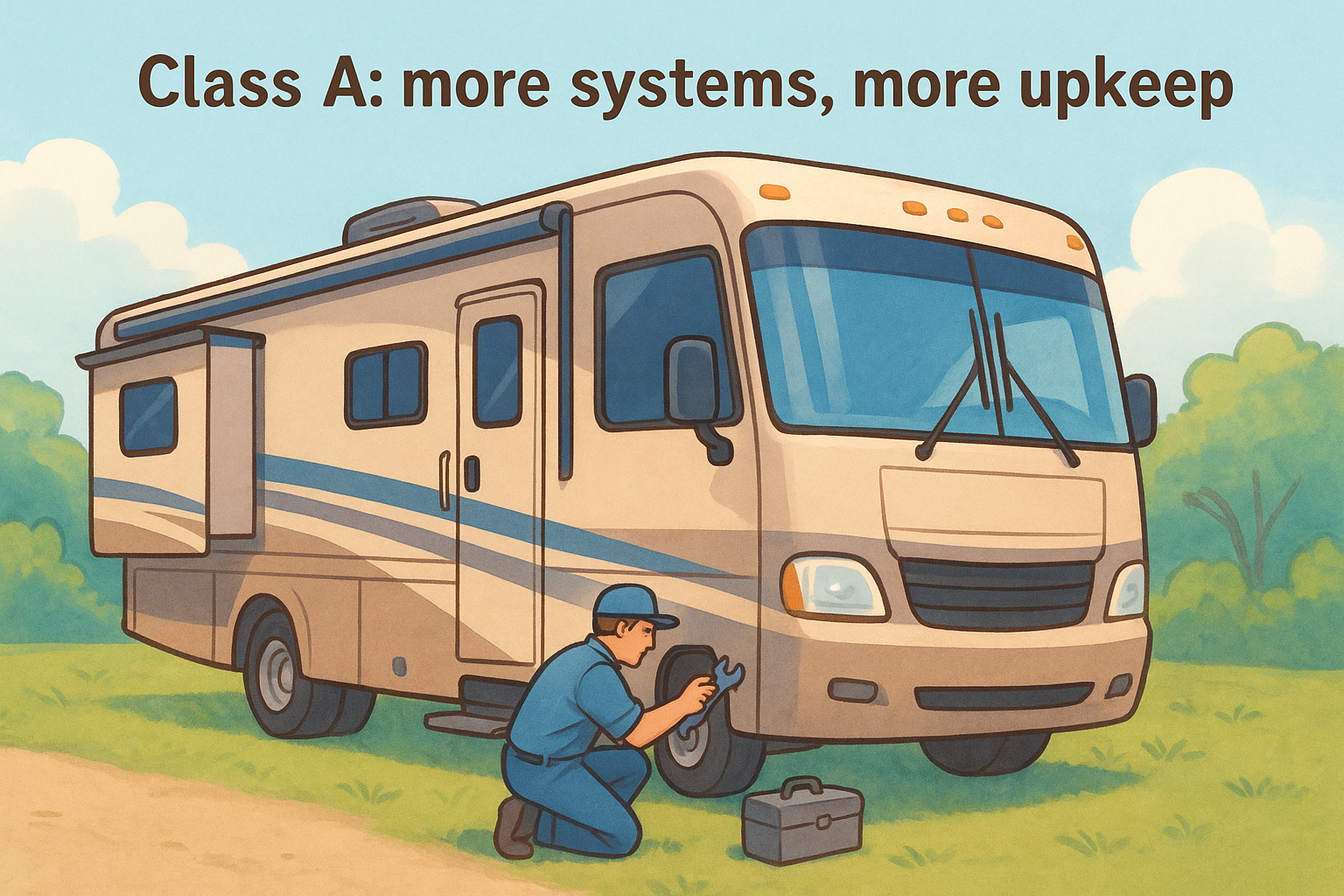
Class A: more systems, more upkeep
Full-size coaches demand the most from an owner's maintenance budget. Slide-out mechanisms, generator systems, and multiple air conditioning units all need periodic servicing, and a roof recoat every few years is nearly unavoidable given the surface area involved. Because these coaches often serve as full-time homes, small issues like a slow tank sensor or a flickering inverter tend to get noticed fast, which is exactly when a mobile RV technician who can come to your campsite saves you from cutting a trip short.
Class B: simple but specialized
Vans trade complexity for compactness, but that compactness creates its own repair challenges. Wiring, plumbing, and cabinetry are often packed so tightly that only technicians familiar with van conversions can service them without tearing apart custom woodwork. Owners frequently deal with wet bath maintenance and compact appliance repairs, both of which benefit from a specialist rather than a generalist shop.
Smaller RVs still need expert hands, just a different kind of expert.
Class C: middle-ground maintenance
Cab-over rigs balance accessibility with enough house systems to keep a maintenance schedule busy. Common needs include:
- Sealant checks around the cab-over bunk seam, a frequent leak point
- Tank cleaning and sensor calibration
- Appliance repair for compact kitchens and furnaces
- Electrical troubleshooting for slide-outs and awnings
Regardless of class, routine inspections catch small problems before they become trip-ending failures, and having a nationwide directory of vetted mobile technicians means you're never stuck waiting on a dealership appointment weeks out, whether you're parked at home or three states into a road trip.
Real-world examples: matching RVs to travelers
Abstract comparisons only go so far. Seeing how real travelers actually use each RV class makes the decision easier, so here are three common profiles that show the tradeoffs in action.
The full-time retirees who wanted a home on wheels
Consider a retired couple who sold their house and hit the road for good. They needed a residential kitchen, a washer and dryer, and enough storage for four seasons of clothing, so a Class A coach made sense despite the higher fuel costs. Their 38-foot diesel pusher gives them the space to host grandkids for a week without feeling cramped, and they've learned to plan routes around campgrounds with pull-through sites that fit their length.
The remote worker chasing weekend trails
A freelance photographer who works from her laptop most weekdays needed something she could park at a trailhead and drive to a coffee shop the next morning. A Class B camper van built on a Sprinter chassis fits her life perfectly: it parks like a large SUV, gets nearly 20 miles per gallon, and doubles as her only vehicle. She traded square footage for the freedom to move spontaneously, which matters more to her than a full kitchen or separate shower.
The right RV isn't the biggest one you can afford, it's the one that matches how you actually live.
The family stretching a summer road trip budget
A family of four planning a three-week national park tour needed sleeping space for two adults and two kids without the price tag of a full coach. Their Class C motorhome gave the kids their own bunk over the cab, kept fuel costs manageable at 13 miles per gallon, and still fit in most state park campgrounds without length restrictions.
Full-time retirees Class A Residential comfort for months on the road Solo remote worker Class B Daily-driver flexibility and easy parking Family of four Class C Sleeping space and budget balanceEach of these buyers started with the same three letters and ended up in completely different rigs, because they matched the class to their actual routine instead of chasing the most impressive floor plan on the lot.
Finding the right rig for your journey
The class a vs class b vs class c rv debate really comes down to matching a rig to your actual habits, not the fantasy version of your travels. Full-timers lean toward Class A for the residential comfort, weekend explorers and daily drivers gravitate toward Class B, and families splitting the difference usually land happily in a Class C. None of these choices is objectively better than another; they're just built for different lives on the road.
Whatever you drive home, ongoing upkeep comes with the territory. Slide-out motors stick, tanks need cleaning, and roof seals wear thin no matter which badge is on the front. Rather than scrambling for a dealership appointment weeks out, check out the owner features and remote assistance membership that connect you with vetted mobile technicians wherever your rig happens to break down.