5 Best RV Inline Water Filters for Clean Drinking Water
Campground water tastes like a garden hose smells, and that's not just in your head. Municipal hookups and well water at parks vary wildly in chlorine levels, sediment, and sometimes bacteria, which is exactly why you need the best rv inline water filter before your next fill-up. Drinking straight from a shore power connection without filtration is a gamble most full-timers stop taking after one bad stomachache on the road.
This guide skips the marketing fluff and gets straight to what matters: flow rate, filtration stages, and how many gallons each filter lasts before you're buying a replacement. We tested and researched options that handle everything from basic sediment and chlorine taste to more serious concerns like lead and giardia, so you can match a filter to your actual water sources instead of guessing.
Below you'll find five filters worth your money, broken down by who they're best for, whether you're boondocking off sketchy water sources or just want cleaner-tasting coffee at a KOA. And if a filter problem turns into something bigger, like a leaking water line or a failing pump, MobileRVService.com connects you with a mobile technician near your campsite so you're not stuck waiting for a dealership appointment.
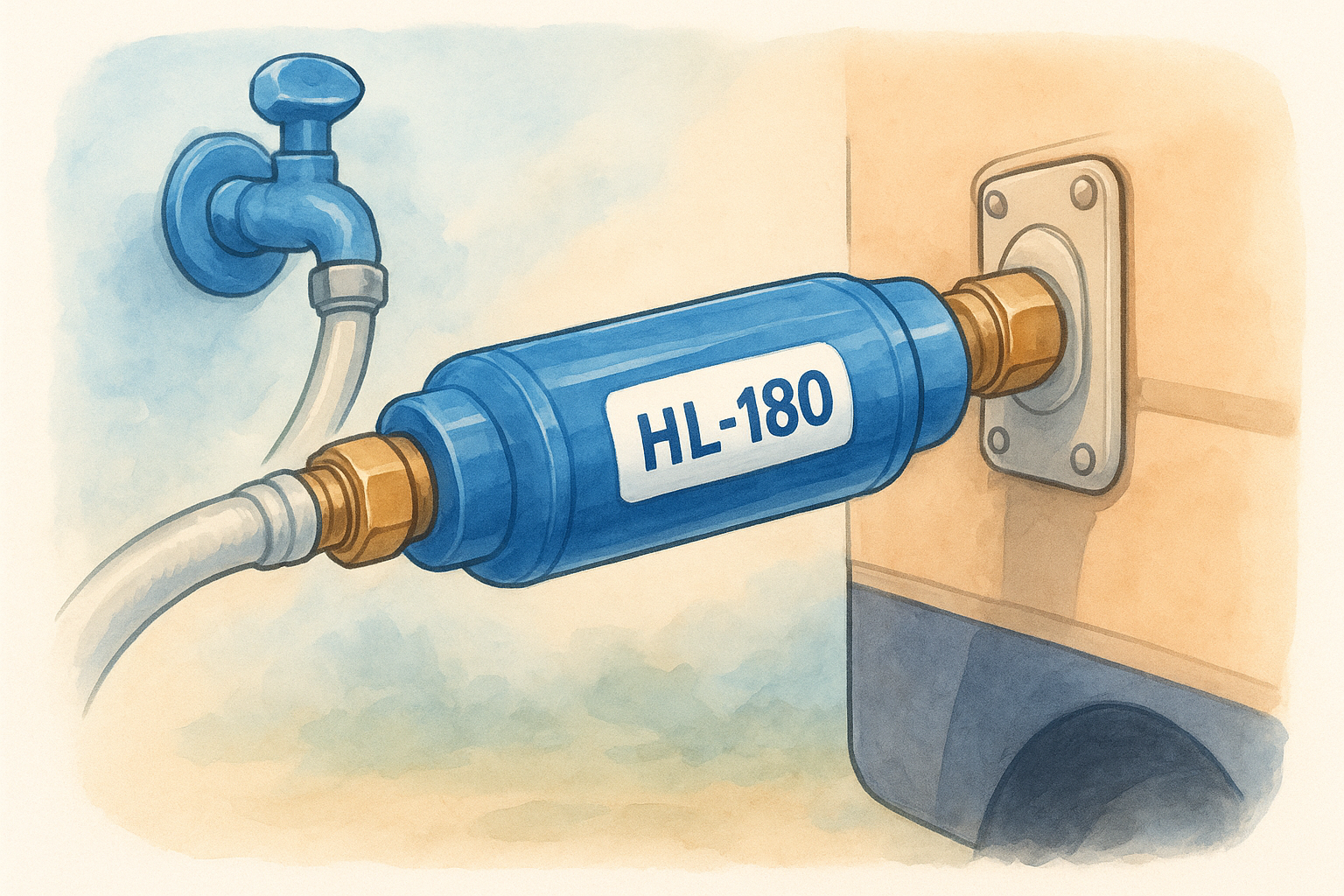
1. Camco 52133 HL-180 in-line exterior RV water filter
Camco's HL-180 is the filter most RV owners buy first, and for good reason. It's the standard recommendation you'll see parked at the counter of nearly every RV supply store, and it earns that spot by doing the basics well without overcomplicating things. If you're searching for the best rv inline water filter that just works without a learning curve, this is where to start.
Key features
The HL-180 uses a granular activated carbon (GAC) filtration system rated to remove chlorine taste and odor, sediment, and some organic contaminants down to 20 microns. It attaches directly to your exterior hose connection before water enters your rig, so everything downstream, from your kitchen sink to your shower head, gets treated water. The clear housing lets you visually check for discoloration or sediment buildup, which is a small detail that saves you from guessing when it's time to swap the cartridge.
A filter you can inspect at a glance beats one you have to trust blindly.
Best for
This filter suits weekend campers and seasonal travelers who fill up at established campgrounds with municipal water rather than questionable well sources. It's not built for heavy-duty contaminant removal like lead or bacteria, so if you're boondocking near agricultural runoff or drawing from unknown wells, look further down this list. But for the majority of RVers hooking up at KOAs and state parks, it handles the chlorine taste problem that ruins coffee and drinking water.
Price range
Expect to pay between $18 and $25 depending on retailer and whether you buy it standalone or in a two-pack. It's one of the most affordable inline options on the market, which explains why it shows up in so many starter RV kits.
Maintenance and lifespan
Camco rates the HL-180 for roughly 3 months or 4,000 gallons of use, whichever comes first, though heavy sediment sources will clog it faster. Replacement cartridges cost around $15 to $20, and swapping them takes less than five minutes with no tools required. Keep a spare in your storage bay so you're never stuck drinking unfiltered water while waiting on a shipment.
2. Culligan RV-800 exterior water filter with hose
Culligan built its reputation on home water treatment, and the RV-800 brings that same engineering to your camper without reinventing the wheel. It's a step up from basic sediment filters, aimed at RVers who want a recognizable brand name backing their drinking water setup.
Key features
The RV-800 ships with a built-in hose, so you skip the fumbling with separate connectors that plagues cheaper filters. Its carbon filtration reduces chlorine taste, sediment, and unpleasant odors, and the compact housing fits easily into a side storage bay without taking up much room. Culligan's reputation for consistent filtration standards carries over from its home systems, which matters if you've used their under-sink filters before and trust the brand.
Brand trust matters most when you can't see what's actually in the water.
Best for
This filter works well for RVers who prioritize convenience over maximum contaminant removal. If you're hooking up at a new campground every few nights and don't want to deal with separate hose attachments, the included hose alone saves you setup time. It's not the pick for well water or backcountry sources, but for municipal hookups, it's dependable.
Price range
You'll typically pay between $30 and $40, a bit more than the Camco option, largely because of the included hose and brand premium.
Maintenance and lifespan
Culligan rates the RV-800 for about 2,000 gallons or roughly 3 months of typical use. Replacement filters run $20 to $25, and the housing itself is reusable, so you're only replacing the cartridge each cycle.
3. Flow-Pur P12GE-RV in-line carbon water filter
Flow-Pur built its name supplying filtration to RV manufacturers directly, and the P12GE-RV is the filter you'll find pre-installed on some higher-end rigs straight from the factory. It's a compact carbon filter designed for owners who want factory-grade filtration without the bulk of a canister system.
Key features
The P12GE-RV uses a coconut-shell activated carbon block rated to reduce chlorine, sediment, and taste and odor issues down to 5 microns, finer than the Camco and Culligan options above. Its slim profile means it fits into tight storage compartments where bulkier filters won't. The 5-micron rating catches finer particulates that basic sediment filters miss, which matters if your water source runs cloudy after a hard rain.
Finer filtration only helps if the filter still fits where you actually store it.
Best for
This filter suits owners with limited storage space who still want better-than-basic filtration. It's a solid match for smaller travel trailers and camper vans where every cubic inch in the bay counts, and for anyone upgrading from a factory-installed filter that's overdue for replacement.
Price range
Expect to pay between $22 and $30, positioning it right between the Camco budget option and Culligan's convenience-focused model.
Maintenance and lifespan
Flow-Pur rates the P12GE-RV for about 3,000 gallons before replacement, with cartridges running $18 to $22. Swap it every season if you camp frequently, since the finer micron rating clogs faster under heavy sediment loads than coarser filters.
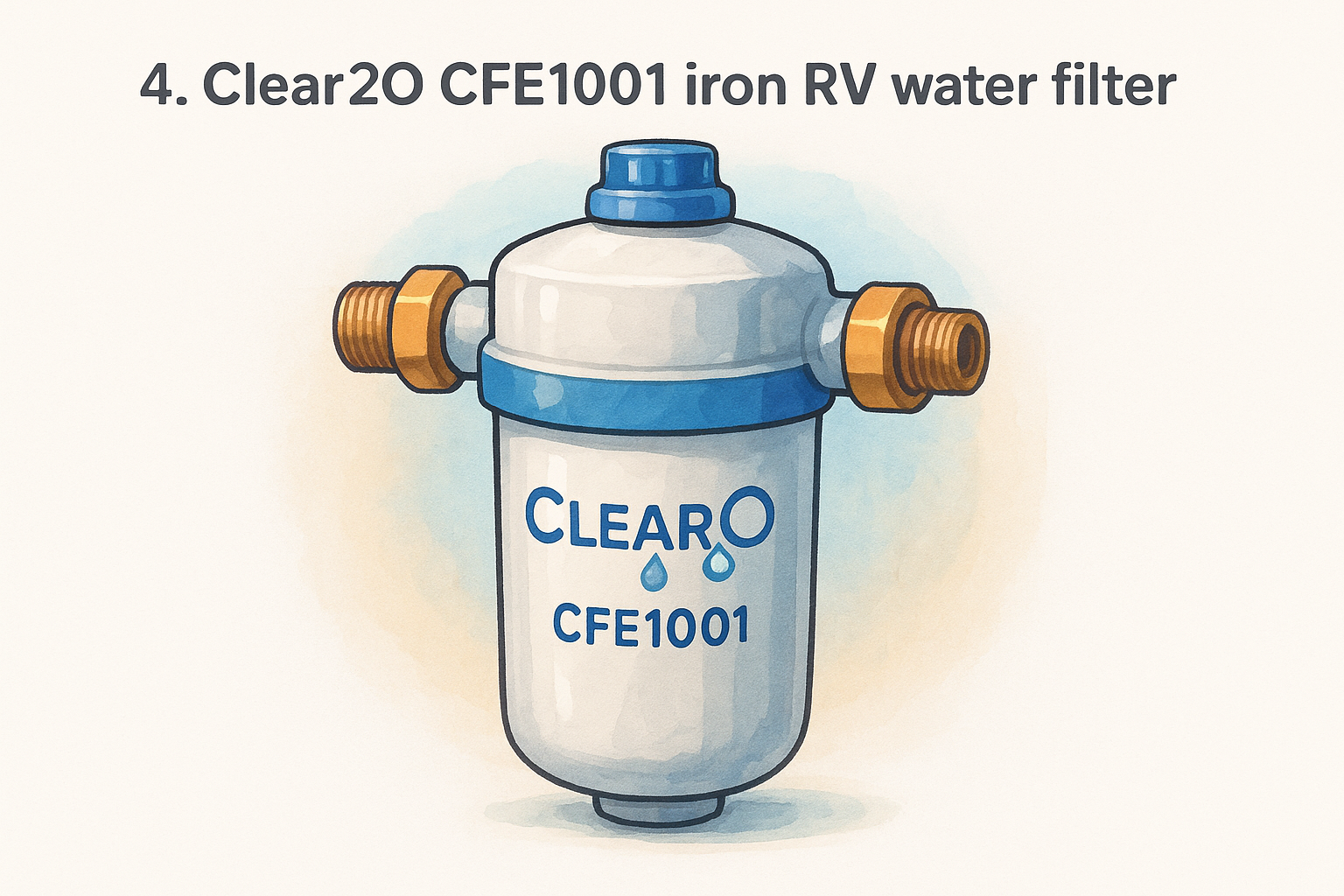
4. Clear2O CFE1001 iron RV water filter
Rusty-tasting water is a specific problem, and Clear2O built the CFE1001 specifically to solve it. If your campground draws from a well with high iron content, or you've noticed orange staining in your sink and shower, this filter targets that issue directly instead of just masking chlorine taste like the options above.
Key features
Designed around a specialized media blend, the CFE1001 reduces iron, manganese, and sulfur odors alongside standard sediment and chlorine taste. Its iron-reduction technology sets it apart from the carbon-only filters earlier on this list, making it one of the better choices when researching the best rv inline water filter for well-fed campgrounds. The housing includes a garden hose thread connection that installs in seconds at your fresh water inlet.
A filter built for iron does one job the others can't touch.
Best for
This filter suits RVers who frequent rural campgrounds and private well hookups rather than municipal water sources. If you've dealt with metallic taste, orange residue, or rotten-egg smell from sulfur, this addresses those problems specifically. City water users won't see much benefit over a standard carbon filter.
Price range
Expect to spend between $25 and $35, putting it in the mid-range tier alongside the Culligan and Flow-Pur options already covered.
Maintenance and lifespan
Clear2O rates the CFE1001 for roughly 2,000 gallons, though heavy iron content shortens that window noticeably. Replacement cartridges cost $18 to $24, and you'll want to check flow rate regularly since iron buildup clogs media faster than sediment alone.
5. Flow-Pur MAXVOC-975RV carbon water filter
Wrapping up this list is a filter built for a narrower but real problem: volatile organic compounds. If you've filled up near industrial runoff, agricultural areas, or older municipal systems with aging pipes, the MAXVOC-975RV targets chemical contaminants that basic carbon filters weren't designed to catch. It's the closest thing on this list to a specialty filter for VOC reduction.
Key features
The MAXVOC-975RV uses a dense carbon block specifically formulated to reduce volatile organic compounds, along with the usual chlorine taste, odor, and sediment. Flow-Pur rates it for VOC and chemical contaminant reduction at a level most inline filters don't attempt, which makes it a genuine standout when comparing the best rv inline water filter options for chemically questionable water sources. It threads onto a standard garden hose connection at your inlet, same as the rest of this list.
A filter that handles VOCs earns its spot when your water source has a chemical history you don't trust.
Best for
This filter suits RVers who travel through industrial regions or fill up at parks with a history of water quality complaints. It's overkill for someone parking exclusively at clean municipal hookups, but it's cheap insurance for full-timers who don't always know their water source ahead of time.
Price range
Expect to pay between $28 and $38, putting it near the top of this list price-wise.
Maintenance and lifespan
Flow-Pur rates the MAXVOC-975RV for about 2,500 gallons, with replacement cartridges running $22 to $28. Swap it sooner if you've filled up somewhere with a known chemical odor, since VOC media saturates faster than standard carbon under heavy exposure.
Keeping your RV water clean on every trip
Picking the right filter comes down to matching your water source to the problem it actually solves. Municipal hookups at established campgrounds call for something like the Camco HL-180 or Culligan RV-800, while well water, rural parks, and questionable industrial areas push you toward the Clear2O or Flow-Pur specialty options. None of these filters cost more than a tank of propane, but they save you from stomach issues and rusty-tasting coffee for months at a time.
A filter only protects your drinking water, though. It won't help if your pump fails, a line cracks, or your water heater stops working mid-trip. When that happens, you need someone who can show up at your campsite instead of a dealership three states away. Check out the remote assistance and membership options available through MobileRVService.com so you're covered no matter what breaks next.